School of Computer Science, Georgia Institute of Technology, Atlanta, Geogria, United States of America.
Department of Complex Trait Genetics, Center for Neurogenomics and Cognitive Research, Amsterdam Neuroscience, Vrije Universiteit Amsterdam, Amsterdam, The Netherlands.
PLoS Comput Biol. 2020 Feb 6;16(2):e1007526. doi: 10.1371/journal.pcbi.1007526. eCollection 2020 Feb.
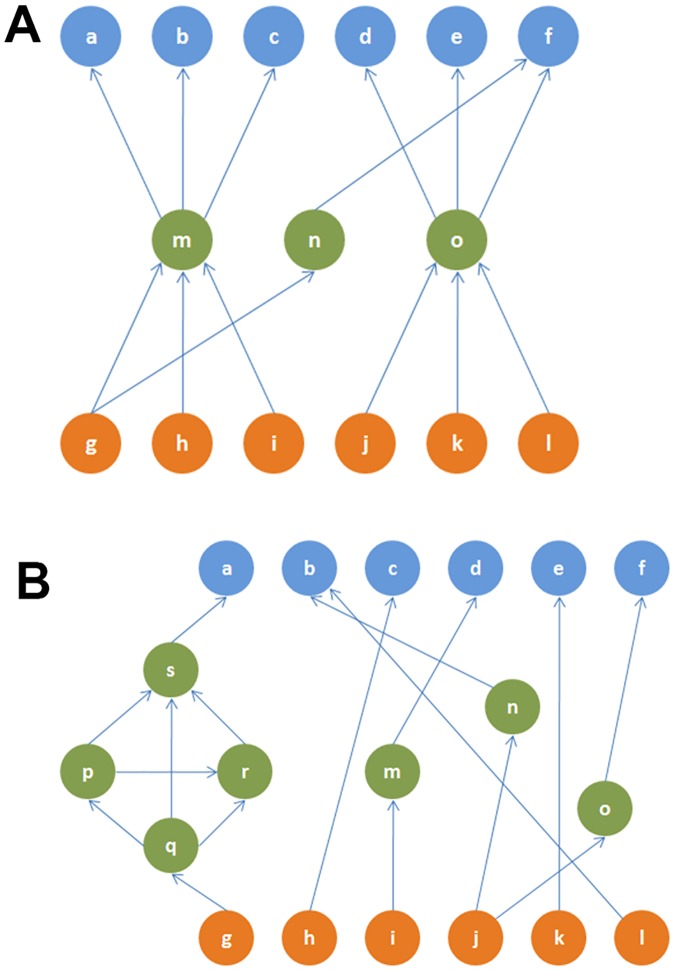
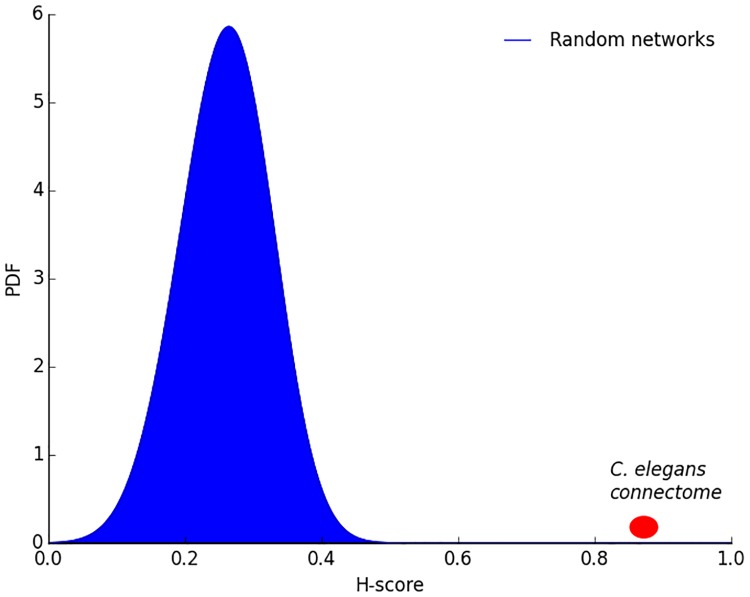
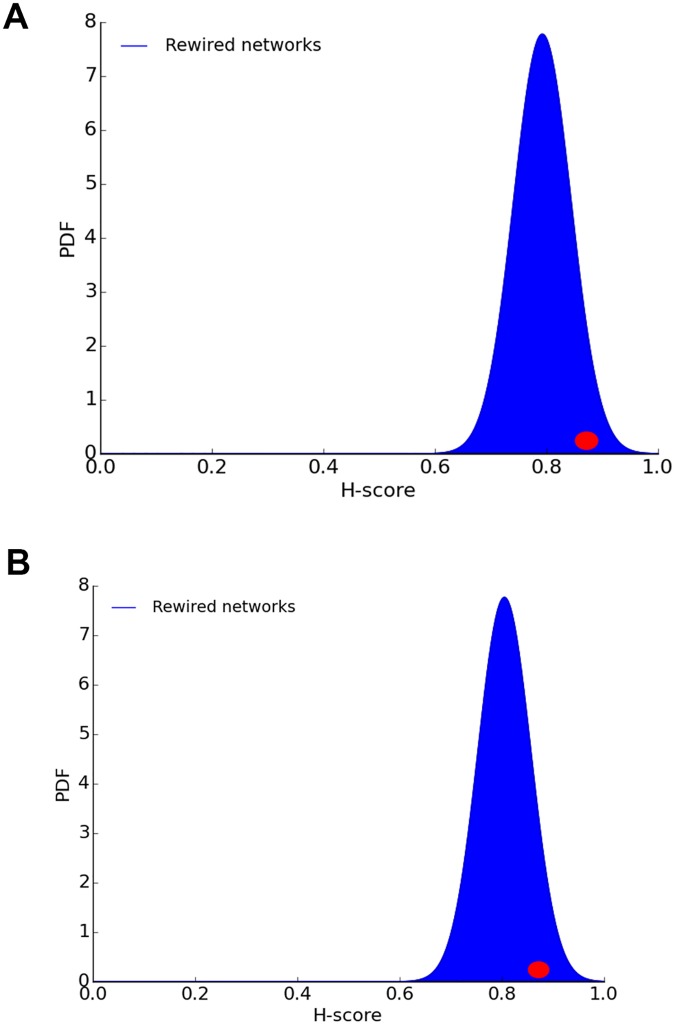
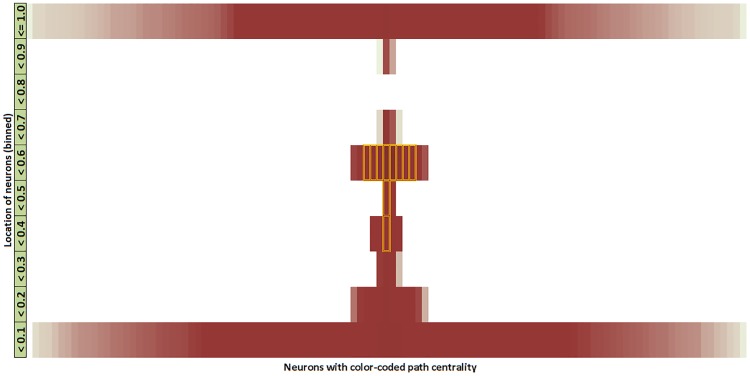
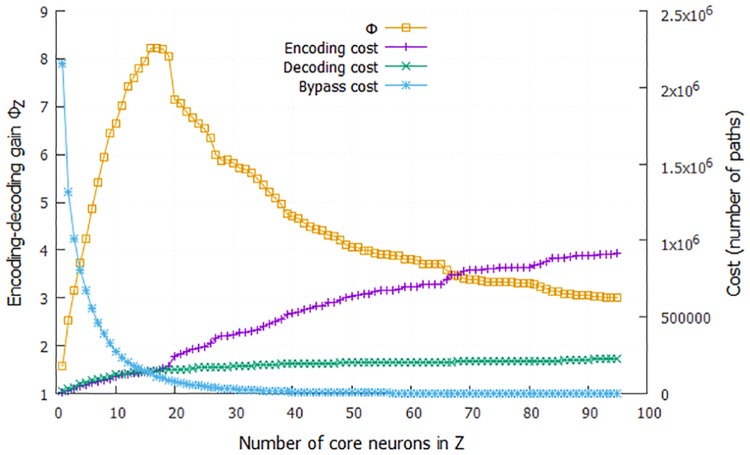
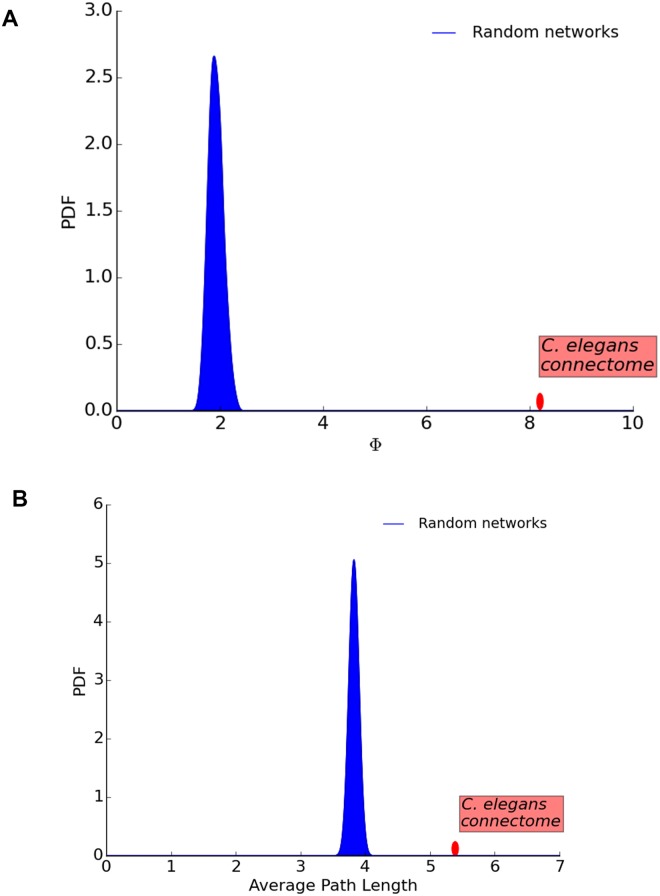
We approach the C. elegans connectome as an information processing network that receives input from about 90 sensory neurons, processes that information through a highly recurrent network of about 80 interneurons, and it produces a coordinated output from about 120 motor neurons that control the nematode's muscles. We focus on the feedforward flow of information from sensory neurons to motor neurons, and apply a recently developed network analysis framework referred to as the "hourglass effect". The analysis reveals that this feedforward flow traverses a small core ("hourglass waist") that consists of 10-15 interneurons. These are mostly the same interneurons that were previously shown (using a different analytical approach) to constitute the "rich-club" of the C. elegans connectome. This result is robust to the methodology that separates the feedforward from the feedback flow of information. The set of core interneurons remains mostly the same when we consider only chemical synapses or the combination of chemical synapses and gap junctions. The hourglass organization of the connectome suggests that C. elegans has some similarities with encoder-decoder artificial neural networks in which the input is first compressed and integrated in a low-dimensional latent space that encodes the given data in a more efficient manner, followed by a decoding network through which intermediate-level sub-functions are combined in different ways to compute the correlated outputs of the network. The core neurons at the hourglass waist represent the information bottleneck of the system, balancing the representation accuracy and compactness (complexity) of the given sensory information.
我们将秀丽隐杆线虫的连接组视为一个信息处理网络,它从大约 90 个感觉神经元接收输入,通过大约 80 个中间神经元的高度递归网络处理这些信息,并从大约 120 个控制线虫肌肉的运动神经元中产生协调的输出。我们专注于从感觉神经元到运动神经元的前馈信息流,并应用了一种称为“沙漏效应”的新的网络分析框架。分析表明,这种前馈流穿过一个由 10-15 个中间神经元组成的小核心(“沙漏腰”)。这些中间神经元大多与之前使用不同分析方法的研究结果一致,即构成了秀丽隐杆线虫连接组的“丰富俱乐部”。当我们只考虑化学突触或化学突触和间隙连接的组合时,这种核心中间神经元的集合仍然基本保持不变。连接组的沙漏结构表明,秀丽隐杆线虫与编码器-解码器人工神经网络有一些相似之处,在这种神经网络中,输入首先在低维潜在空间中被压缩和整合,以更有效的方式对给定数据进行编码,然后通过解码网络以不同的方式组合中间级子功能来计算网络的相关输出。沙漏腰部的核心神经元代表了系统的信息瓶颈,平衡了给定感觉信息的表示准确性和紧凑性(复杂性)。