Department of Urology, Miller School of Medicine, University of Miami, Miami, FL, USA.
Division of Urologic Surgery, Harvard Medical School, Beth Israel Deaconess Medical Center, Boston, MA, USA.
Am J Mens Health. 2020 Jan-Feb;14(1):1557988320903191. doi: 10.1177/1557988320903191.
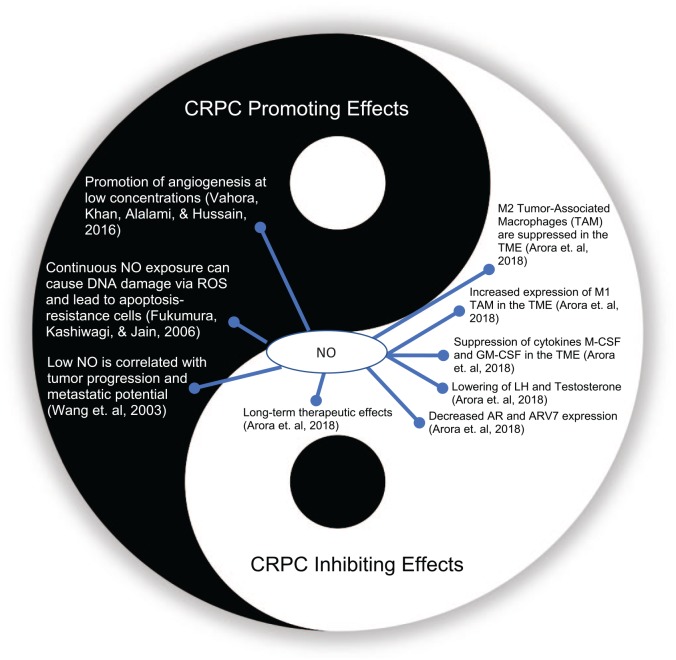
Nitric oxide (NO) is a ubiquitous signaling molecule in the human body with well-known roles in many different processes and organ systems. In cancer, the two-concentrations hypothesis of NO has dictated that low levels of NO are cancer promoting, while high levels of NO are protective against cancer. Although prostate cancer is a hormonally driven malignancy, research has been shifting away from androgen-responsive epithelial cells and evolving to focus on NO therapies, the tumor microenvironment (TME), and inflammation. NO is reported to be able to inhibit activity of the androgen receptor. This may prevent prostate growth, but low levels of NO could conversely select for castration-resistant prostate cells, creating an aggressive cancer phenotype. At high levels, nitrosative stress created from NO overproduction can be protective against prostate neoplasia. In this review, we discuss development and possibilities of NO-based therapies for prostate cancer.
一氧化氮(NO)是人体内无处不在的信号分子,在许多不同的过程和器官系统中具有众所周知的作用。在癌症中,NO 的双浓度假说表明,低水平的 NO 促进癌症,而高水平的 NO 对癌症具有保护作用。尽管前列腺癌是一种受激素驱动的恶性肿瘤,但研究已经从对雄激素反应的上皮细胞转移,逐渐转向关注 NO 治疗、肿瘤微环境(TME)和炎症。有报道称,NO 能够抑制雄激素受体的活性。这可能会阻止前列腺生长,但相反,低水平的 NO 可能会选择去势抵抗性前列腺细胞,形成侵袭性癌症表型。在高水平下,NO 过度产生引起的硝化应激可以对前列腺肿瘤起到保护作用。在这篇综述中,我们讨论了基于 NO 的治疗前列腺癌的发展和可能性。