Toronto General Hospital Research Institute, University Health Network, Toronto Medical Discovery Tower, Room 3-702, 101 College Street, Toronto, Ontario, M5G 1L7, Canada.
Department of Physiology, Faculty of Medicine, University of Toronto, Toronto, ON, Canada.
J Neuroinflammation. 2020 Feb 7;17(1):51. doi: 10.1186/s12974-019-1681-3.
Radiotherapy is widely used and effective for treating brain tumours, but inevitably impairs cognition as it arrests cellular processes important for learning and memory. This is particularly evident in the aged brain with limited regenerative capacity, where radiation produces irreparable neuronal damage and activation of neighbouring microglia. The latter is responsible for increased neuronal death and contributes to cognitive decline after treatment. To date, there are few effective means to prevent cognitive deficits after radiotherapy.
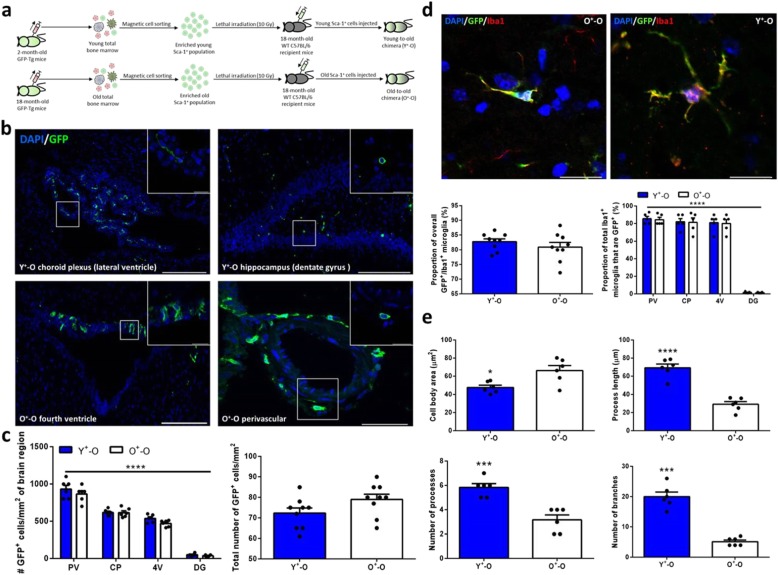
Here we implanted hematopoietic stem cells (HSCs) from young or old (2- or 18-month-old, respectively) donor mice expressing green fluorescent protein (GFP) into old recipients and assessed cognitive abilities 3 months post-reconstitution.
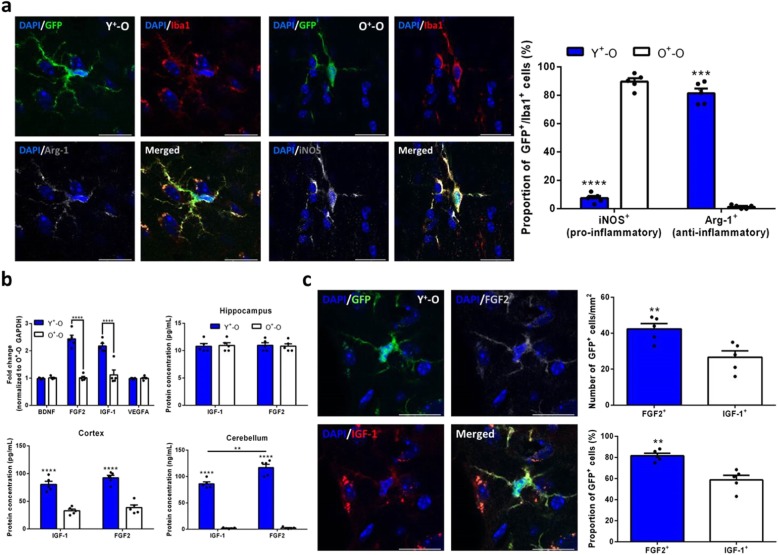
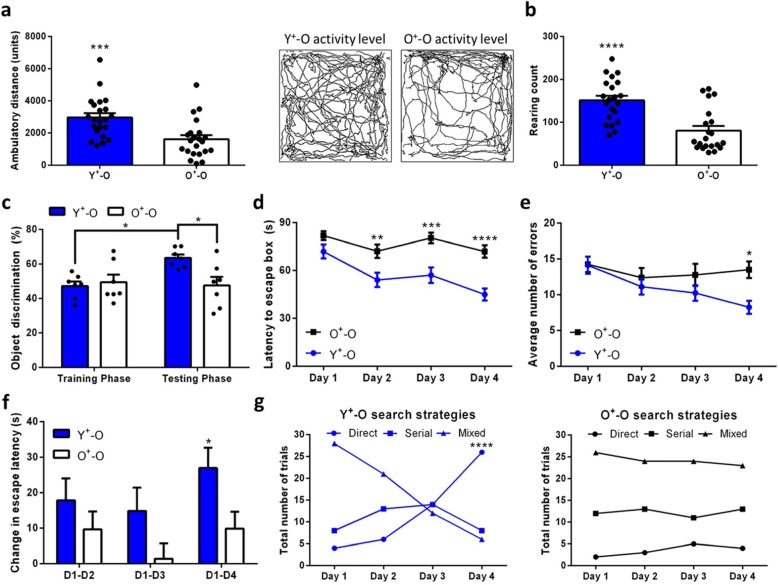
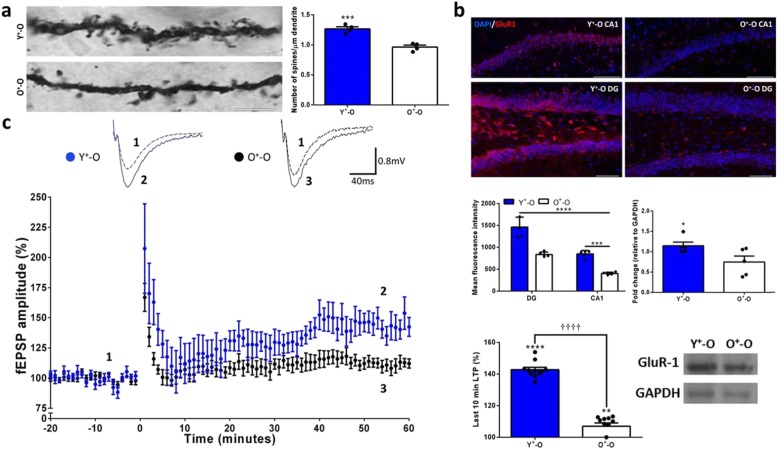
Regardless of donor age, GFP cells homed to the brain of old recipients and expressed the macrophage/microglial marker, Iba1. However, only young cells attenuated deficits in novel object recognition and spatial memory and learning in old mice post-irradiation. Mechanistically, old recipients that received young HSCs, but not old, displayed significantly greater dendritic spine density and long-term potentiation (LTP) in CA1 neurons of the hippocampus. Lastly, we found that GFP/Iba1 cells from young and old donors were differentially polarized to an anti- and pro-inflammatory phenotype and produced neuroprotective factors and reactive nitrogen species in vivo, respectively.
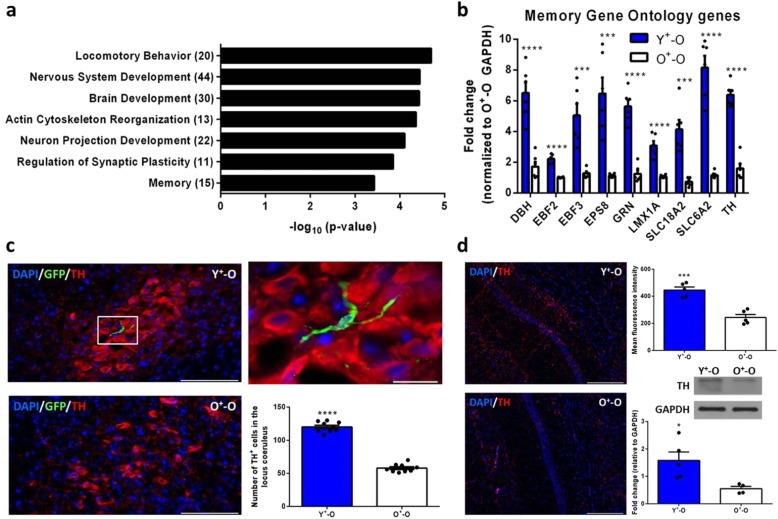
Our results suggest aged peripherally derived microglia-like cells may exacerbate cognitive impairments after radiotherapy, whereas young microglia-like cells are polarized to a reparative phenotype in the irradiated brain, particularly in neural circuits associated with rewards, learning, and memory. These findings present a proof-of-principle for effectively reinstating central cognitive function of irradiated brains with peripheral stem cells from young donor bone marrow.
放射疗法广泛用于治疗脑肿瘤,且疗效显著,但在衰老的大脑中,这种疗法不可避免地会损害认知能力,因为它会阻止对学习和记忆很重要的细胞过程。在衰老的大脑中,这种情况尤其明显,因为衰老的大脑再生能力有限,放射治疗会产生不可逆转的神经元损伤,并激活邻近的小胶质细胞。后者负责增加神经元死亡,并导致治疗后认知能力下降。迄今为止,很少有有效的方法可以预防放射治疗后的认知缺陷。
在这里,我们将来自年轻(2 个月大)或年老(18 个月大)供体小鼠的表达绿色荧光蛋白(GFP)的造血干细胞(HSCs)植入年老的受体小鼠中,并在再细胞生成后 3 个月评估认知能力。
无论供体年龄如何,GFP 细胞都会归巢到年老受体的大脑中,并表达巨噬细胞/小胶质细胞标志物 Iba1。然而,只有年轻的细胞在年老的小鼠接受放射治疗后减轻了新物体识别和空间记忆和学习方面的缺陷。从机制上讲,接受年轻 HSCs 的年老受体而不是年老受体,显示出海马 CA1 神经元中的树突棘密度和长时程增强(LTP)显著增加。最后,我们发现来自年轻和年老供体的 GFP/Iba1 细胞分别向抗炎和促炎表型极化,并在体内产生神经保护因子和活性氮物质。
我们的研究结果表明,衰老的外周衍生的小胶质细胞样细胞可能会加剧放射治疗后的认知障碍,而年轻的小胶质细胞样细胞在照射的大脑中被极化到修复表型,特别是在与奖励、学习和记忆相关的神经回路中。这些发现为用来自年轻供体骨髓的外周干细胞有效恢复照射大脑的中枢认知功能提供了原理证明。