Jiangsu Institute of Poultry Science, Jiangsu Yangzhou, 225125, China.
Jiangsu Institute of Poultry Science, Jiangsu Yangzhou, 225125, China.
Poult Sci. 2020 Feb;99(2):1096-1106. doi: 10.1016/j.psj.2019.12.030. Epub 2020 Jan 24.
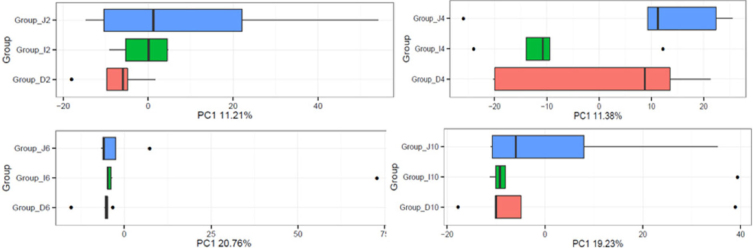
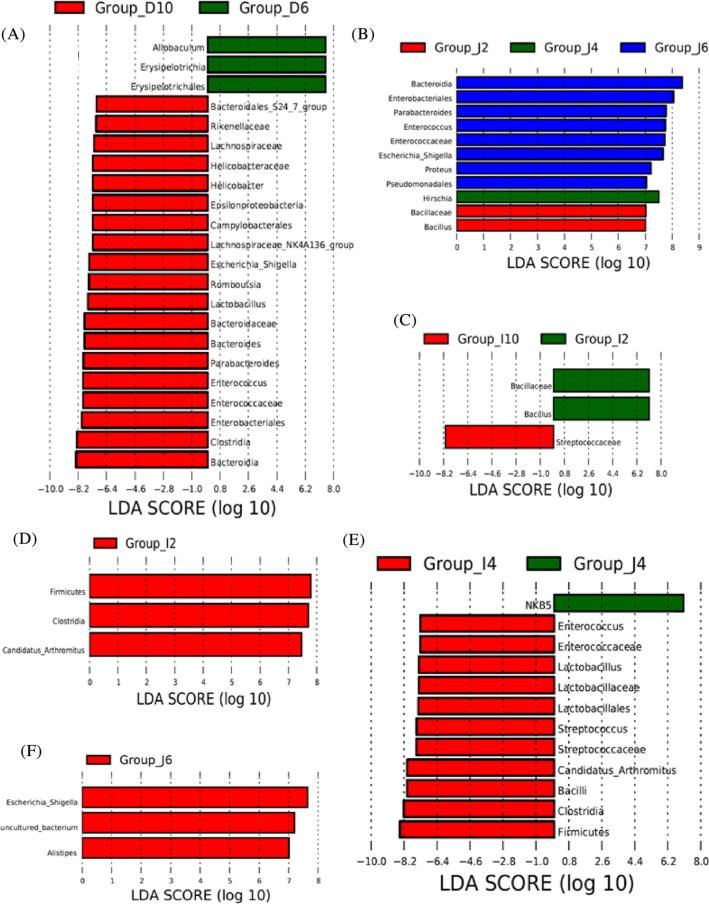
We studied the microbial profiles of the duodenum, jejunum, and ileum during different developmental stages in the duck using high-throughput sequencing of the bacterial 16S rRNA gene. We also investigated the differences in the microbiota in the duodenum, jejunum, and ileum at different developmental times. A correlation analysis was performed between the most abundant bacterial genera and the development of the small intestine. An analysis of alpha diversity indicated different species richness and bacterial diversity in the different small intestinal segments and at different development times. A beta diversity analysis indicated differences in the bacterial community compositions across time. In a weighted UniFrac principal coordinates analysis, the samples clustered into two categories, 2 to 4 wk and 6 to 10 wk, in the duodenum, jejunum, and ileum. Our results show that the small intestine is predominantly populated by the phyla Firmicutes, Bacteroidetes, and Proteobacteria throughout the developmental stages of the duck. The duodenum, jejunum, and ileum shared most of the bacterial phyla and genera present, although they showed significant differences in their relative abundances in the intestinal segments and developmental stages. They shared different bacterial taxa during development times and among different segments when the intergroup differences were analyzed. The genera Bacillus, Corynebacterium 1, Lactococcus, Sphingomonas, and Haliangium correlated moderately positively with the increase in bodyweight and the lengths and weights of the duodenum, jejunum, and ileum, and these genera may be considered important markers when assessing the heath of the intestinal microbiota in ducks. This study provides a foundation upon which to extend our knowledge of the diversity and composition of the duck microbiota and a basis for further studies of the management of the small intestinal microbiota and improvements in the health and production of ducks.
我们使用高通量测序技术对鸭的十二指肠、空肠和回肠在不同发育阶段的微生物谱进行了研究。我们还研究了不同发育时间鸭的十二指肠、空肠和回肠中微生物群的差异。对最丰富的细菌属与小肠发育之间的相关性进行了分析。对α多样性的分析表明,不同的小肠道段和不同的发育时间具有不同的物种丰富度和细菌多样性。β多样性分析表明,细菌群落组成随时间的变化而不同。在加权 UniFrac 主坐标分析中,样本在十二指肠、空肠和回肠中聚类为两个类别,2 至 4 周和 6 至 10 周。我们的结果表明,在鸭的整个发育阶段,小肠主要由厚壁菌门、拟杆菌门和变形菌门组成。十二指肠、空肠和回肠共享大多数存在的细菌门和属,尽管它们在肠道段和发育阶段的相对丰度上存在显著差异。当分析发育时间和不同段之间的组间差异时,它们共享不同的细菌分类群。芽孢杆菌属、棒状杆菌属 1、乳球菌属、鞘氨醇单胞菌属和盐单胞菌属与体重增加以及十二指肠、空肠和回肠的长度和重量呈中度正相关,这些属可被视为评估鸭肠道微生物群健康状况的重要标志物。本研究为扩展我们对鸭微生物群多样性和组成的认识提供了基础,也为进一步研究小肠微生物群的管理和提高鸭的健康和生产水平提供了基础。