Centre for Interdisciplinary Research in Basic Sciences, Jamia Millia Islamia, Jamia Nagar, New Delhi 110025, India.
Department of Pharmacognosy College of Pharmacy, King Saud University, P.O. Box 2457, Riyadh, Saudi Arabia.
Cells. 2020 Feb 4;9(2):359. doi: 10.3390/cells9020359.
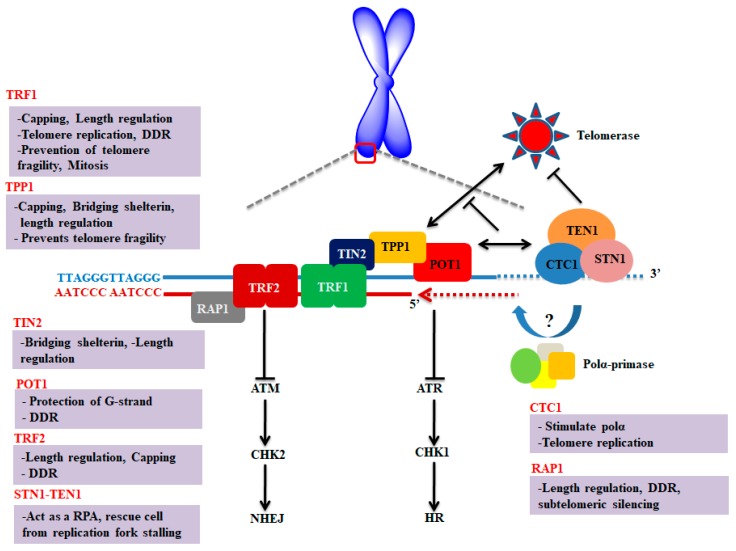
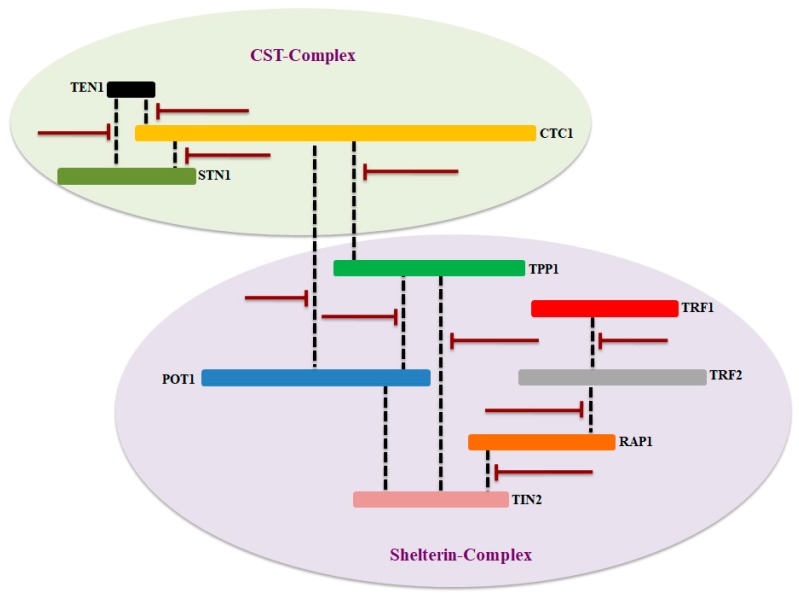
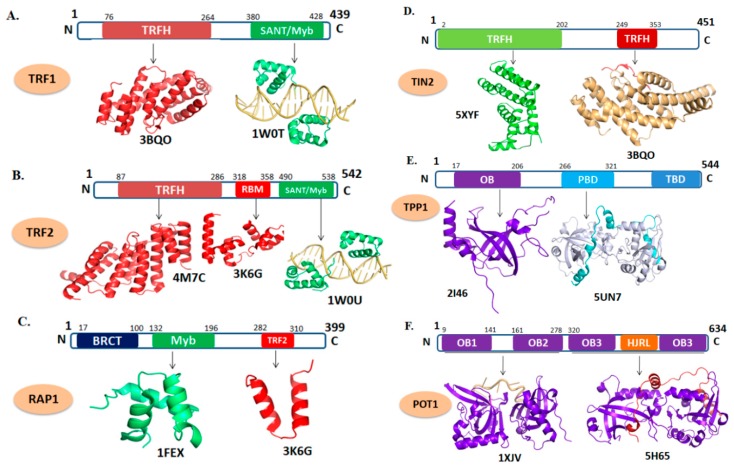
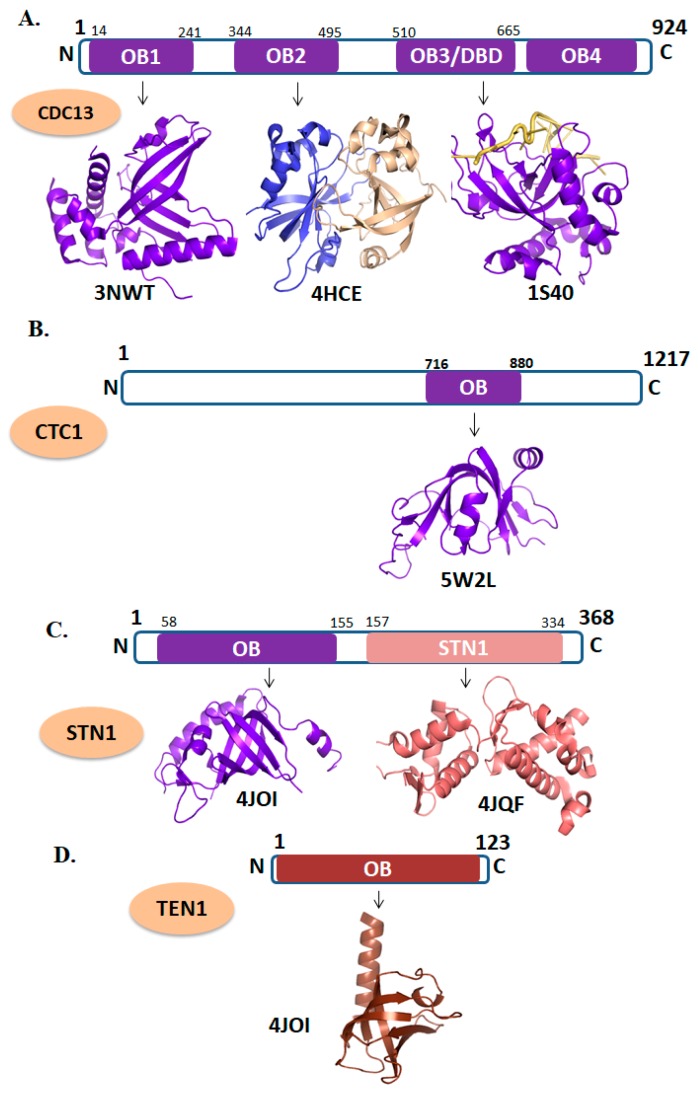
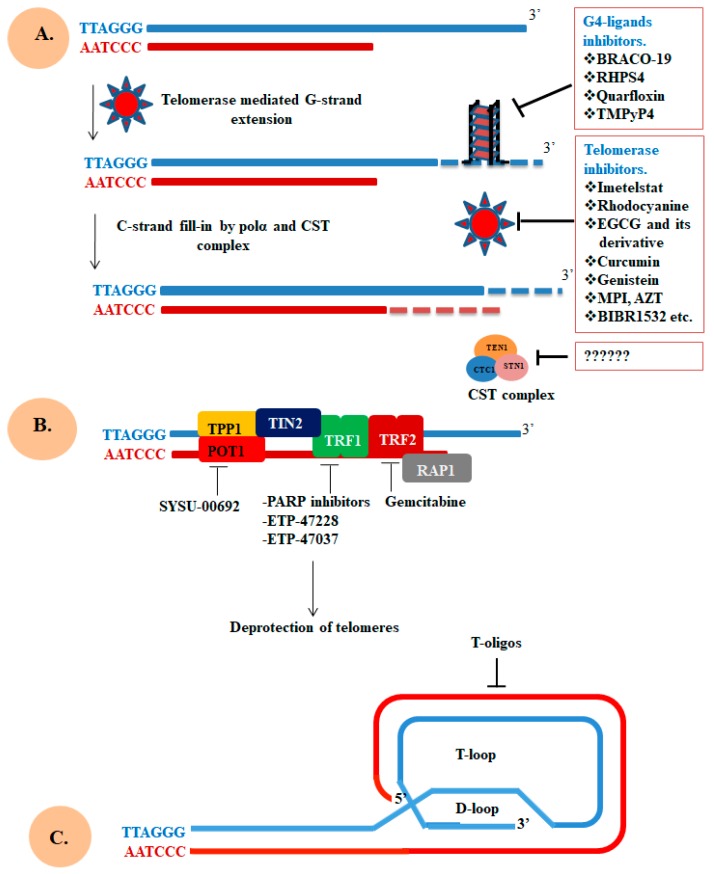
Telomere comprises the ends of eukaryotic linear chromosomes and is composed of G-rich (TTAGGG) tandem repeats which play an important role in maintaining genome stability, premature aging and onsets of many diseases. Majority of the telomere are replicated by conventional DNA replication, and only the last bit of the lagging strand is synthesized by telomerase (a reverse transcriptase). In addition to replication, telomere maintenance is principally carried out by two key complexes known as shelterin (TRF1, TRF2, TIN2, RAP1, POT1, and TPP1) and CST (CDC13/CTC1, STN1, and TEN1). Shelterin protects the telomere from DNA damage response (DDR) and regulates telomere length by telomerase; while, CST govern the extension of telomere by telomerase and C strand fill-in synthesis. We have investigated both structural and biochemical features of shelterin and CST complexes to get a clear understanding of their importance in the telomere maintenance. Further, we have analyzed ~115 clinically important mutations in both of the complexes. Association of such mutations with specific cellular fault unveils the importance of shelterin and CST complexes in the maintenance of genome stability. A possibility of targeting shelterin and CST by small molecule inhibitors is further investigated towards the therapeutic management of associated diseases. Overall, this review provides a possible direction to understand the mechanisms of telomere borne diseases, and their therapeutic intervention.
端粒包含真核线性染色体的末端,由富含 G 的(TTAGGG)串联重复序列组成,在维持基因组稳定性、过早衰老和许多疾病的发生中起着重要作用。大多数端粒通过常规 DNA 复制进行复制,只有滞后链的最后一点是由端粒酶(逆转录酶)合成的。除了复制,端粒的维持主要由两个关键复合物来完成,称为 shelterin(TRF1、TRF2、TIN2、RAP1、POT1 和 TPP1)和 CST(CDC13/CTC1、STN1 和 TEN1)。Shelterin 保护端粒免受 DNA 损伤反应(DDR)的影响,并通过端粒酶调节端粒长度;而 CST 通过端粒酶和 C 链填充合成来控制端粒的延伸。我们研究了 shelterin 和 CST 复合物的结构和生化特征,以清楚地了解它们在端粒维持中的重要性。此外,我们还分析了这两个复合物中约 115 个临床重要突变。这些突变与特定细胞缺陷的关联揭示了 shelterin 和 CST 复合物在维持基因组稳定性方面的重要性。进一步研究了小分子抑制剂对 shelterin 和 CST 的靶向作用,以期对相关疾病进行治疗管理。总的来说,这篇综述为理解端粒相关疾病的机制及其治疗干预提供了一个可能的方向。