Department of Life and Environmental Sciences, University of Cagliari, Cittadella Universitaria, 09124 Monserrato-Cagliari, Italy.
Department of Toxicology "Akademik Danilo Soldatović", Faculty of Pharmacy, University of Belgrade, 11000 Belgrade, Serbia.
Biomolecules. 2020 Feb 4;10(2):235. doi: 10.3390/biom10020235.
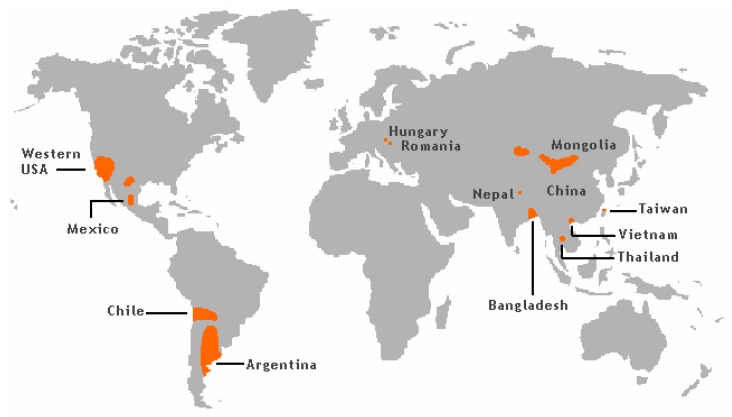
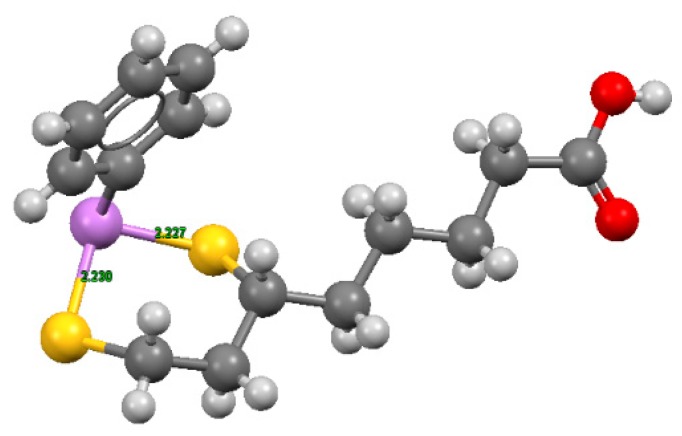
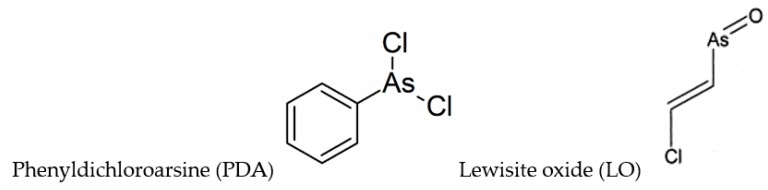
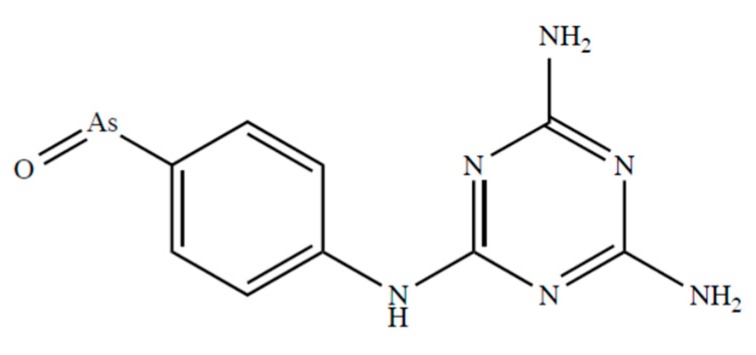
High arsenic (As) levels in food and drinking water, or under some occupational conditions, can precipitate chronic toxicity and in some cases cancer. Millions of people are exposed to unacceptable amounts of As through drinking water and food. Highly exposed individuals may develop acute, subacute, or chronic signs of poisoning, characterized by skin lesions, cardiovascular symptoms, and in some cases, multi-organ failure. Inorganic arsenite(III) and organic arsenicals with the general formula R-As are bound tightly to thiol groups, particularly to vicinal dithiols such as dihydrolipoic acid (DHLA), which together with some seleno-enzymes constitute vulnerable targets for the toxic action of As. In addition, R-As-compounds have even higher affinity to selenol groups, e.g., in thioredoxin reductase that also possesses a thiol group vicinal to the selenol. Inhibition of this and other ROS scavenging seleno-enzymes explain the oxidative stress associated with arsenic poisoning. The development of chelating agents, such as the dithiols BAL (dimercaptopropanol), DMPS (dimercapto-propanesulfonate) and DMSA (dimercaptosuccinic acid), took advantage of the fact that As had high affinity towards vicinal dithiols. Primary prevention by reducing exposure of the millions of people exposed to unacceptable As levels should be the prioritized strategy. However, in acute and subacute and even some cases with chronic As poisonings chelation treatment with therapeutic dithiols, in particular DMPS appears promising as regards alleviation of symptoms. In acute cases, initial treatment with BAL combined with DMPS should be considered.
食物和饮用水中砷(As)含量高,或者在某些职业条件下,可能会引发慢性毒性,在某些情况下还会引发癌症。数百万人通过饮用水和食物接触到不可接受量的砷。高度暴露的个体可能会出现急性、亚急性或慢性中毒迹象,表现为皮肤损伤、心血管症状,在某些情况下还会出现多器官衰竭。无机亚砷酸盐(III)和具有通式 R-As 的有机砷化合物与巯基紧密结合,特别是与二氢硫辛酸(DHLA)等相邻巯基结合,DHLA 与一些硒酶一起构成砷毒性作用的脆弱靶标。此外,R-As 化合物与硒醇基团的亲和力更高,例如在还具有硒醇基相邻巯基的硫氧还蛋白还原酶中。这种和其他 ROS 清除硒酶的抑制解释了与砷中毒相关的氧化应激。螯合剂的开发,如二巯基丙醇(BAL)、二巯基丙磺酸钠(DMPS)和二巯丁二酸(DMSA),利用了 As 与相邻巯基具有高亲和力的事实。减少数百万人接触不可接受的砷水平的初级预防应该是优先策略。然而,在急性和亚急性甚至一些慢性砷中毒病例中,用治疗性二巯基治疗螯合治疗,特别是 DMPS,在缓解症状方面似乎很有希望。在急性病例中,应考虑联合使用 BAL 和 DMPS 的初始治疗。