Institute of Animal Breeding and Husbandry, Christian-Albrechts-University Kiel, 24098, Kiel, Germany.
Vereinigte Informationssysteme Tierhaltung w.V. (Vit) Verden, 27283, Verden, Germany.
Genet Sel Evol. 2020 Feb 7;52(1):6. doi: 10.1186/s12711-020-0525-z.
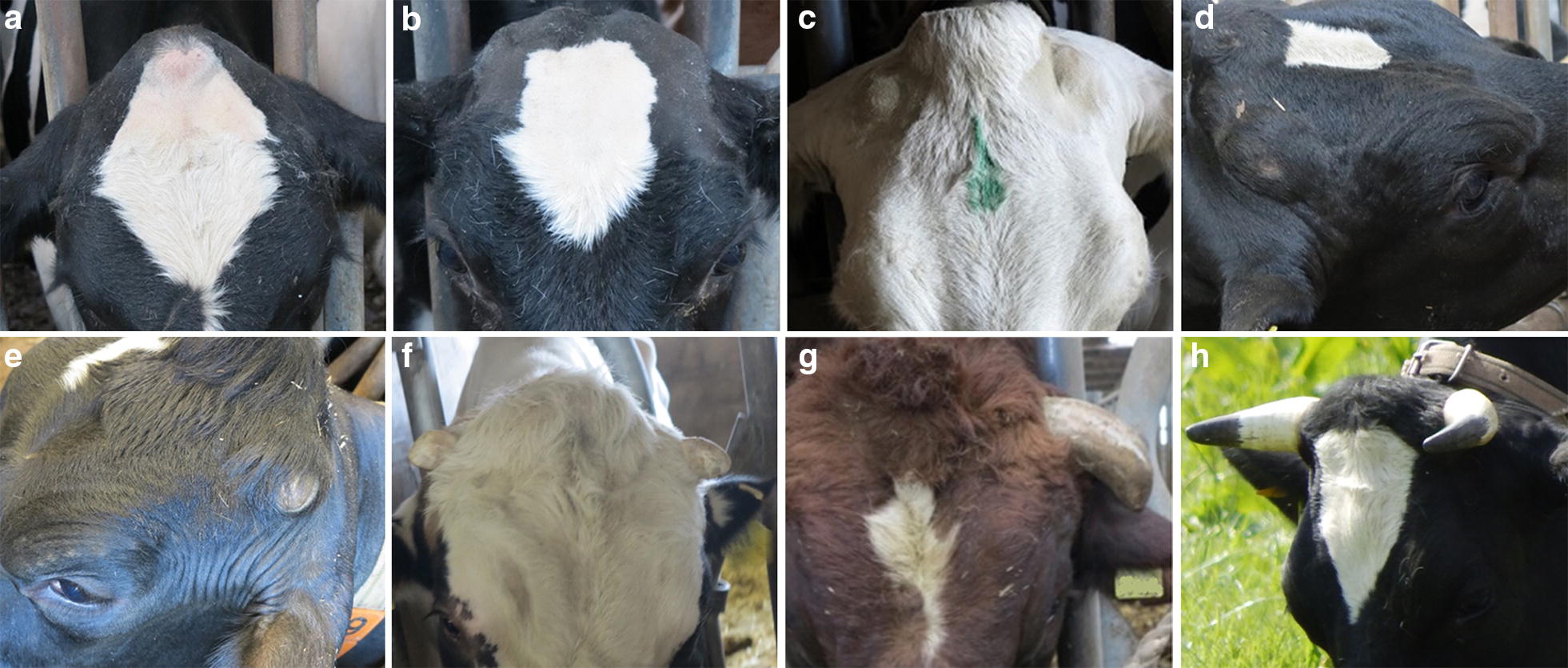
Breeding genetically hornless, i.e. polled, cattle provides an animal welfare-friendly and non-invasive alternative to the dehorning of calves. However, the molecular regulation of the development of horns in cattle is still poorly understood. Studying genetic characters such as polledness and scurs, can provide valuable insights into this process. Scurs are hornlike formations that occur occasionally in a wide variety of sizes and forms as an unexpected phenotype when breeding polled cattle.
We present a unique dataset of 885 Holstein-Friesian cattle with polled parentage. The horn phenotype was carefully examined, and the phenotypic heterogeneity of the trait is described. Using a direct gene test for polledness, the polled genotype of the animals was determined. Subsequently, the existence of a putative scurs locus was investigated using high-density genotype data of a selected subset of 232 animals and two mapping approaches: mixed linear model-based association analyses and combined linkage disequilibrium and linkage analysis.
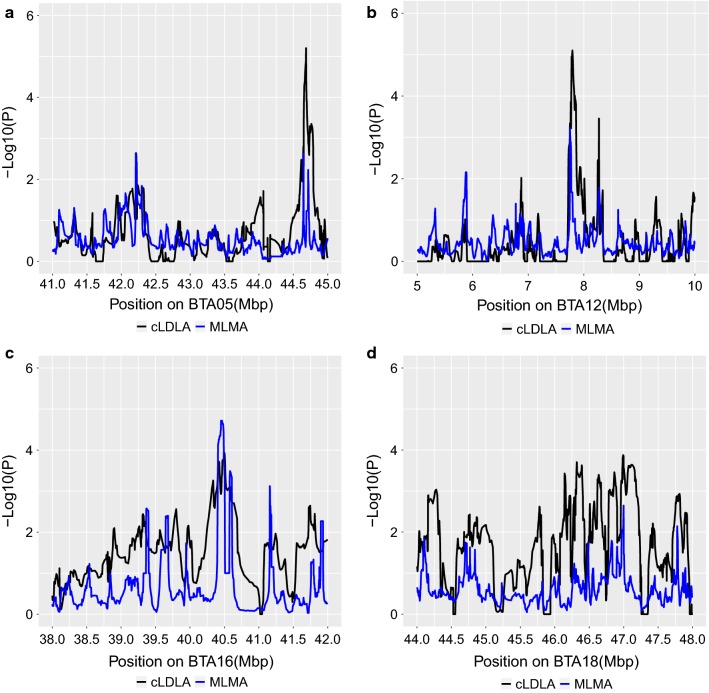
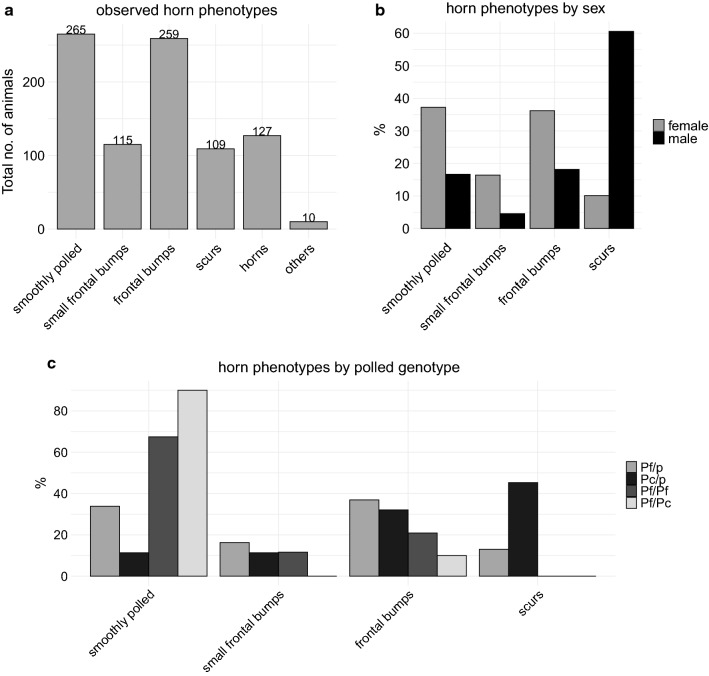
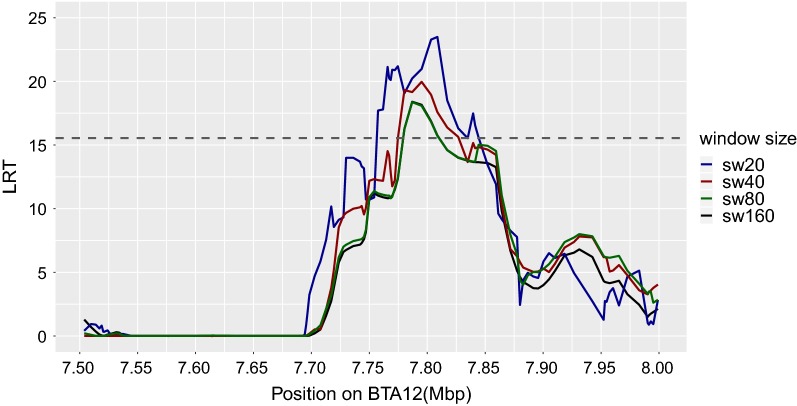
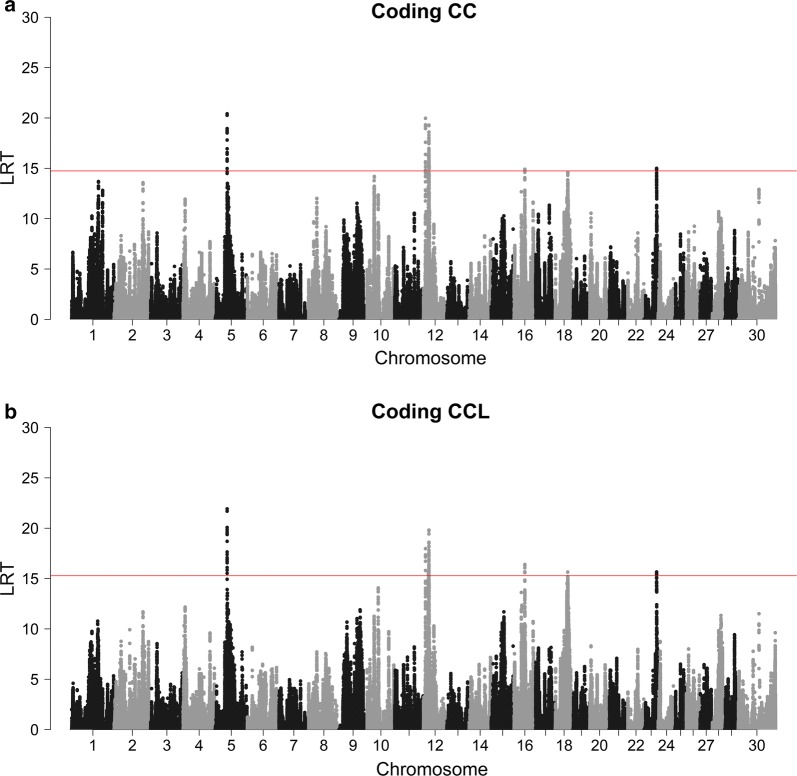
The results of an exploratory data analysis indicated that the expression of scurs depends on age at phenotyping, sex and polled genotype. Scurs were more prevalent in males than in females. Moreover, homozygous polled animals did not express any pronounced scurs and we found that the Friesian polled allele suppresses the development of scurs more efficiently than the Celtic polled allele. Combined linkage and linkage disequilibrium mapping revealed four genome-wide significant loci that affect the development of scurs, one on BTA5 and three on BTA12. Moreover, suggestive associations were detected on BTA16, 18 and 23. The mixed linear model-based association analysis supports the results of the combined linkage and linkage disequilibrium analysis. None of the mapping approaches provided convincing evidence for a monogenic inheritance of scurs.
Our results contradict the initial and still broadly accepted model for the inheritance of horns and scurs. We hypothesise an oligogenetic model to explain the development of scurs and polledness.
培育无角的、即去角的牛种,为牛提供了一种对动物福利友好且非侵入性的替代去角方法。然而,牛角发育的分子调控仍知之甚少。研究去角和短角等遗传特征,可以为这一过程提供有价值的见解。短角是一种牛角样的结构,在培育去角牛时,偶尔会出现各种大小和形式的意想不到的表型。
我们提供了一个独特的数据集,其中包含 885 头荷斯坦-弗里生牛,具有去角的遗传背景。对牛的角表型进行了仔细检查,并描述了该性状的表型异质性。使用直接的去角基因测试,确定了动物的去角基因型。随后,使用 232 头动物的高密度基因型数据和两种映射方法:混合线性模型关联分析和结合连锁不平衡和连锁分析,研究了短角的假定位置。
探索性数据分析的结果表明,短角的表达取决于表型年龄、性别和去角基因型。雄性比雌性更常见短角。此外,纯合去角动物没有表现出任何明显的短角,我们发现弗里生去角等位基因比凯尔特去角等位基因更有效地抑制短角的发育。联合连锁和连锁不平衡作图显示了四个影响短角发育的全基因组显著位点,一个位于 BTA5 上,三个位于 BTA12 上。此外,在 BTA16、18 和 23 上还检测到了提示性关联。基于混合线性模型的关联分析支持了联合连锁和连锁不平衡分析的结果。没有一种映射方法为短角的单基因遗传提供了令人信服的证据。
我们的结果与角和短角遗传的初始且广泛接受的模型相矛盾。我们假设一个寡基因模型来解释短角和去角的发育。