Research Center for Subtropical Fisheries, Seikai National Fisheries Research Institute, Japan Fisheries Research and Education Agency, Ishigaki, Okinawa 907-0451, Japan
Department of Marine Bioscience, Graduate School of Marine Science and Technology, Tokyo University of Marine Science and Technology, Minato, Tokyo 108-8477, Japan.
Biol Open. 2020 Feb 25;9(2):bio049247. doi: 10.1242/bio.049247.
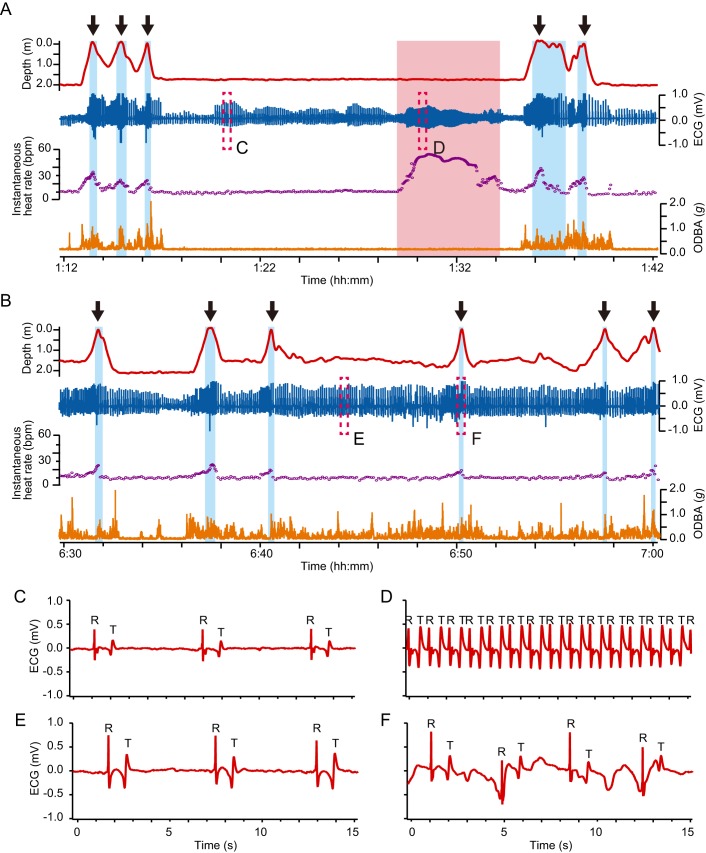
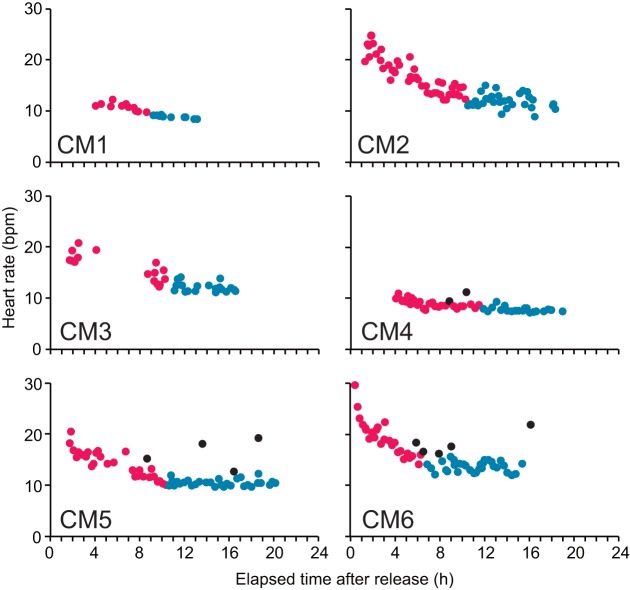
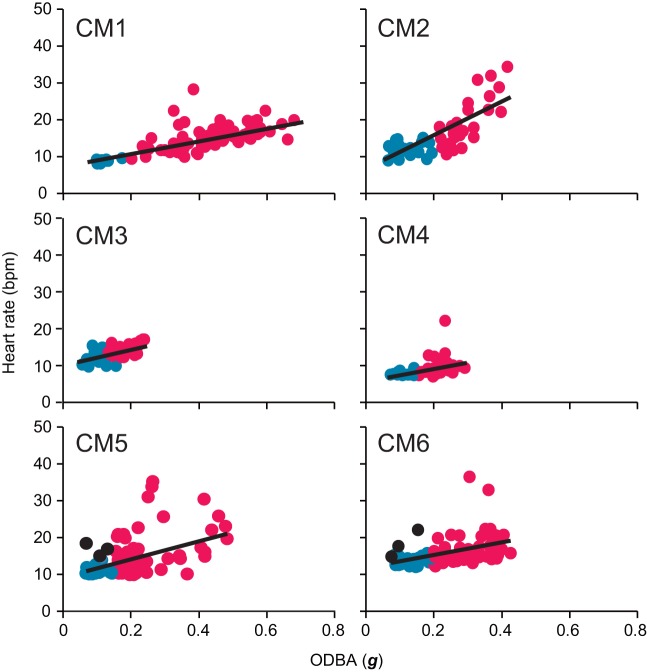
In chelonids, oxygen is primarily stored in the lungs during a dive. Therefore, management of blood oxygen transportation to peripheral tissues by cardiovascular adjustments during submergence is crucial to maximize their dive duration, and consequently, the time spent for ecological activities such as foraging. However, the cardiac response to exercise has rarely been examined in sea turtles. In this study, heart rate and its relationship with exercise during voluntary dives were determined in six captive green turtles (19.4±1.5 kg) by simultaneously recording depth, acceleration and electrocardiogram. Our results demonstrated that the heart rate of green turtles was generally low (11.1±0.4 bpm) during resting dives, but they often exhibited instantaneously extreme tachycardia (up to 78.4 bpm). Green turtles elevated their heart rate up to 39.8±1.5 bpm during ventilation after resting dives, while up to 33.1±1.4 bpm after active dives. The heart rate immediately elevated with onset of exercise, and increased linearly with exercise. This result may indicate that turtles immediately need to transport oxygen from the lungs to peripheral tissues by pulmonary and systemic circulations to meet the metabolic demands of exercise because they mainly store oxygen in their lungs.
在龟鳖目动物中,氧气主要在潜水过程中储存在肺部。因此,心血管系统在潜水时对血液中氧气向周围组织运输的调节对于最大限度地延长潜水时间至关重要,从而延长海龟的觅食等生态活动时间。然而,海龟的心脏对运动的反应很少被研究。在这项研究中,通过同时记录深度、加速度和心电图,我们确定了 6 只圈养绿海龟(19.4±1.5kg)在自愿潜水时的心率及其与运动的关系。结果表明,绿海龟在休息潜水中的心率通常较低(11.1±0.4bpm),但它们经常会出现瞬间的极度心动过速(高达 78.4bpm)。绿海龟在休息潜水后的通气过程中,心率升高到 39.8±1.5bpm,而在主动潜水后则升高到 33.1±1.4bpm。心率随着运动的开始而立即升高,并随运动线性增加。这一结果可能表明,海龟需要立即通过肺循环和体循环将氧气从肺部输送到周围组织,以满足运动的代谢需求,因为它们主要将氧气储存在肺部。