He Qiang, Liu Hui, Huang Chuxin, Wang Renchun, Luo Minhua, Lu Wei
Department of Neurology, The Second Xiangya Hospital, Central South University, Changsha, China.
The Second Clinical Medicine School, Lanzhou University, Lanzhou, China.
Front Mol Neurosci. 2020 Jan 24;13:2. doi: 10.3389/fnmol.2020.00002. eCollection 2020.
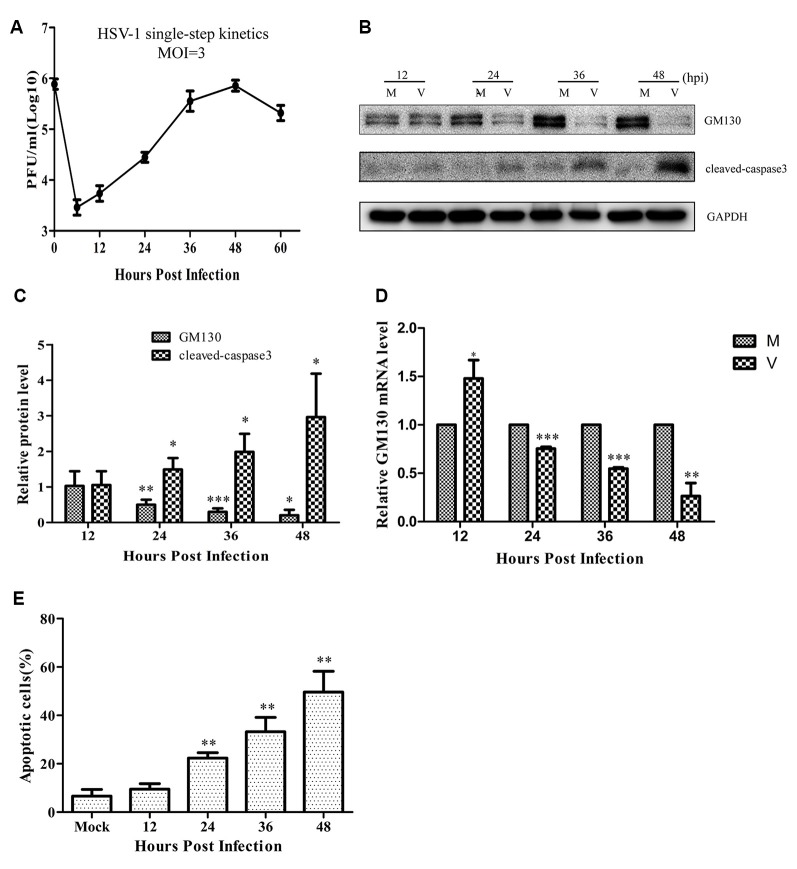
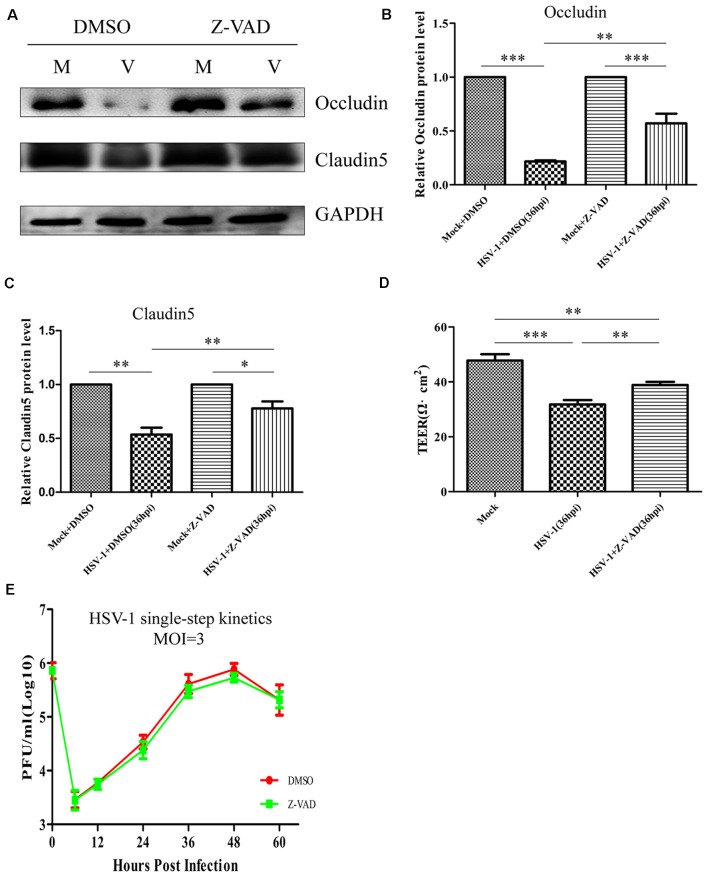
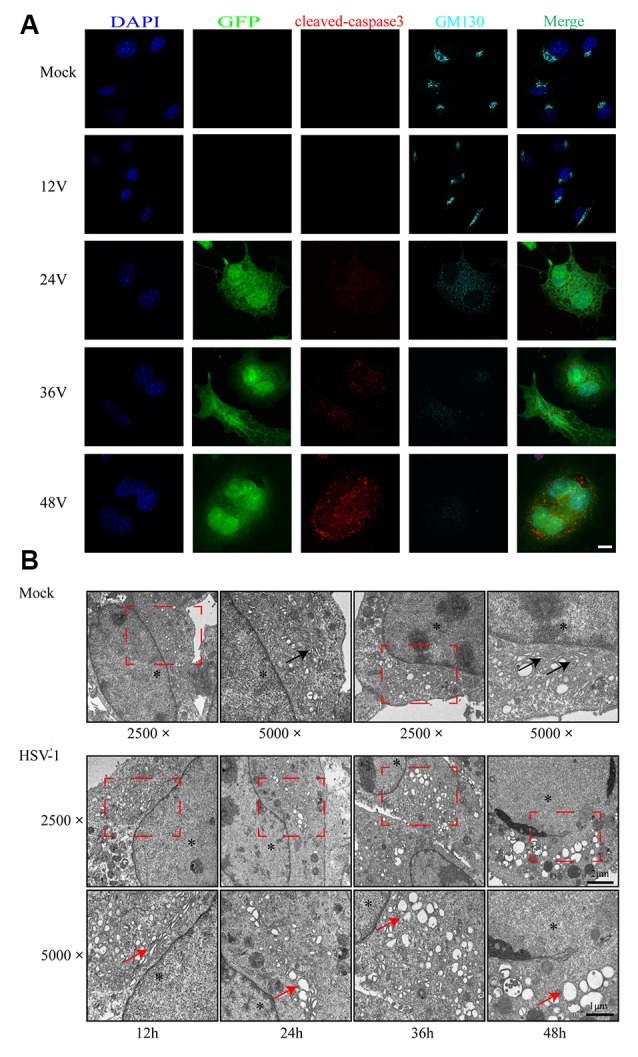
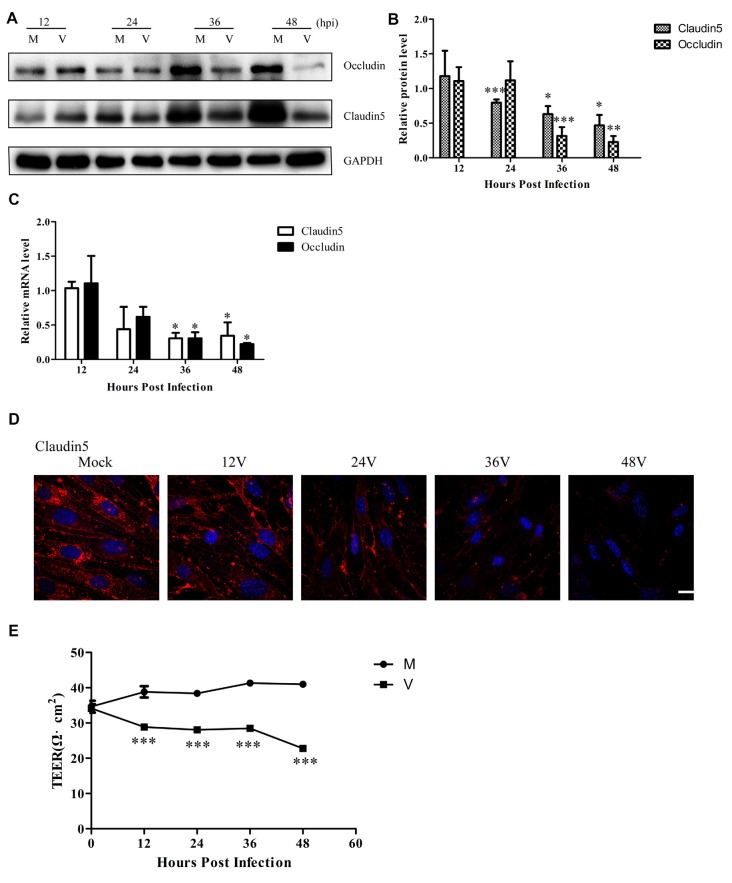
Herpes simplex encephalitis (HSE) caused by herpes simplex virus 1 (HSV-1) infection can lead to a high mortality rate and severe neurological sequelae. The destruction of the blood-brain barrier (BBB) is an important pathological mechanism for the development of HSE. However, the specific mechanism underlying the BBB destruction remains unclear. Our previous study found that the Golgi apparatus (GA) plays a crucial role in maintaining the integrity of the BBB. Therefore, this present study aimed to investigate the role of the GA in the destruction of the BBB and its underlying mechanisms. Mouse brain endothelial cells (Bend.3) were cultured to establish a BBB model , and then infected with HSV-1. The results showed that HSV-1 infection caused downregulation of the Golgi-associated protein GM130, accompanied by Golgi fragmentation, cell apoptosis, and downregulation of tight junction proteins occludin and claudin 5. Knockdown of GM130 with small interfering RNA in uninfected Bend.3 cells triggered Golgi fragmentation, apoptosis, and downregulation of occludin and claudin 5. However, overexpression of GM130 in HSV-1 infected Bend.3 cells by transient transfection partially attenuated the aforementioned damage caused by HSV-1 infection. When the pan-caspase inhibitor Z-VAD-fmk was used after HSV-1 infection to inhibit apoptosis, the protein levels of GM130, occludin and claudin 5 were partially restored. Taken together, these observations indicate that HSV-1 infection of Bend.3 cells triggers a GM130-mediated Golgi stress response that is involved in apoptosis, which in turn results in downregulation of occludin and claudin 5 protein levels. Meanwhile, GM130 downregulation is partially due to apoptosis triggered by HSV-1 infection. Our findings reveal an association between the GA and the BBB during HSV-1 infection and identify potentially novel targets for protecting the BBB and therapeutic approaches for patients with HSE.
由单纯疱疹病毒1型(HSV-1)感染引起的单纯疱疹性脑炎(HSE)可导致高死亡率和严重的神经后遗症。血脑屏障(BBB)的破坏是HSE发生发展的重要病理机制。然而,BBB破坏的具体机制仍不清楚。我们之前的研究发现,高尔基体(GA)在维持BBB的完整性方面起着关键作用。因此,本研究旨在探讨GA在BBB破坏中的作用及其潜在机制。培养小鼠脑内皮细胞(Bend.3)以建立BBB模型,然后用HSV-1感染。结果显示,HSV-1感染导致高尔基体相关蛋白GM130表达下调,同时伴有高尔基体碎片化、细胞凋亡以及紧密连接蛋白occludin和claudin 5表达下调。在未感染的Bend.3细胞中用小干扰RNA敲低GM130会引发高尔基体碎片化、细胞凋亡以及occludin和claudin 5表达下调。然而,通过瞬时转染在HSV-1感染的Bend.3细胞中过表达GM130可部分减轻HSV-1感染引起的上述损伤。当在HSV-1感染后使用泛半胱天冬酶抑制剂Z-VAD-fmk抑制细胞凋亡时,GM130、occludin和claudin 5的蛋白水平部分恢复。综上所述,这些观察结果表明,Bend.3细胞的HSV-1感染引发了GM130介导的高尔基体应激反应,并参与细胞凋亡,进而导致occludin和claudin 5蛋白水平下调。同时,GM130下调部分归因于HSV-1感染引发的细胞凋亡。我们的研究结果揭示了HSV-1感染期间GA与BBB之间的关联,并确定了保护BBB的潜在新靶点以及HSE患者的治疗方法。