Government General Hospital, Guntur Medical College, Guntur, India.
Department of Neurosurgery, Massachusetts General Hospital and Harvard Medical School, Boston, MA, United States.
Front Immunol. 2020 Jan 21;10:3137. doi: 10.3389/fimmu.2019.03137. eCollection 2019.
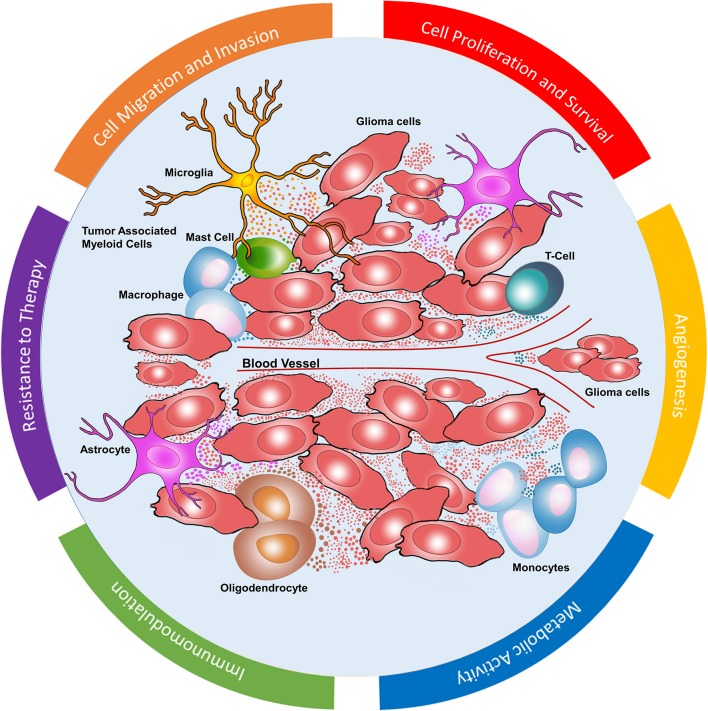
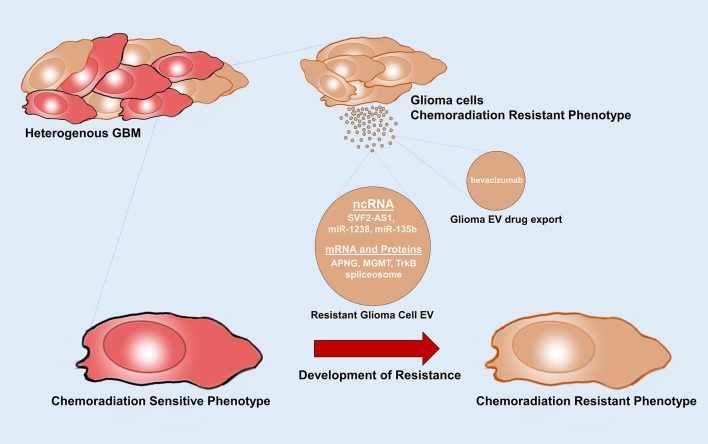
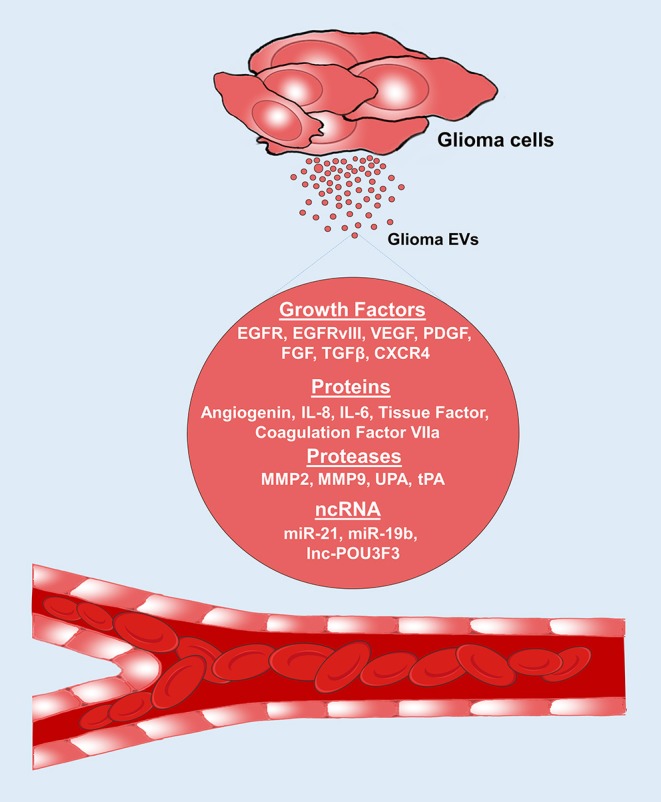
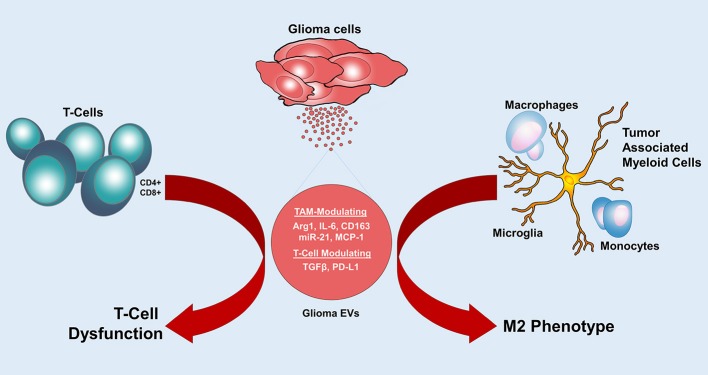
Glioblastomas (GBM) are highly aggressive primary brain tumors. Complex and dynamic tumor microenvironment (TME) plays a crucial role in the sustained growth, proliferation, and invasion of GBM. Several means of intercellular communication have been documented between glioma cells and the TME, including growth factors, cytokines, chemokines as well as extracellular vesicles (EVs). EVs carry functional genomic and proteomic cargo from their parental cells and deliver that information to surrounding and distant recipient cells to modulate their behavior. EVs are emerging as crucial mediators of establishment and maintenance of the tumor by modulating the TME into a tumor promoting system. Herein we review recent literature in the context of GBM TME and the means by which EVs modulate tumor proliferation, reprogram metabolic activity, induce angiogenesis, escape immune surveillance, acquire drug resistance and undergo invasion. Understanding the multifaceted roles of EVs in the niche of GBM TME will provide invaluable insights into understanding the biology of GBM and provide functional insights into the dynamic EV-mediated intercellular communication during gliomagenesis, creating new opportunities for GBM diagnostics and therapeutics.
胶质母细胞瘤(GBM)是高度侵袭性的原发性脑肿瘤。复杂而动态的肿瘤微环境(TME)在 GBM 的持续生长、增殖和侵袭中起着至关重要的作用。已经记录了胶质瘤细胞与 TME 之间的几种细胞间通讯方式,包括生长因子、细胞因子、趋化因子以及细胞外囊泡(EVs)。EVs 从其亲本细胞携带功能基因组和蛋白质组货物,并将这些信息传递给周围和远处的受体细胞,以调节它们的行为。EVs 通过将 TME 调节为促进肿瘤的系统,正在成为建立和维持肿瘤的重要介质。本文综述了 GBM TME 中 EV 调节肿瘤增殖、重新编程代谢活性、诱导血管生成、逃避免疫监视、获得耐药性和侵袭的最新文献。了解 EV 在 GBM TME 中的多方面作用将为深入了解 GBM 的生物学提供宝贵的见解,并为在神经胶质瘤发生过程中 EV 介导的细胞间动态通讯提供功能见解,为 GBM 的诊断和治疗创造新的机会。