Borjan Bojana, Kern Johann, Steiner Normann, Gunsilius Eberhard, Wolf Dominik, Untergasser Gerold
Department of Internal Medicine V, Innsbruck Medical University, Innsbruck, Austria.
Experimental Oncogenomics Group, Tyrolean Cancer Research Institute, Innsbruck, Austria.
Front Oncol. 2020 Jan 22;9:1530. doi: 10.3389/fonc.2019.01530. eCollection 2019.
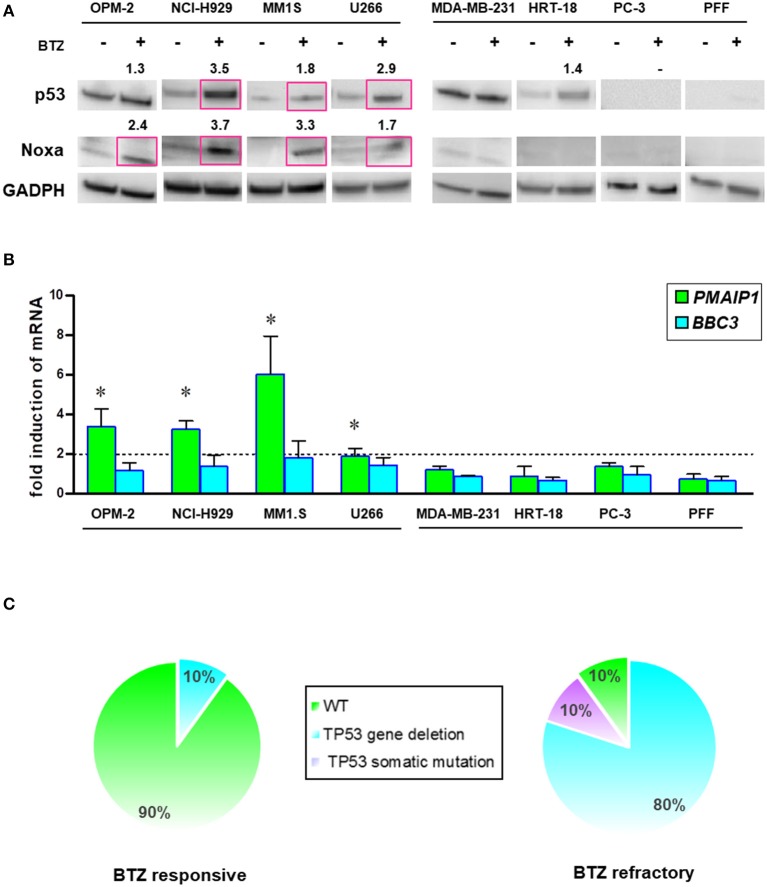
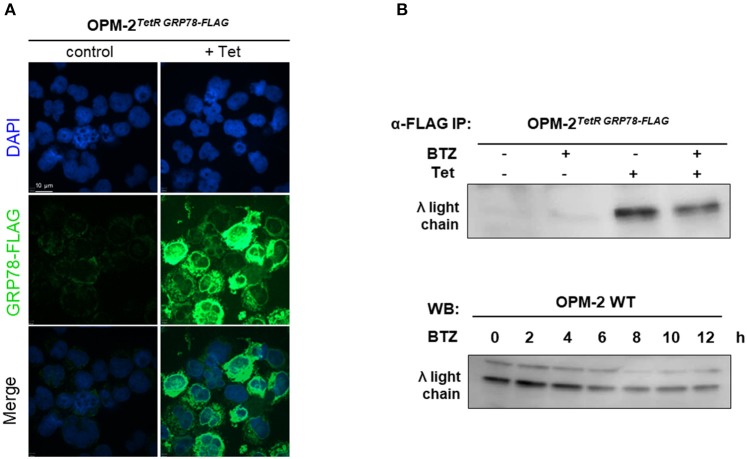
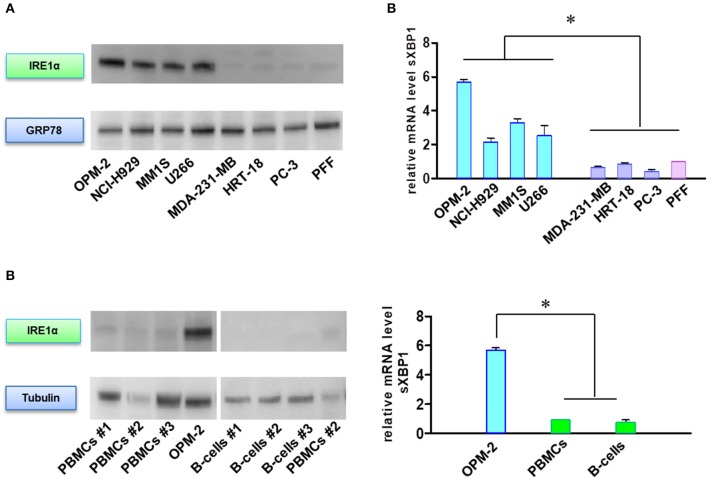
Mechanisms mediating resistance against the proteasome inhibition by bortezomib (BTZ) in multiple myeloma (MM) cells are still unclear. We analyzed the activation of the unfolded protein response (UPR), induction of prosurvival, and apoptotic pathways after proteasome inhibition in BTZ-sensitive and -resistant cells. Thereafter, these findings from tissue culture were proofed on MM cells of BTZ-sensitive and BTZ-refractory patients. Proteasomal and ABC transporter activities were measured in sensitive and resistant cell lines by the use of the respective substrates. TP53 gene loss and mutations were determined by cytogenetics and targeted NGS. UPR pathways, proteasome subunit levels and protein secretion were studied by Western Blot analysis, and apoptosis was determined by flow cytometry. MM cell lines were stably transfected with inducible GRP78 expression to study unfolded protein expression. Transient knock-down of GRP78 was done by RNA interference. Splicing of XBP1 and expression of GRP78 was studied by real-time PCR in CD138-enriched MM primary cells of BTZ-refractory and -sensitive patients. BTZ-sensitive cells displayed lower basal proteasomal activities. Similar activities of all three major ABC transporter proteins were detected in BTZ-sensitive and resistant cells. Sensitive cells showed deficiencies in triggering canonical prosurvival UPR provoked by endoplasmic reticulum (ER) stress induction. BTZ treatment did not increase unfolded protein levels or induced GRP78-mediated UPR. BTZ-resistant cells and BTZ-refractory patients exhibited lower sXBP1 levels. Apoptosis of BTZ-sensitive cells was correlating with induction of p53 and NOXA. Tumor cytogenetics and NGS analysis revealed more frequent deletions and mutations in BTZ-refractory MM patients. We identified low sXBP1 levels and abnormalities as factors correlating with bortezomib resistance in MM. Therefore, determination of sXBP1 levels and status prior to BTZ treatment in MM may be beneficial to predict BTZ resistance.
在多发性骨髓瘤(MM)细胞中,介导对硼替佐米(BTZ)蛋白酶体抑制产生抗性的机制仍不清楚。我们分析了BTZ敏感和抗性细胞中蛋白酶体抑制后未折叠蛋白反应(UPR)的激活、促生存诱导和凋亡途径。此后,在BTZ敏感和BTZ难治性患者的MM细胞上验证了这些组织培养结果。通过使用各自的底物,在敏感和抗性细胞系中测量蛋白酶体和ABC转运蛋白活性。通过细胞遗传学和靶向NGS确定TP53基因缺失和突变。通过蛋白质印迹分析研究UPR途径、蛋白酶体亚基水平和蛋白质分泌,并通过流式细胞术确定凋亡。用可诱导的GRP78表达稳定转染MM细胞系以研究未折叠蛋白表达。通过RNA干扰进行GRP78的瞬时敲低。通过实时PCR在BTZ难治性和敏感患者的CD138富集的MM原代细胞中研究XBP1的剪接和GRP78的表达。BTZ敏感细胞显示出较低的基础蛋白酶体活性。在BTZ敏感和抗性细胞中检测到所有三种主要ABC转运蛋白的相似活性。敏感细胞在内质网(ER)应激诱导引发的经典促生存UPR触发方面存在缺陷。BTZ处理未增加未折叠蛋白水平或诱导GRP78介导的UPR。BTZ抗性细胞和BTZ难治性患者表现出较低的sXBP1水平。BTZ敏感细胞的凋亡与p53和NOXA的诱导相关。肿瘤细胞遗传学和NGS分析显示BTZ难治性MM患者中缺失和突变更频繁。我们确定低sXBP1水平和异常是与MM中硼替佐米抗性相关的因素。因此,在MM中BTZ治疗前测定sXBP1水平和状态可能有助于预测BTZ抗性。