Abe Hideaki, Natsumeda Manabu, Okada Masayasu, Watanabe Jun, Tsukamoto Yoshihiro, Kanemaru Yu, Yoshimura Junichi, Oishi Makoto, Hashizume Rintaro, Kakita Akiyoshi, Fujii Yukihiko
Department of Neurosurgery, Brain Research Institute, Niigata University, Niigata, Japan.
Department of Neurological Surgery, Northwestern University Feinberg School of Medicine, Chicago, IL, United States.
Front Oncol. 2020 Jan 21;9:1568. doi: 10.3389/fonc.2019.01568. eCollection 2019.
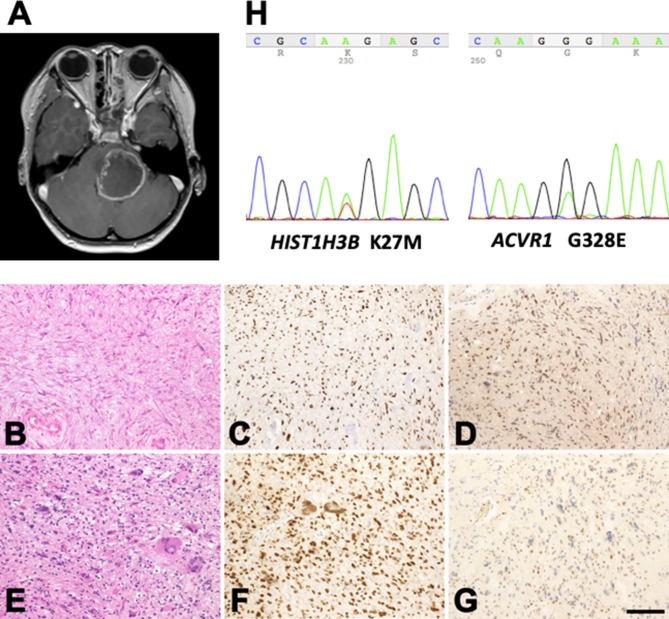
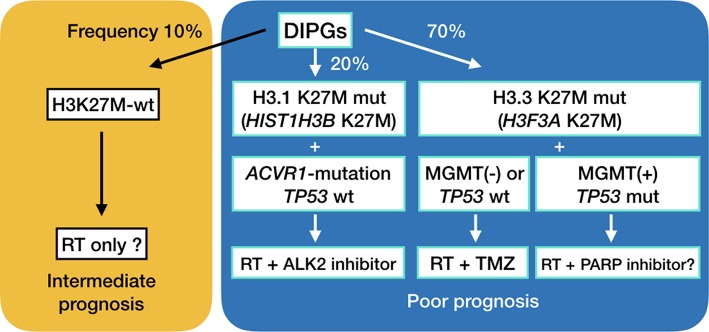
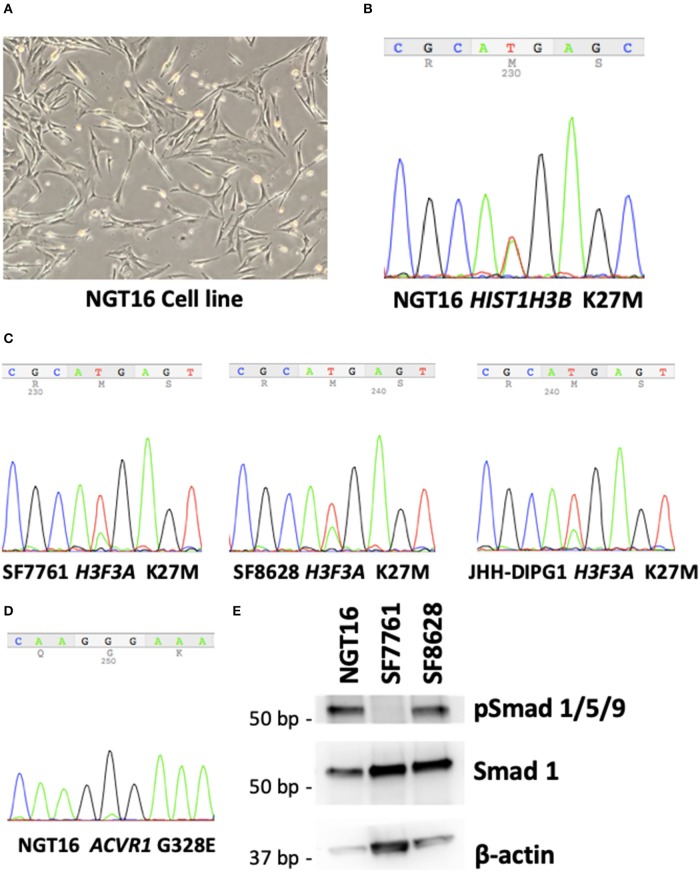
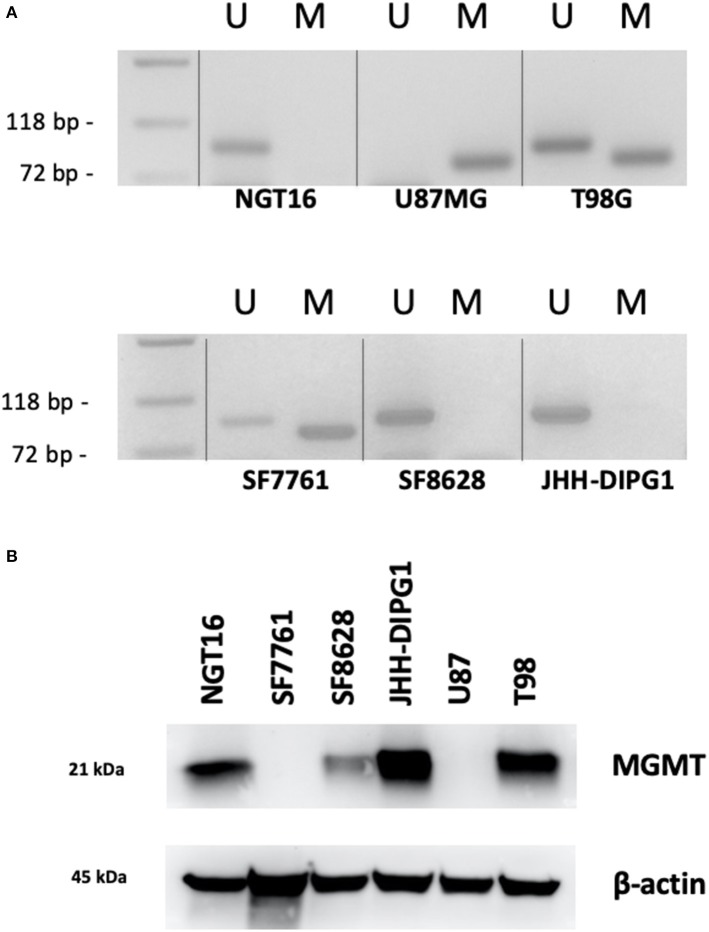
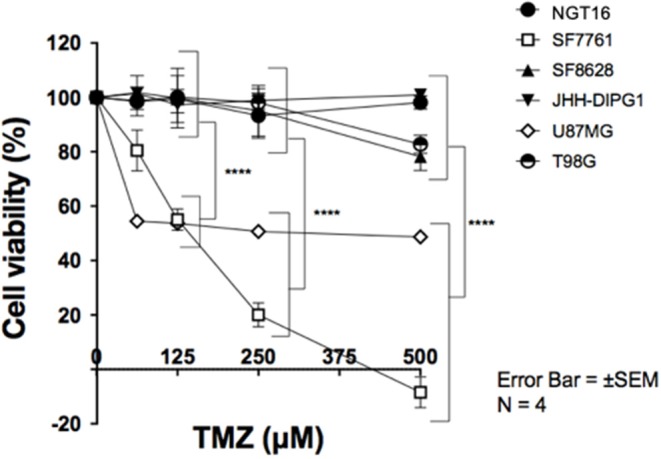
Diffuse midline gliomas (DMGs) show resistance to many chemotherapeutic agents including temozolomide (TMZ). Histone gene mutations in DMGs trigger epigenetic changes including DNA hypomethylation, one of which is a frequent lack of O6-methyl-guanine-DNA methyltransferase () promoter methylation, resulting in increased MGMT expression. We established the NGT16 cell line with K27M and G328E gene mutations from a DMG patient and used this cell line and other DMG cell lines with gene mutation (SF7761, SF8628, JHH-DIPG1) to analyze promoter methylation, MGMT protein expression, and response to TMZ. Three out of 4 DMG cell lines (NGT16, SF8628, and JHH-DIPG1) had unmethylated promoter, increased MGMT expression, and showed resistance to TMZ treatment. SF7761 cells with gene mutation showed promoter methylation, lacked MGMT expression, and sensitivity to TMZ treatment. NGT16 line showed response to ALK2 inhibitor K02288 treatment . We confirmed that MGMT expression contributes to TMZ resistance in DMG cell lines. There is an urgent need to develop new strategies to treat TMZ-resistant DMGs.
弥漫性中线胶质瘤(DMG)对包括替莫唑胺(TMZ)在内的多种化疗药物具有抗性。DMG中的组蛋白基因突变引发表观遗传变化,包括DNA低甲基化,其中之一是O6-甲基鸟嘌呤-DNA甲基转移酶(MGMT)启动子甲基化频繁缺失,导致MGMT表达增加。我们从一名DMG患者中建立了具有K27M和G328E基因突变的NGT16细胞系,并使用该细胞系以及其他具有MGMT基因突变的DMG细胞系(SF7761、SF8628、JHH-DIPG1)来分析MGMT启动子甲基化、MGMT蛋白表达以及对TMZ的反应。4个DMG细胞系中的3个(NGT16、SF8628和JHH-DIPG1)具有未甲基化的MGMT启动子,MGMT表达增加,并且对TMZ治疗表现出抗性。具有MGMT基因突变的SF7761细胞显示出MGMT启动子甲基化,缺乏MGMT表达,并且对TMZ治疗敏感。NGT16细胞系对ALK2抑制剂K02288治疗有反应。我们证实MGMT表达促成了DMG细胞系对TMZ的抗性。迫切需要开发新的策略来治疗对TMZ耐药的DMG。