Ramanujam Venkatraman, Shen Yang, Ying Jinfa, Mobli Mehdi
Centre for Advanced Imaging, The University of Queensland, St Lucia, QLD, Australia.
Laboratory of Chemical Physics, National Institute of Diabetes and Digestive and Kidney Diseases, Bethesda, MD, United States.
Front Chem. 2020 Jan 22;7:889. doi: 10.3389/fchem.2019.00889. eCollection 2019.
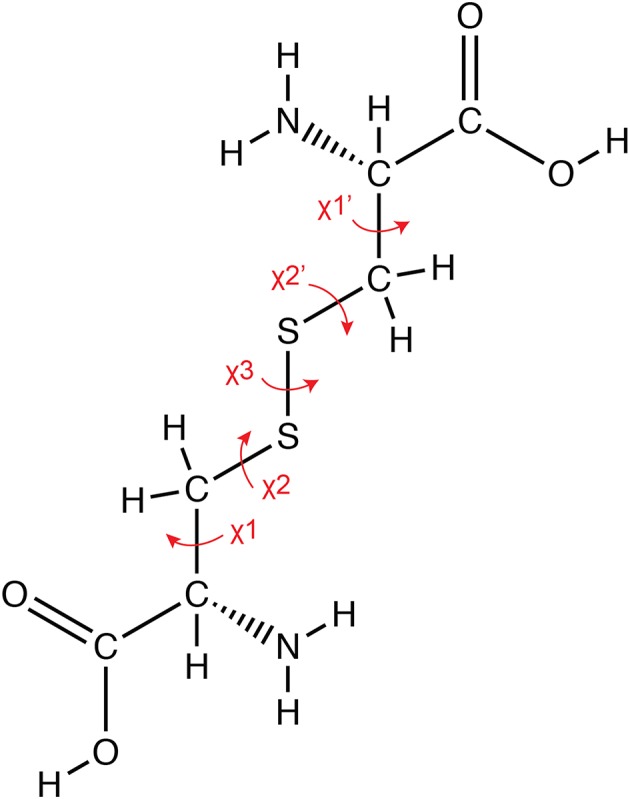
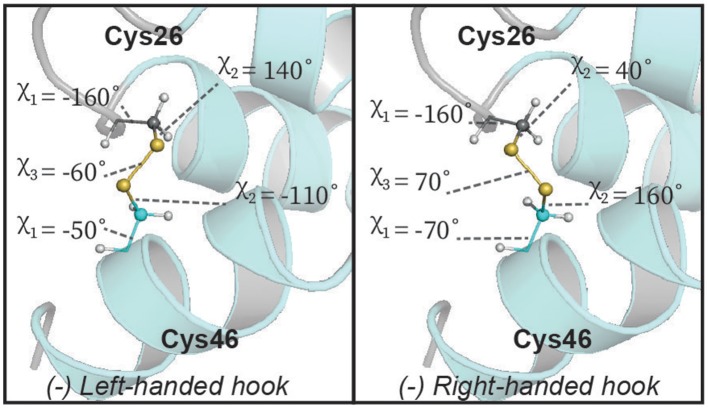
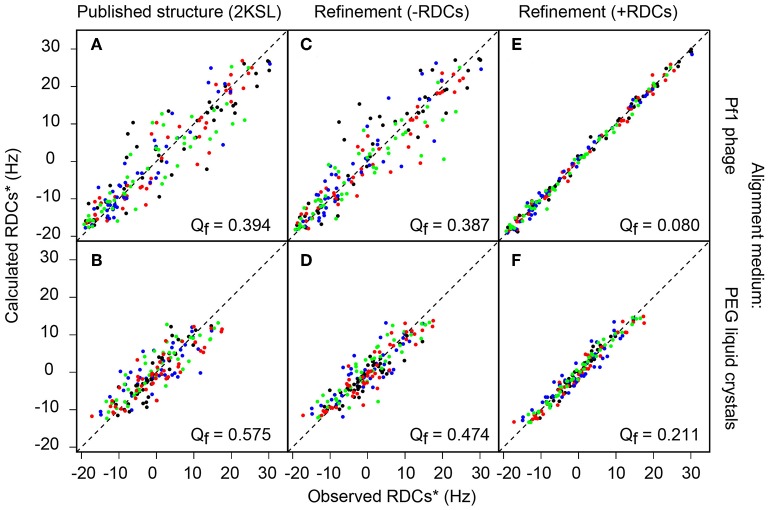
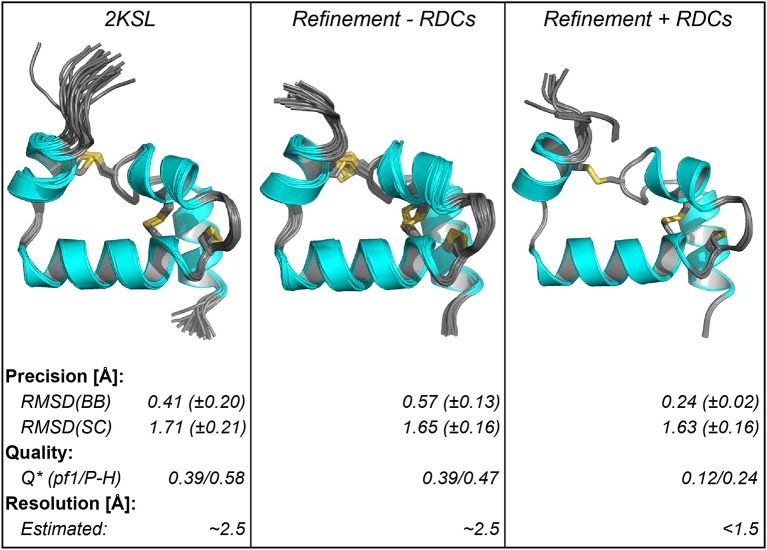
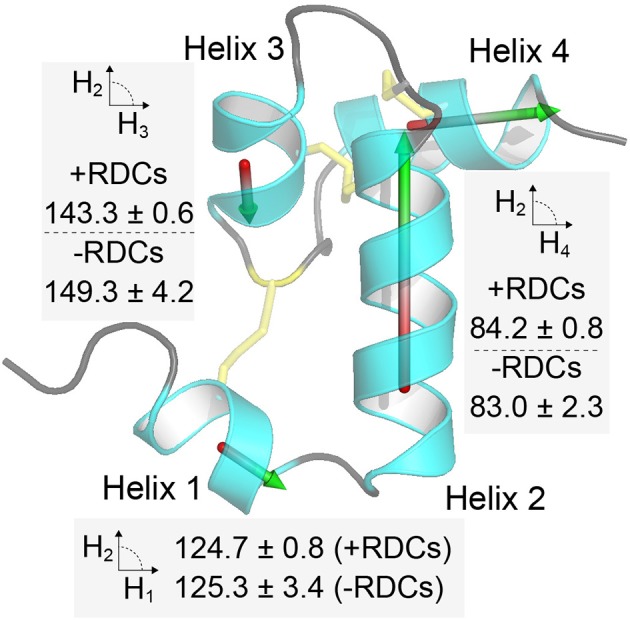
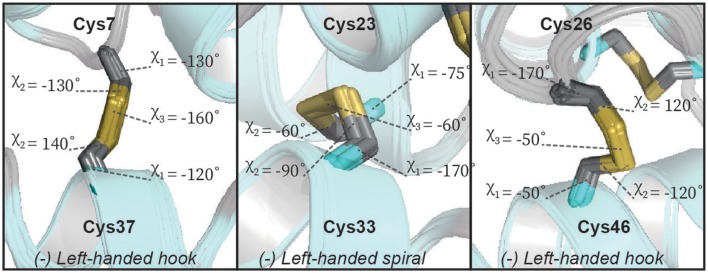
Disulfide bridges in proteins are formed by the oxidation of pairs of cysteine residues. These cross-links play a critical role in stabilizing the 3D-structure of small disulfide rich polypeptides such as hormones and venom toxins. The arrangement of the multiple disulfide bonds directs the peptide fold into distinct structural motifs that have evolved for resistance against biochemical and physical insults. These structural scaffolds have, therefore, proven to be very attractive in bioengineering efforts to develop novel biologics with applications in health and agriculture. Structural characterization of small disulfide rich peptides (DRPs) presents unique challenges when using commonly applied biophysical methods. NMR is the most commonly used method for studying such molecules, where the relatively small size of these molecules results in highly precise structural ensembles defined by a large number of distance and dihedral angle restraints per amino acid. However, in NMR the sulfur atoms that are involved in three of the five dihedral angles in a disulfide bond cannot be readily measured. Given the central role of disulfide bonds in the structure of these molecules, it is unclear what the inherent resolution of such NMR structures is when using traditional NMR methods. Here, we use an extensive set of long-range residual dipolar couplings (RDCs) to assess the resolution of the NMR structure of a disulfide-rich peptide. We find that structures based primarily on NOEs, yield ensembles that are equivalent to a crystallographic resolution of 2-3 Å in resolution, and that incorporation of RDCs reduces this to ~1-1.5 Å resolution. At this resolution the sidechain of ordered amino acids can be defined accurately, allowing the geometry of the cysteine bridges to be better defined, and allowing for disulfide-bond connectivities to be determined with high confidence. The observed improvements in resolution when using RDCs is remarkable considering the small size of these peptides.
蛋白质中的二硫键由成对的半胱氨酸残基氧化形成。这些交联在稳定富含二硫键的小多肽(如激素和毒液毒素)的三维结构中起着关键作用。多个二硫键的排列将肽折叠引导成不同的结构基序,这些基序已经进化以抵抗生化和物理损伤。因此,这些结构支架在生物工程中被证明非常有吸引力,用于开发在健康和农业中有应用的新型生物制品。当使用常用的生物物理方法时,富含二硫键的小肽(DRP)的结构表征存在独特的挑战。核磁共振(NMR)是研究此类分子最常用的方法,这些分子相对较小的尺寸导致由每个氨基酸大量的距离和二面角约束定义的高精度结构集合。然而,在NMR中,二硫键中五个二面角中的三个所涉及的硫原子不易测量。鉴于二硫键在这些分子结构中的核心作用,使用传统NMR方法时,此类NMR结构的固有分辨率尚不清楚。在这里,我们使用大量的远程残余偶极耦合(RDC)来评估富含二硫键肽的NMR结构的分辨率。我们发现,主要基于核Overhauser效应(NOE)的结构产生的集合相当于晶体学分辨率为2-3埃,并且纳入RDC将其降低到约1-1.5埃的分辨率。在这个分辨率下,可以准确地定义有序氨基酸的侧链,从而更好地定义半胱氨酸桥的几何形状,并能够高置信度地确定二硫键的连接性。考虑到这些肽的小尺寸,使用RDC时观察到的分辨率提高是显著的。