Section of Structural Biology, Department of Infectious Diseases, Faculty of Medicine, Imperial College London, London, United Kingdom.
Department of Life Sciences, Faculty of Natural Sciences, Imperial College London, London, United Kingdom.
Elife. 2020 Feb 10;9:e52125. doi: 10.7554/eLife.52125.
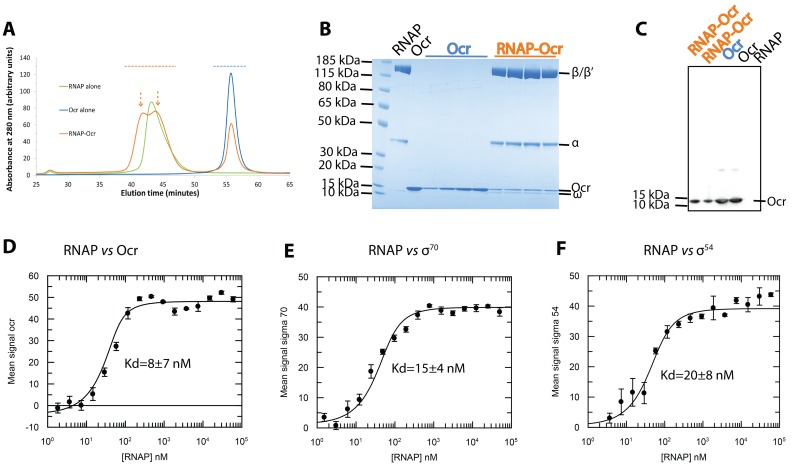
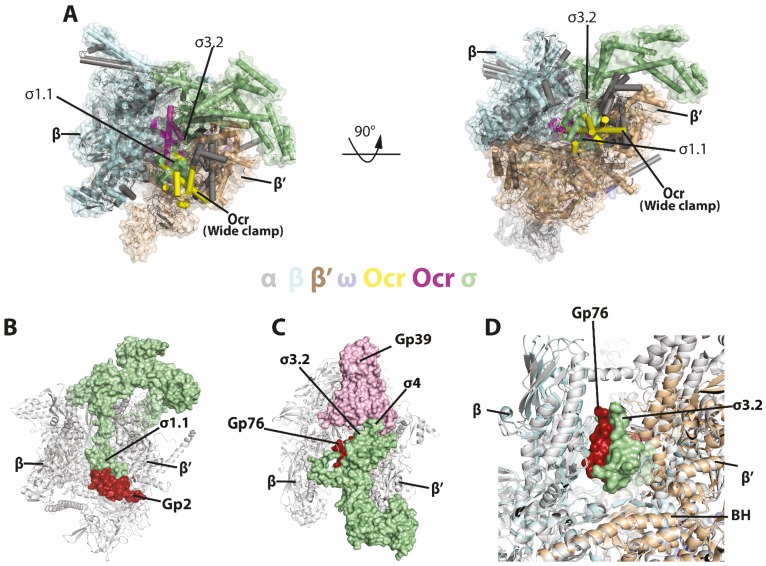
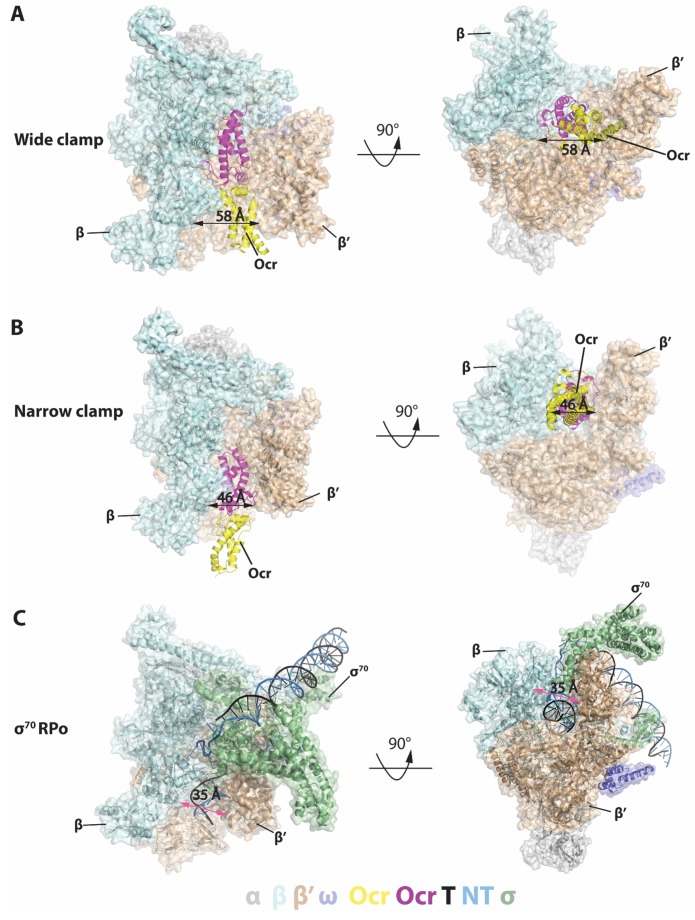
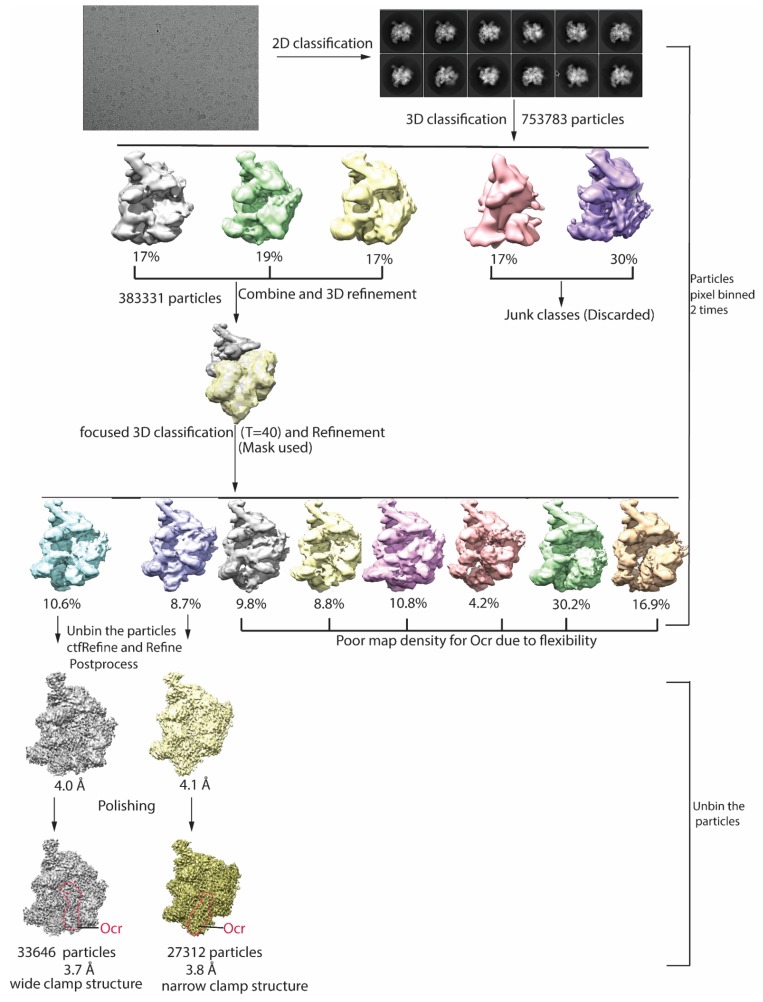
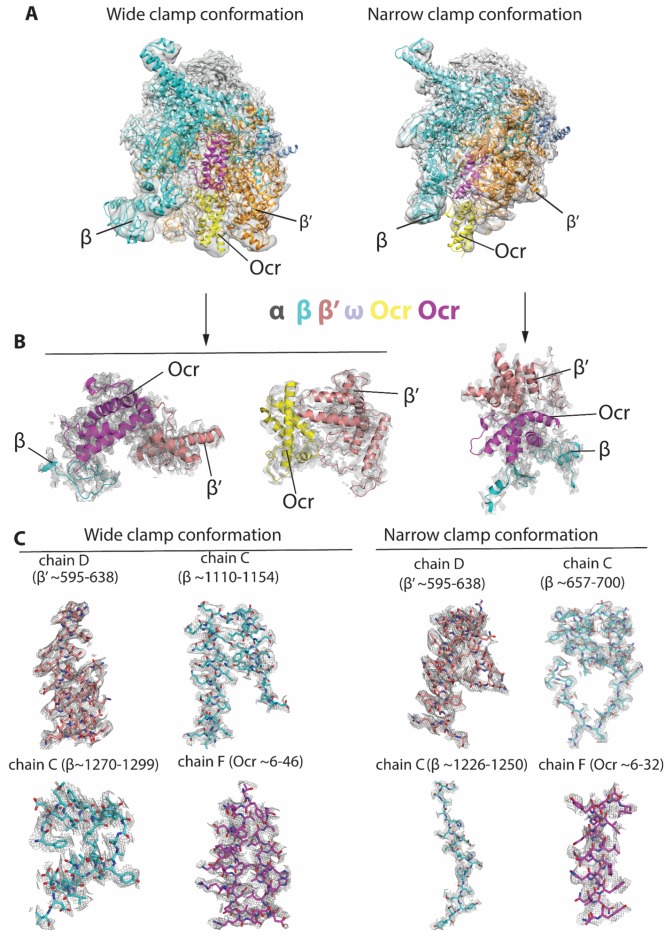
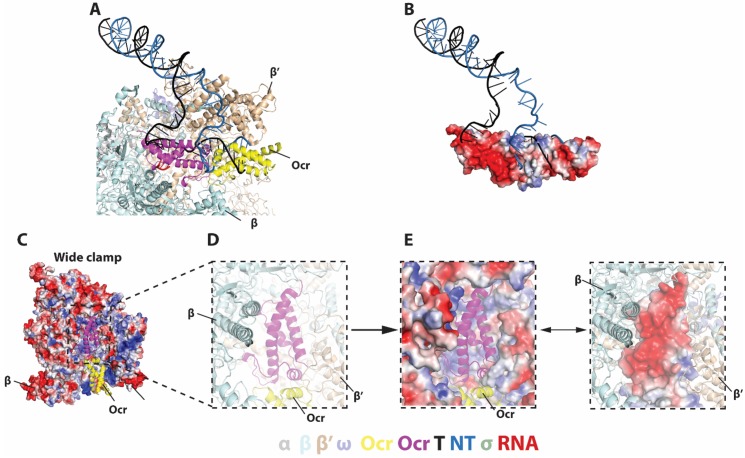
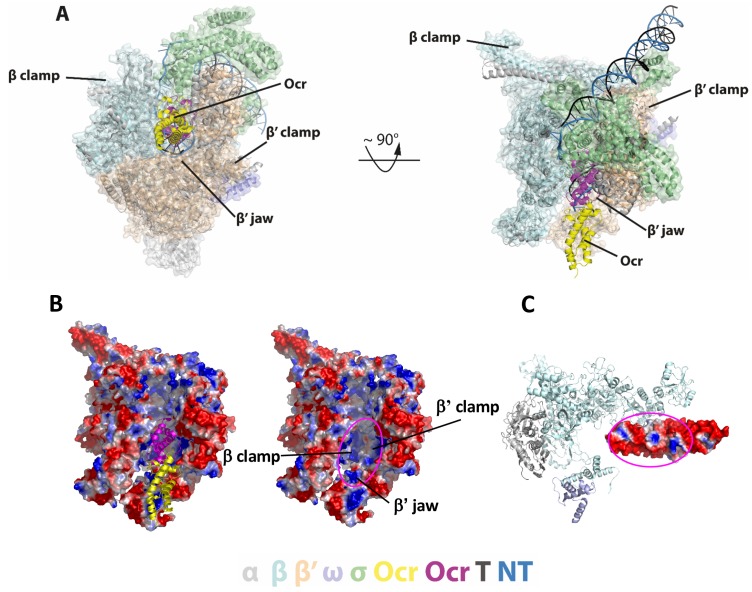
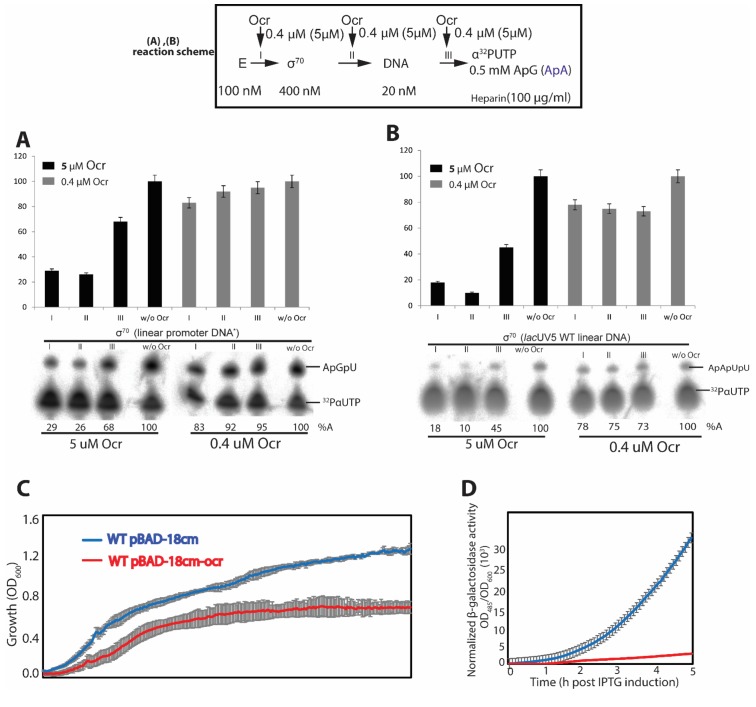
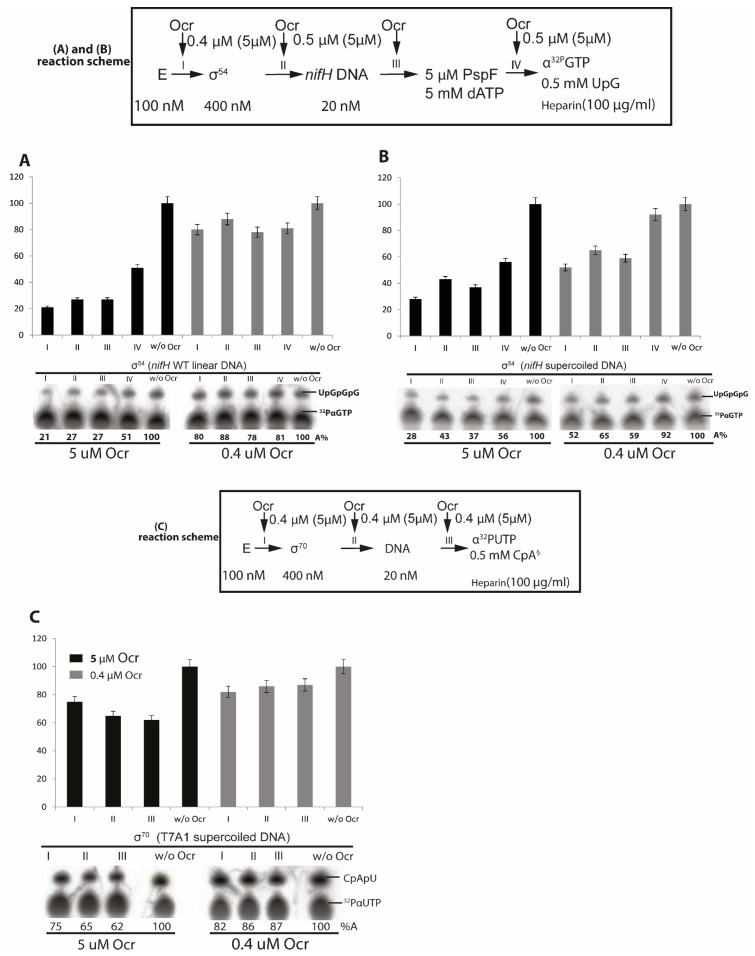
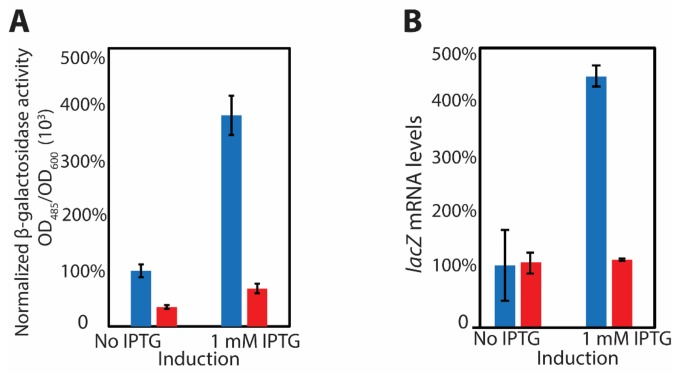
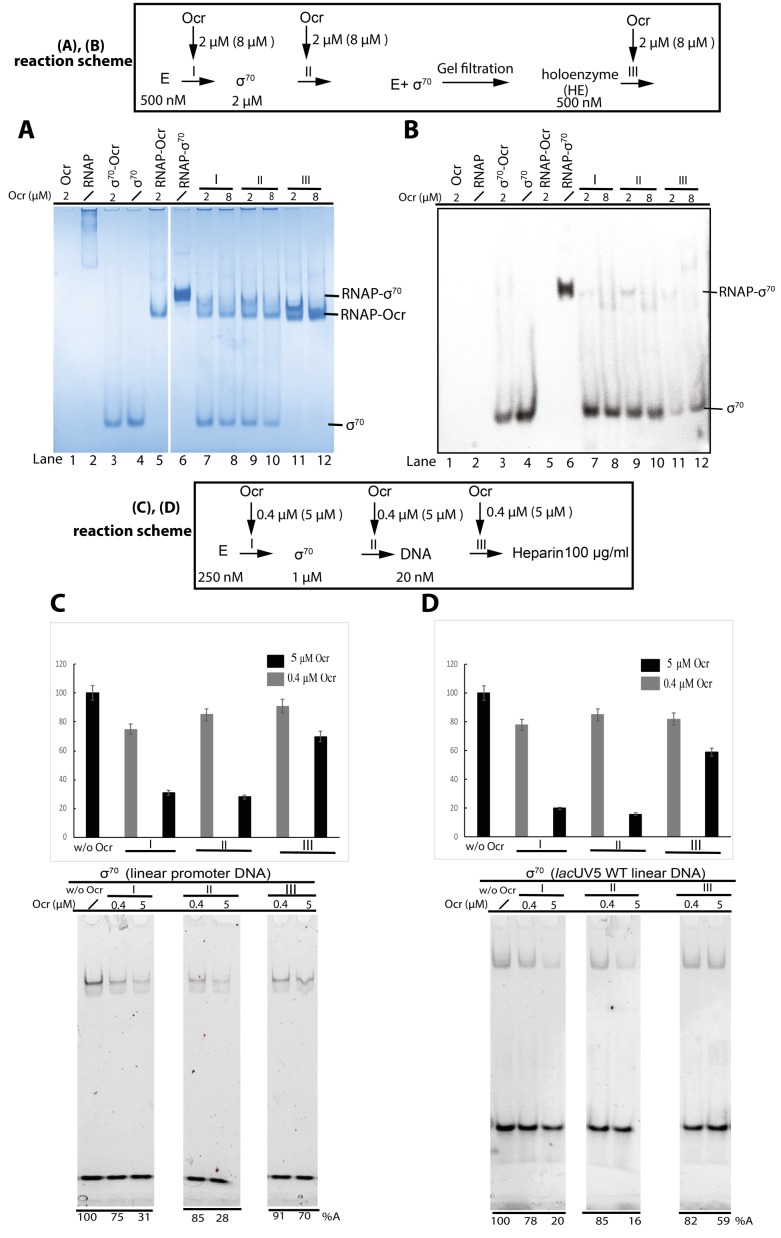
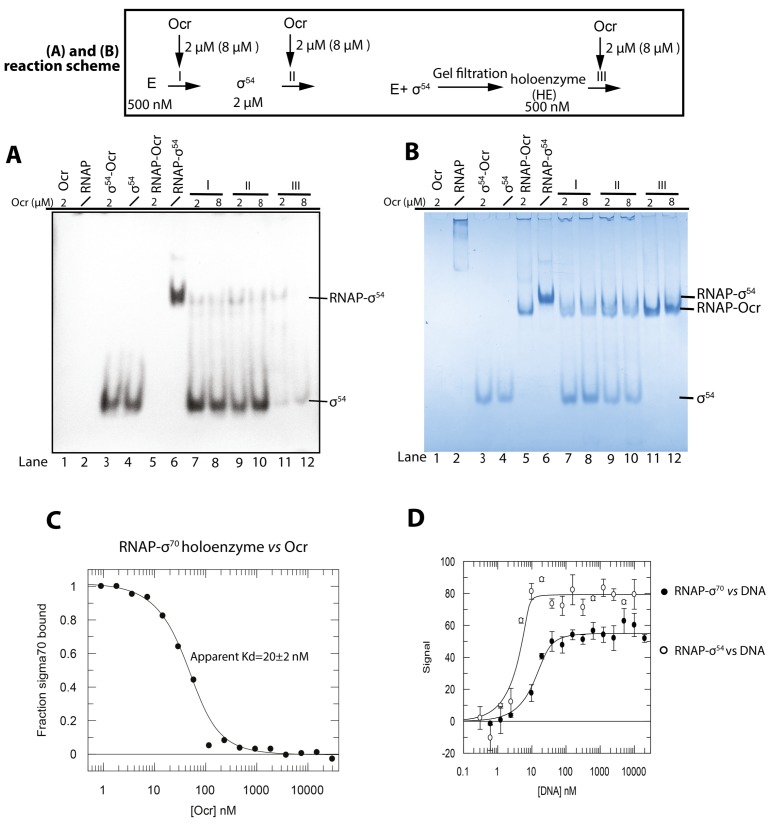
Bacteriophage T7 infects and evades the host restriction/modification system. The Ocr protein of T7 was shown to exist as a dimer mimicking DNA and to bind to host restriction enzymes, thus preventing the degradation of the viral genome by the host. Here we report that Ocr can also inhibit host transcription by directly binding to bacterial RNA polymerase (RNAP) and competing with the recruitment of RNAP by sigma factors. Using cryo electron microscopy, we determined the structures of Ocr bound to RNAP. The structures show that an Ocr dimer binds to RNAP in the cleft, where key regions of sigma bind and where DNA resides during transcription synthesis, thus providing a structural basis for the transcription inhibition. Our results reveal the versatility of Ocr in interfering with host systems and suggest possible strategies that could be exploited in adopting DNA mimicry as a basis for forming novel antibiotics.
噬菌体 T7 感染并逃避宿主限制/修饰系统。T7 的 Ocr 蛋白被证明以模拟 DNA 的二聚体形式存在,并与宿主限制酶结合,从而防止宿主对病毒基因组的降解。在这里,我们报告 Ocr 还可以通过直接与细菌 RNA 聚合酶(RNAP)结合并与 σ 因子招募 RNAP 竞争来抑制宿主转录。使用低温电子显微镜,我们确定了与 RNAP 结合的 Ocr 的结构。这些结构表明,Ocr 二聚体结合到 RNAP 的裂隙中,σ 因子结合的关键区域以及转录合成过程中 DNA 所在的位置,从而为转录抑制提供了结构基础。我们的结果揭示了 Ocr 在干扰宿主系统方面的多功能性,并提出了可能的策略,可以利用 DNA 模拟作为形成新型抗生素的基础。