Department of Immunology, H. Lee Moffitt Cancer Center, Tampa, Florida, United States of America.
Cancer Biology Ph.D. Program, University of South Florida, Tampa, Florida, United States of America.
PLoS One. 2020 Feb 10;15(2):e0225820. doi: 10.1371/journal.pone.0225820. eCollection 2020.
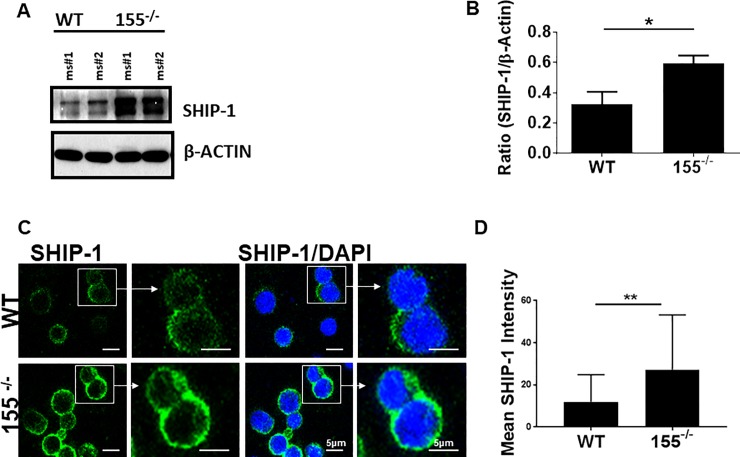
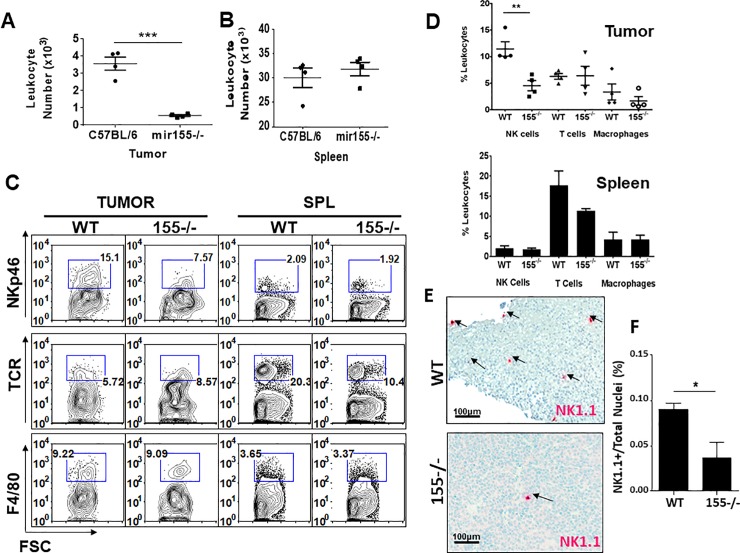
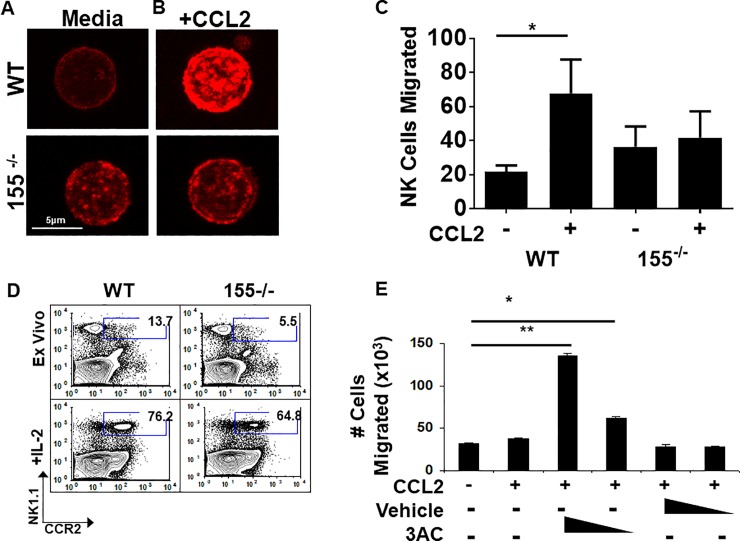
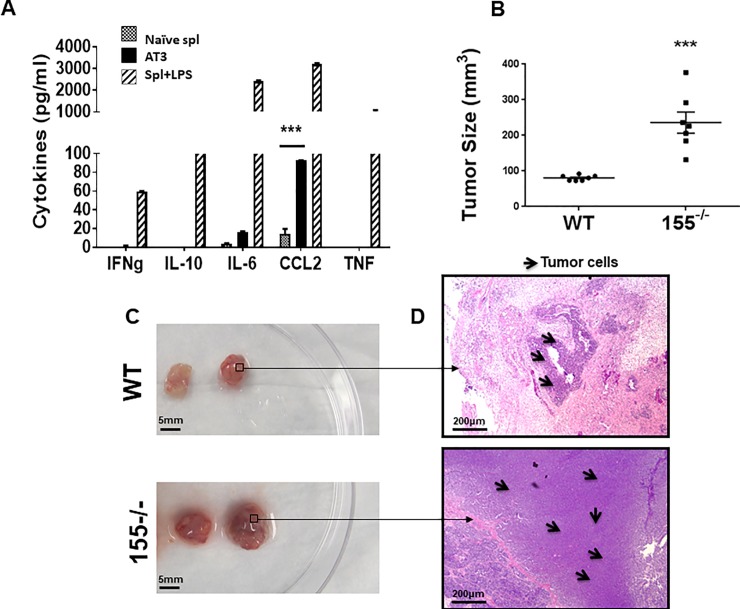
NK cell migration and activation are crucial elements of tumor immune surveillance. In mammary carcinomas, the number and function of NK cells is diminished, despite being positively associated with clinical outcome. MicroRNA-155 (miR-155) has been shown to be an important regulator of NK cell activation through its interaction with SHIP-1 downstream of inhibitory NK receptor signaling, but has not been explored in regard to NK cell migration. Here, we explored the migratory potential and function of NK cells in subcutaneous AT3 in mice lacking miR-155. Without tumor, these bic/miR-155-/- mice possess similar numbers of NK cells that exhibit comparable surface levels of cytotoxic receptors as NK cells from wild-type (WT) mice. Isolated miR-155-/- NK cells also exhibit equivalent cytotoxicity towards tumor targets in vitro compared to isolated WT control NK cells, despite overexpression of known miR-155 gene targets. NK cells isolated from miR-155-/- mice exhibit impaired F-actin polymerization and migratory capacity in Boyden-chamber assays in response chemokine (C-C motif) ligand 2 (CCL2). This migratory capacity could be normalized in the presence of SHIP-1 inhibitors. Of note, miR-155-/- mice challenged with mammary carcinomas exhibited heightened tumor burden which correlated with a lower number of tumor-infiltrating NK1.1+ cells. Our results support a novel, physiological role for SHIP-1 in the control of NK cell tumor trafficking, and implicate miR-155 in the regulation of NK cell chemotaxis, in the context of mammary carcinoma. This may implicate dysfunctional NK cells in the lack of tumor clearance in mice.
自然杀伤 (NK) 细胞的迁移和激活是肿瘤免疫监视的关键要素。在乳腺癌中,NK 细胞的数量和功能减少,尽管与临床结果呈正相关。微小 RNA-155 (miR-155) 通过与其下游抑制性 NK 受体信号转导的 SHIP-1 相互作用,已被证明是 NK 细胞激活的重要调节因子,但尚未在 NK 细胞迁移方面进行探索。在这里,我们研究了缺乏 miR-155 的小鼠皮下 AT3 中 NK 细胞的迁移潜力和功能。在没有肿瘤的情况下,这些 bic/miR-155-/- 小鼠具有相似数量的 NK 细胞,其表面表达的细胞毒性受体与 WT 小鼠的 NK 细胞相当。与 WT 对照 NK 细胞相比,分离的 miR-155-/-NK 细胞在体外对肿瘤靶标也表现出相当的细胞毒性,尽管已知 miR-155 基因靶标的表达增加。从 miR-155-/-小鼠中分离出的 NK 细胞在趋化因子 (C-C 基序) 配体 2 (CCL2) 的 Boyden 室测定中表现出受损的 F-肌动蛋白聚合和迁移能力。在 SHIP-1 抑制剂存在的情况下,这种迁移能力可以得到正常化。值得注意的是,患有乳腺癌的 miR-155-/-小鼠表现出更高的肿瘤负担,这与浸润肿瘤的 NK1.1+细胞数量减少有关。我们的结果支持 SHIP-1 在控制 NK 细胞肿瘤转移中的新型生理作用,并暗示 miR-155 在乳腺癌中调节 NK 细胞趋化性。这可能暗示 NK 细胞功能失调导致小鼠肿瘤清除失败。