Department of Neurology, Tianjin Medical University General Hospital, Tianjin, China.
The Third Affiliated Hospital of Zhengzhou University, No. 7 Kangfu front ST, Zhengzhou, Henan, China.
J Neuroinflammation. 2021 Jun 12;18(1):133. doi: 10.1186/s12974-021-02181-4.
Brain ischemia compromises natural killer (NK) cell-mediated immune defenses by acting on neurogenic and intracellular pathways. Less is known about the posttranscriptional mechanisms that regulate NK cell activation and cytotoxicity after ischemic stroke.
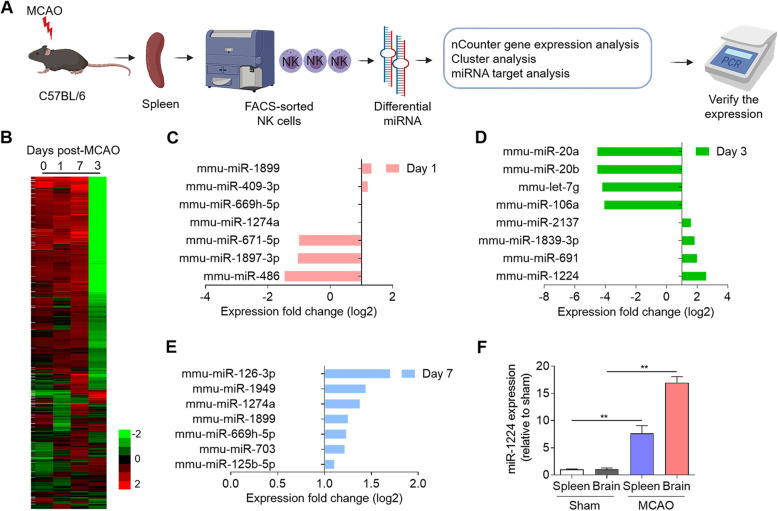
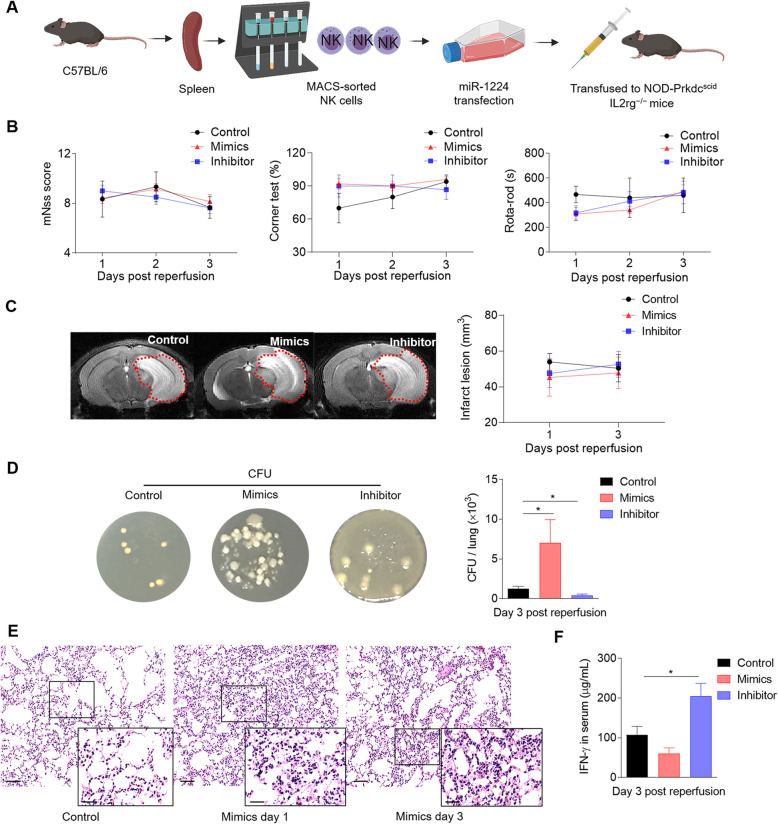
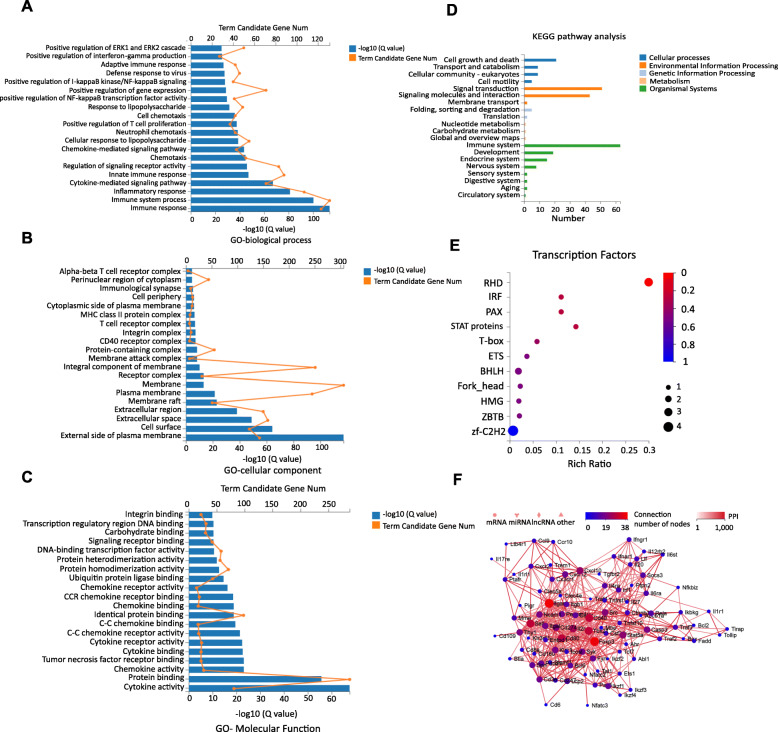
Using a NanoString nCounter® miRNA array panel, we explored the microRNA (miRNA) profile of splenic NK cells in mice subjected to middle cerebral artery occlusion. Differential gene expression and function/pathway analysis were applied to investigate the main functions of predicted miRNA target genes. miR-1224 inhibitor/mimics transfection and passive transfer of NK cells were performed to confirm the impact of miR-1224 in NK cells after brain ischemia.
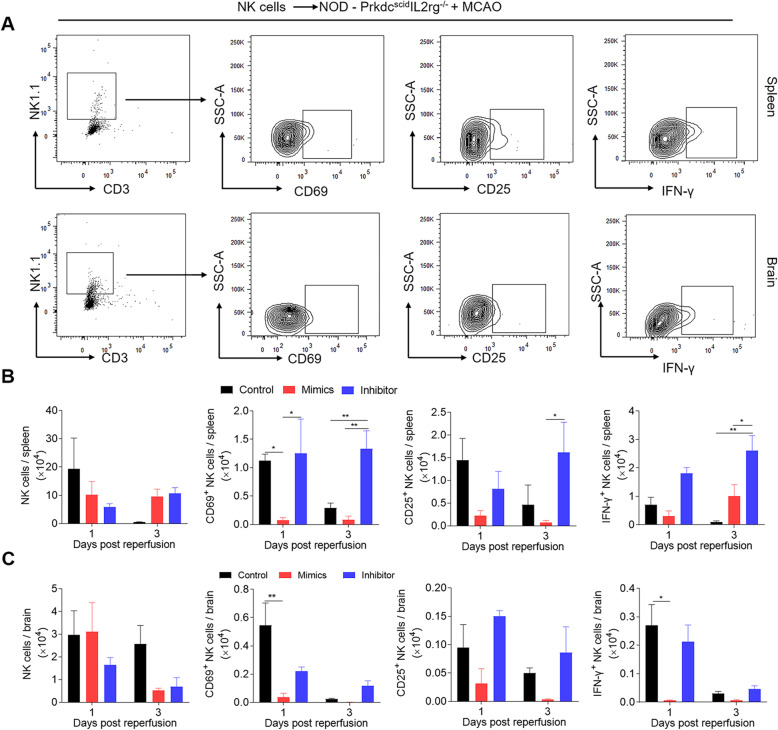
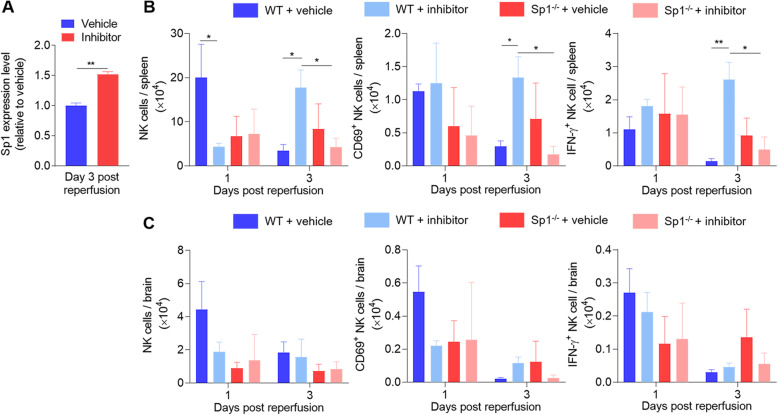
We observed striking dysregulation of several miRNAs in response to ischemia. Among those miRNAs, miR-1224 markedly increased 3 days after ischemic stroke. Transfection of miR-1224 mimics into NK cells resulted in suppression of NK cell activity, while an miR-1224 inhibitor enhanced NK cell activity and cytotoxicity, especially in the periphery. Passive transfer of NK cells treated with an miR-1224 inhibitor prevented the accumulation of a bacterial burden in the lungs after ischemic stroke, suggesting an enhanced immune defense of NK cells. The transcription factor Sp1, which controls cytokine/chemokine release by NK cells at the transcriptional level, is a predicted target of miR-1224. The inhibitory effect of miR-1224 on NK cell activity was blocked in Sp1 knockout mice.
These findings indicate that miR-1224 may serve as a negative regulator of NK cell activation in an Sp1-dependent manner; this mechanism may be a novel target to prevent poststroke infection specifically in the periphery and preserve immune defense in the brain.
脑缺血通过作用于神经发生和细胞内途径来损害自然杀伤 (NK) 细胞介导的免疫防御。关于调节缺血性中风后 NK 细胞激活和细胞毒性的转录后机制知之甚少。
使用 NanoString nCounter® miRNA 阵列面板,我们研究了大脑中动脉闭塞小鼠脾脏 NK 细胞的 microRNA (miRNA) 谱。差异基因表达和功能/途径分析用于研究预测 miRNA 靶基因的主要功能。进行 miR-1224 抑制剂/模拟物转染和 NK 细胞被动转移,以确认 miR-1224 在脑缺血后对 NK 细胞的影响。
我们观察到几种 miRNA 对缺血的反应明显失调。在这些 miRNA 中,miR-1224 在缺血性中风后 3 天显着增加。将 miR-1224 模拟物转染到 NK 细胞中导致 NK 细胞活性受到抑制,而 miR-1224 抑制剂增强了 NK 细胞活性和细胞毒性,尤其是在外周。用 miR-1224 抑制剂处理的 NK 细胞的被动转移可防止缺血性中风后肺部细菌负荷的积累,表明 NK 细胞的免疫防御增强。转录因子 Sp1 是 NK 细胞在转录水平上控制细胞因子/趋化因子释放的预测靶点,是 miR-1224 的靶标。Sp1 敲除小鼠中 miR-1224 对 NK 细胞活性的抑制作用被阻断。
这些发现表明,miR-1224 可能以 Sp1 依赖的方式作为 NK 细胞激活的负调节剂;这种机制可能是预防外周部位中风后感染和在大脑中保留免疫防御的新靶点。