College of Nanoscale Science & Engineering, State University of New York Polytechnic Institute, Albany, New York, United States of America.
College of Medicine, State University of New York Downstate Medical Center, Brooklyn, New York, United States of America.
PLoS One. 2020 Feb 10;15(2):e0228772. doi: 10.1371/journal.pone.0228772. eCollection 2020.
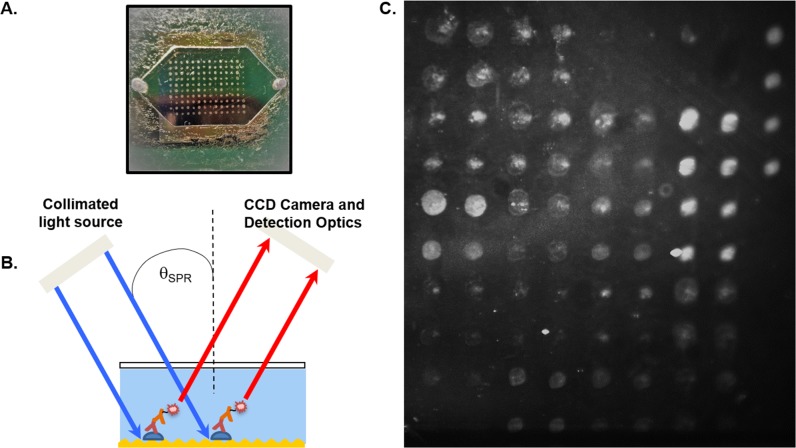
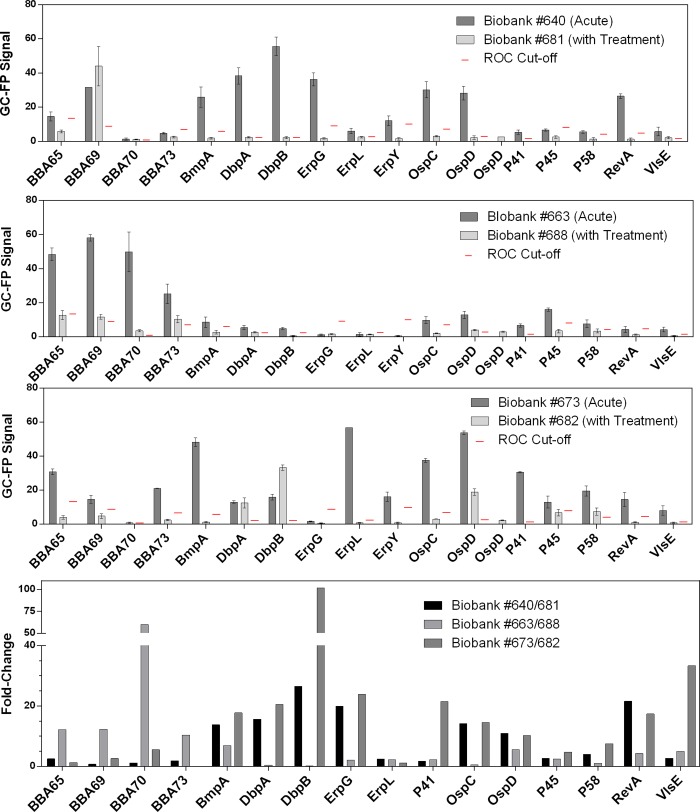
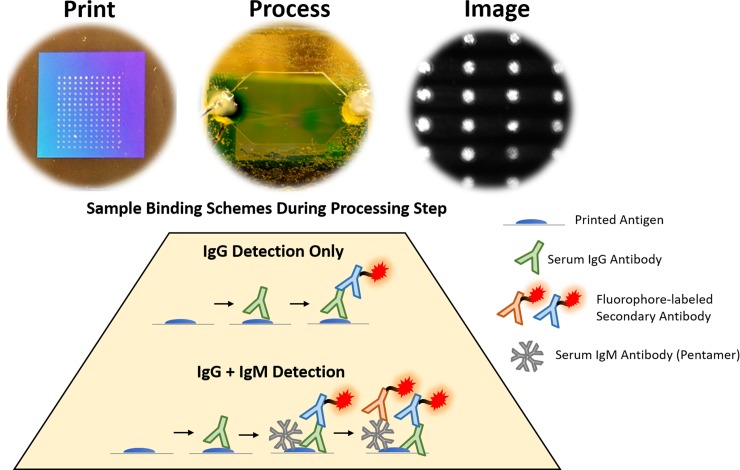
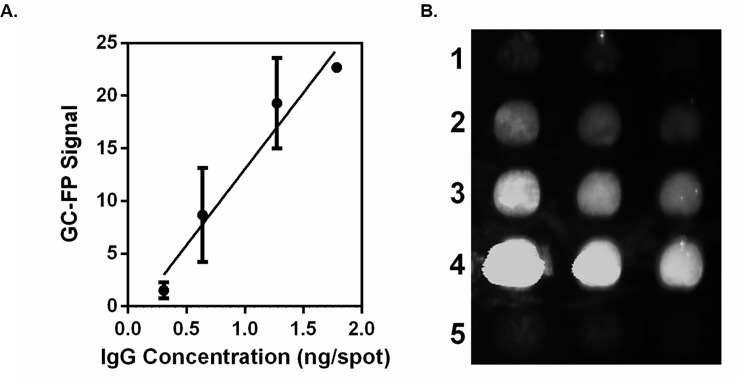
Lyme disease (LD) diagnosis using the current two-tier algorithm is constrained by low sensitivity for early-stage infection and ambiguity in determining treatment response. We recently developed a protein microarray biochip that measures diagnostic serum antibody targets using grating-coupled fluorescent plasmonics (GC-FP) technology. This strategy requires microliters of blood serum to enable multiplexed biomarker screening on a compact surface and generates quantitative results that can be further processed for diagnostic scoring. The GC-FP biochip was used to detect serum antibodies in patients with active and convalescent LD, as well as various negative controls. We hypothesized that the quantitative, high-sensitivity attributes of the GC-FP approach permit: 1) screening of antibody targets predictive for LD status, and 2) development a diagnostic algorithm that is more sensitive, specific, and informative than the standard ELISA and Western blot assays. Notably, our findings led to a diagnostic algorithm that may be more sensitive than the current standard for detecting early LD, while maintaining 100% specificity. We further show that analysis of relative antibody levels to predict disease status, such as in acute and convalescent stages of infection, is possible with a highly sensitive and quantitative platform like GC-FP. The results from this study add to the urgent conversation regarding better diagnostic strategies and more effective treatment for patients affected by tick-borne disease.
莱姆病(LD)的现行两阶段算法诊断受到早期感染敏感性低和治疗反应判断不明确的限制。我们最近开发了一种蛋白质微阵列生物芯片,该芯片使用光栅耦合荧光等离子体(GC-FP)技术测量诊断血清抗体靶标。该策略需要使用微升血清量,以便在紧凑的表面上进行多重生物标志物筛选,并生成可进一步用于诊断评分的定量结果。GC-FP 生物芯片用于检测活动性和恢复期 LD 患者以及各种阴性对照的血清抗体。我们假设 GC-FP 方法的定量、高灵敏度属性允许:1)筛选预测 LD 状态的抗体靶标,以及 2)开发比标准 ELISA 和 Western blot 检测更敏感、更特异和更具信息量的诊断算法。值得注意的是,我们的发现导致了一种诊断算法,其可能比当前用于检测早期 LD 的标准更敏感,同时保持 100%的特异性。我们进一步表明,使用像 GC-FP 这样的高灵敏度和定量平台分析相对抗体水平以预测疾病状态是可能的,例如在感染的急性和恢复期。这项研究的结果增加了关于更好的诊断策略和更有效的治疗受蜱传疾病影响的患者的迫切讨论。