Department of Molecular Genetics and Microbiology, Duke University, Durham, NC 27708, USA.
Department of Biomedical Engineering, Duke University, Durham, NC 27708, USA.
Sci Adv. 2020 Jan 24;6(4):eaax3173. doi: 10.1126/sciadv.aax3173. eCollection 2020 Jan.
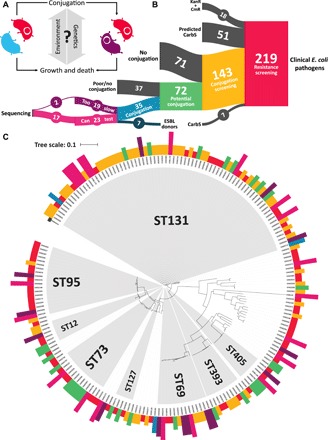
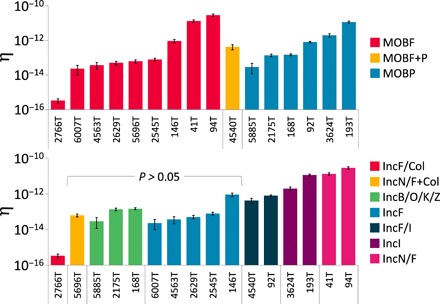
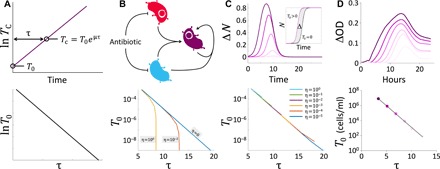
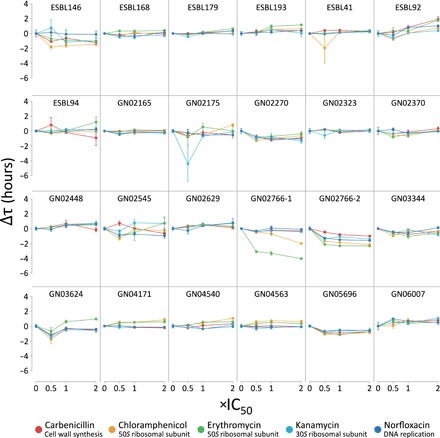
Plasmids are key vehicles of horizontal gene transfer (HGT), mobilizing antibiotic resistance, virulence, and other traits among bacterial populations. The environmental and genetic forces that drive plasmid transfer are poorly understood, however, due to the lack of definitive quantification coupled with genomic analysis. Here, we integrate conjugative phenotype with plasmid genotype to provide quantitative analysis of HGT in clinical pathogens. We find a substantial proportion of these pathogens (>25%) able to readily spread resistance to the most common classes of antibiotics. Antibiotics of varied modes of action had less than a 5-fold effect on conjugation efficiency in general, with one exception displaying 31-fold promotion upon exposure to macrolides and chloramphenicol. In contrast, genome sequencing reveals plasmid incompatibility group strongly correlates with transfer efficiency. Our findings offer new insights into the determinants of plasmid mobility and have implications for the development of treatments that target HGT.
质粒是水平基因转移(HGT)的关键载体,可在细菌种群中移动抗生素抗性、毒力和其他特征。然而,由于缺乏明确的定量分析加上基因组分析,驱动质粒转移的环境和遗传力量仍了解甚少。在这里,我们将共轭表型与质粒基因型相结合,为临床病原体中的 HGT 提供定量分析。我们发现这些病原体中有相当大的比例(>25%)能够轻易地传播对最常见抗生素类别的耐药性。一般来说,作用模式不同的抗生素对 conjugation 效率的影响不到 5 倍,只有一种情况在接触大环内酯类和氯霉素时表现出 31 倍的促进作用。相比之下,基因组测序显示质粒不相容群与转移效率强烈相关。我们的研究结果为质粒迁移的决定因素提供了新的见解,并对靶向 HGT 的治疗方法的发展具有重要意义。