Kumar Mahendra, Singh Alak Kumar, Sikandar Mohammad
Uttar Pradesh Pollution Control Board, Sadbhawna Nagar, Kanpur, Uttar Pradesh 208001, India.
Department of Food Technology, Harcourt Butler Technical University, Nawabganj, Kanpur, Uttar Pradesh 208002, India.
Heliyon. 2020 Jan 30;6(1):e03321. doi: 10.1016/j.heliyon.2020.e03321. eCollection 2020 Jan.
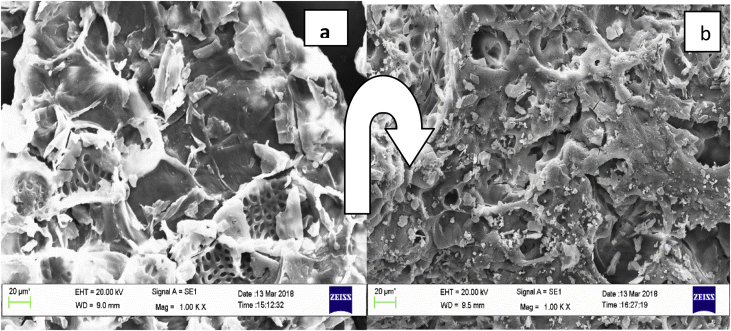
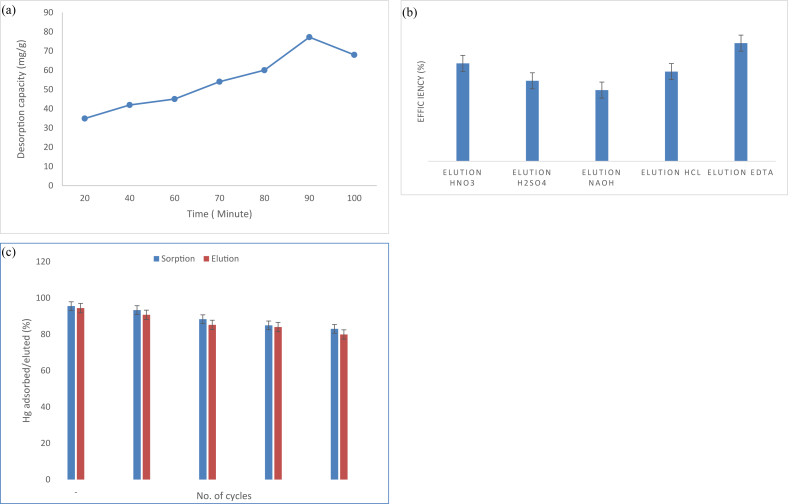
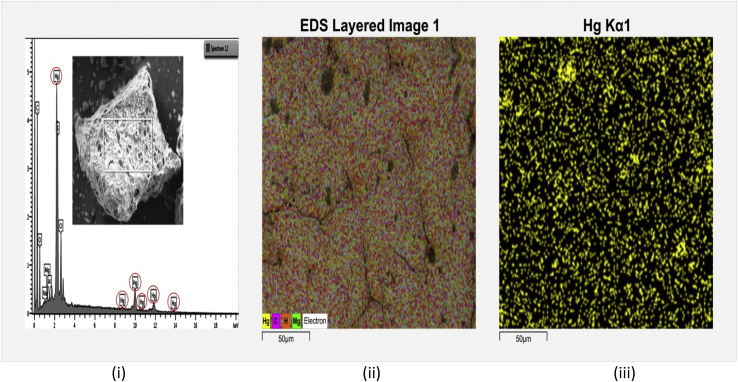
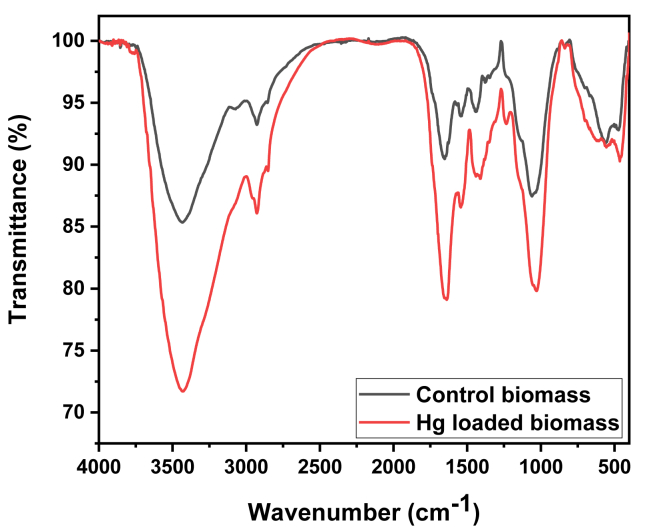
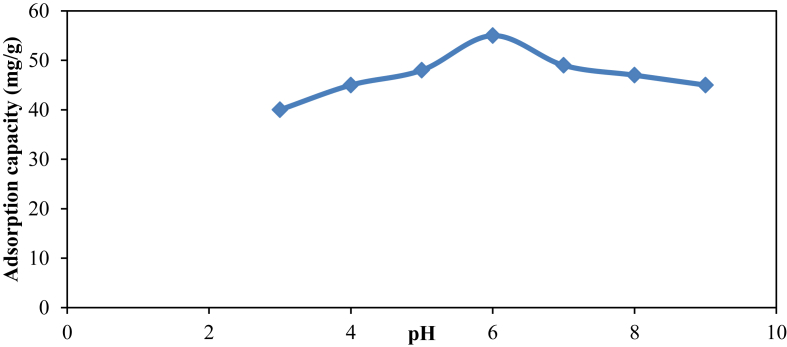
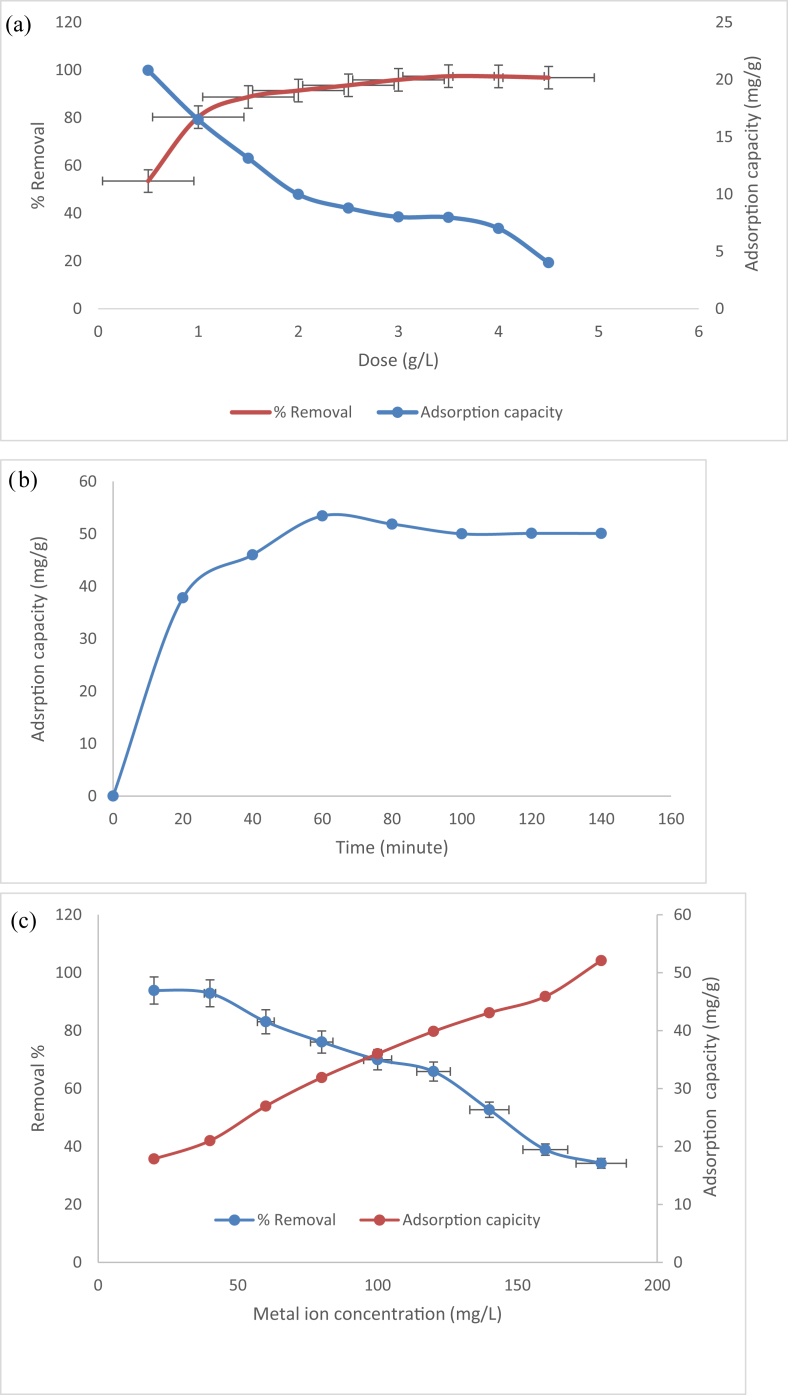
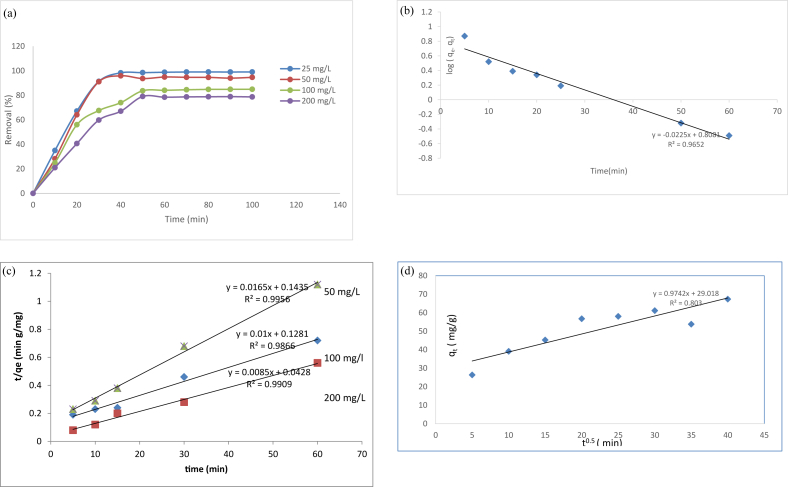
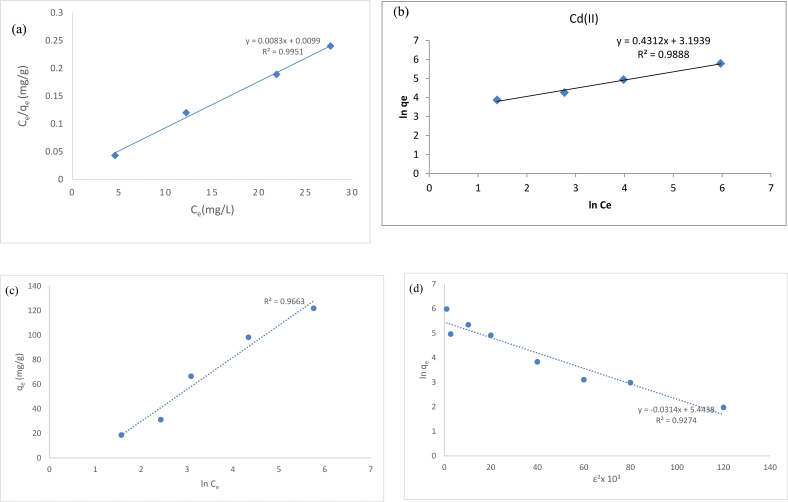
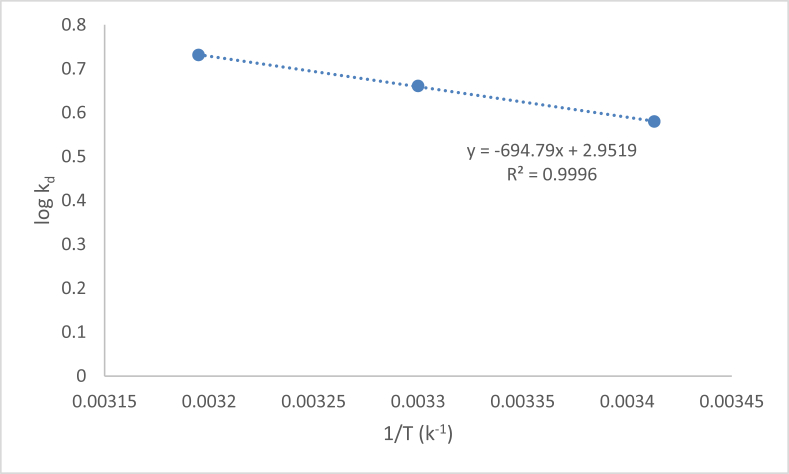
The present work investigated the ability of algal biomass to remove mercury from aqueous solutions. The mercury biosorption process was studied through batch experiments 35 °C temperature with regard to the influence of contact time, initial mercury concentration, pH and desorption. The maximum adsorption capacity was registered at pH 6. The adsorption conduct of Hg(II) was defined by pseudo second order well rather pseudo first order as the experimental data (q) come to an agreement with the calculated value. The kinetics of adsorption was fast and a high capacity of adsorption occurred within only 90 min. The adsorption data were signified by many models but Langmuir (q = 42. mg g) & Freundlich fitted well having regression coefficients near to unity. The thermodynamic parameters were also suited well as negative value of free energy cope up to spontaneity, positive value of the randomness described by ΔS attributed to affinity of Hg towards algal bioadsorbant and high positive value of heat of enthalpy designates that the adsorption process is expected due to robust interactions between the Hg(II) ions and various functional groups on surface of algal bioadsorbant. Field emission scanning electron microscopy integrated with energy dispersive X-ray spectroscopy analysis before and after adsorption of Hg(II) reveals the adsorption of metallic ions over the surface. FTIR study supported the existence of various functional groups (carboxylix, amines, hydroxyls, amides etc.) helped in adsorption. Continuous adsorption desorption experiments proved that algal cells was excellent biosorbents with potential for further development.
本研究考察了藻类生物质从水溶液中去除汞的能力。通过间歇实验研究了汞的生物吸附过程,实验温度为35℃,考察了接触时间、初始汞浓度、pH值和解吸的影响。最大吸附容量出现在pH值为6时。Hg(II)的吸附行为由伪二级动力学很好地定义,而不是伪一级动力学,因为实验数据(q)与计算值相符。吸附动力学很快,仅在90分钟内就出现了高吸附容量。吸附数据由多种模型表示,但Langmuir模型(q = 42. mg/g)和Freundlich模型拟合良好,回归系数接近1。热力学参数也很合适,自由能的负值表明吸附过程具有自发性,ΔS描述的随机性正值归因于汞对藻类生物吸附剂的亲和力,焓变的高正值表明吸附过程是由于Hg(II)离子与藻类生物吸附剂表面各种官能团之间的强烈相互作用而发生的。场发射扫描电子显微镜结合能量色散X射线光谱分析在Hg(II)吸附前后揭示了金属离子在表面的吸附。傅里叶变换红外光谱研究支持了各种官能团(羧基、胺基、羟基、酰胺等)的存在有助于吸附。连续吸附-解吸实验证明藻类细胞是优良的生物吸附剂,具有进一步开发的潜力。