Department of Obstetrics and Gynecology, Yamaguchi University Graduate School of Medicine, Minamikogushi 1-1-1, Ube 755-8505, Japan.
Department of Obstetrics and Gynecology, Saiseikai Shimonoseki General Hospital, Yasuokacho 8-5-1, Shimonoseki 759-6603, Japan.
Int J Mol Sci. 2020 Feb 8;21(3):1135. doi: 10.3390/ijms21031135.
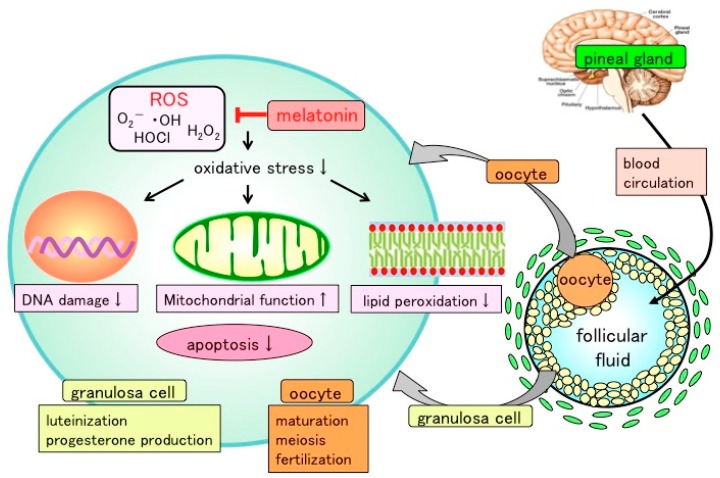
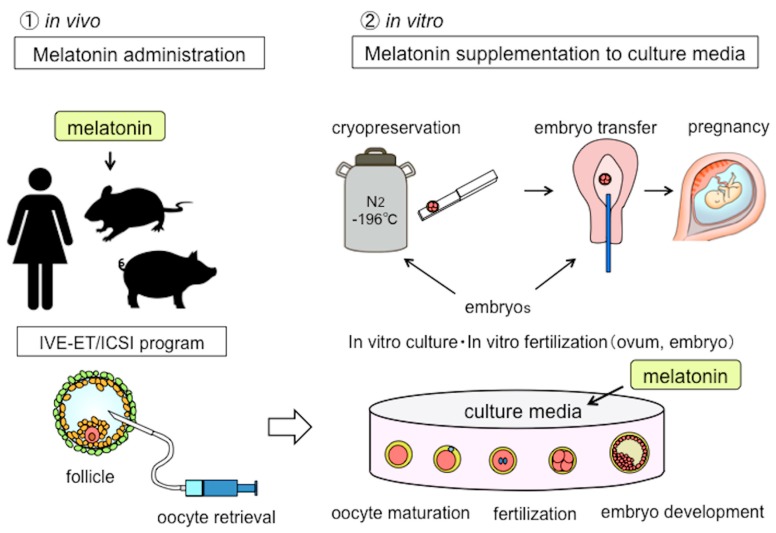
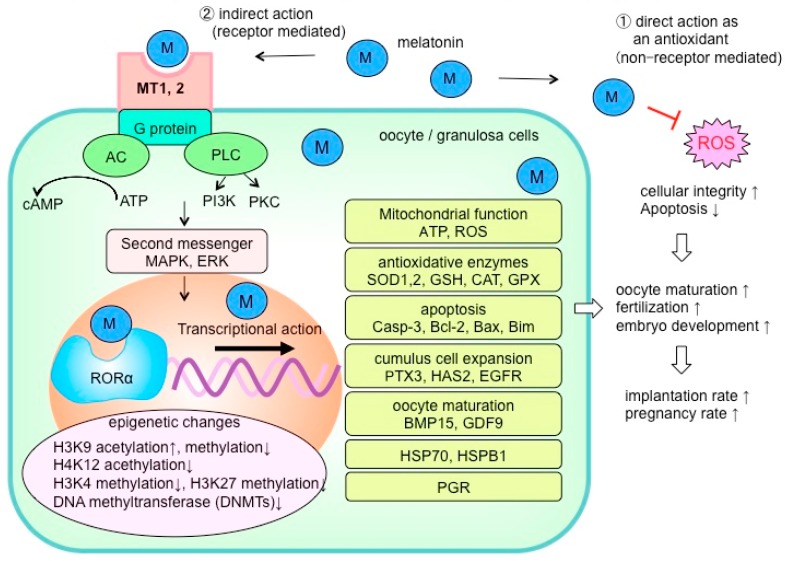
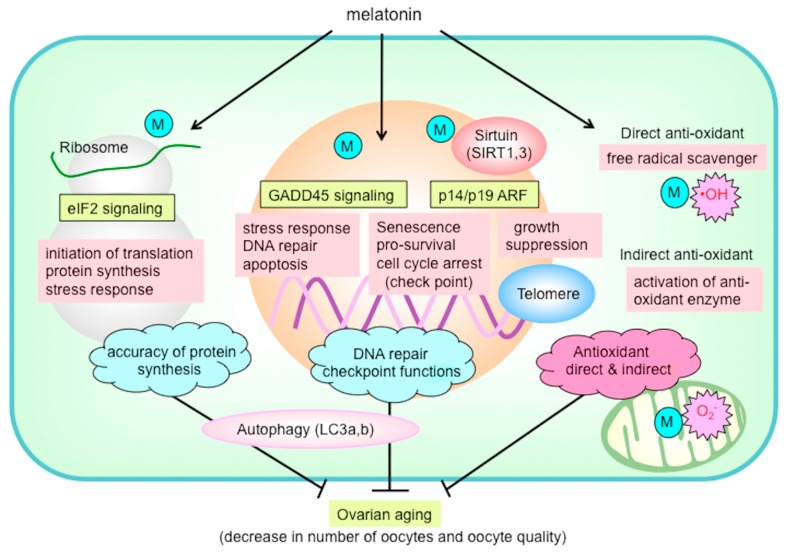
Melatonin is probably produced in all cells but is only secreted by the pineal gland. The pineal secretion of melatonin is determined by the light-dark cycle, and it is only released at night. Melatonin regulates biological rhythms via its receptors located in the suprachiasmatic nuclei of the hypothalamus. Melatonin also has strong antioxidant activities to scavenge free radicals such as reactive oxygen species (ROS). The direct free radical scavenging actions are receptor independent. ROS play an important role in reproductive function including in the ovulatory process. However, excessive ROS can also have an adverse effect on oocytes because of oxidative stress, thereby causing infertility. It is becoming clear that melatonin is located in the ovarian follicular fluid and in the oocytes themselves, which protects these cells from oxidative damage as well as having other beneficial actions in oocyte maturation, fertilization, and embryo development. Trials on humans have investigated the improvement of outcomes of assisted reproductive technology (ART), such as in vitro fertilization and embryo transfer (IVF-ET), by way of administering melatonin to patients suffering from infertility. In addition, clinical research has examined melatonin as an anti-aging molecule via its antioxidative actions, and its relationship with the aging diseases, e.g., Alzheimer's and Parkinson's disease, is also underway. Melatonin may also reduce ovarian aging, which is a major issue in assisted reproductive technology. This review explains the relationship between melatonin and human reproductive function, as well as the clinical applications expected to improve the outcomes of assisted reproductive technology such as IVF, while also discussing possibilities for melatonin in preventing ovarian aging.
褪黑素可能存在于所有细胞中,但仅由松果体分泌。松果体分泌的褪黑素受昼夜节律的影响,仅在夜间释放。褪黑素通过位于下丘脑视交叉上核的受体来调节生物节律。褪黑素还具有很强的抗氧化活性,可清除自由基,如活性氧(ROS)。直接清除自由基的作用与受体无关。ROS 在生殖功能中发挥着重要作用,包括排卵过程。然而,过多的 ROS 也会对卵子造成不利影响,因为氧化应激会导致不孕。越来越清楚的是,褪黑素存在于卵巢卵泡液和卵子本身中,它可以保护这些细胞免受氧化损伤,并且在卵母细胞成熟、受精和胚胎发育过程中有其他有益作用。人类试验研究了通过向不孕患者施用褪黑素来改善辅助生殖技术(ART)的结果,例如体外受精和胚胎移植(IVF-ET)。此外,临床研究还通过其抗氧化作用检查了褪黑素作为抗衰老分子的作用,并且正在研究其与衰老疾病(例如阿尔茨海默病和帕金森病)的关系。褪黑素还可能减缓卵巢衰老,这是辅助生殖技术中的一个主要问题。本综述解释了褪黑素与人类生殖功能之间的关系,以及预期可以改善 IVF 等辅助生殖技术结果的临床应用,同时还讨论了褪黑素在预防卵巢衰老方面的可能性。