Department of Biological Sciences, Kangwon National University, Chuncheon, Gangwon 24341, Korea.
Department of Neurobiology, School of Medicine, Kangwon National University, Chuncheon, Gangwon 24341, Korea.
Cells. 2020 Feb 8;9(2):392. doi: 10.3390/cells9020392.
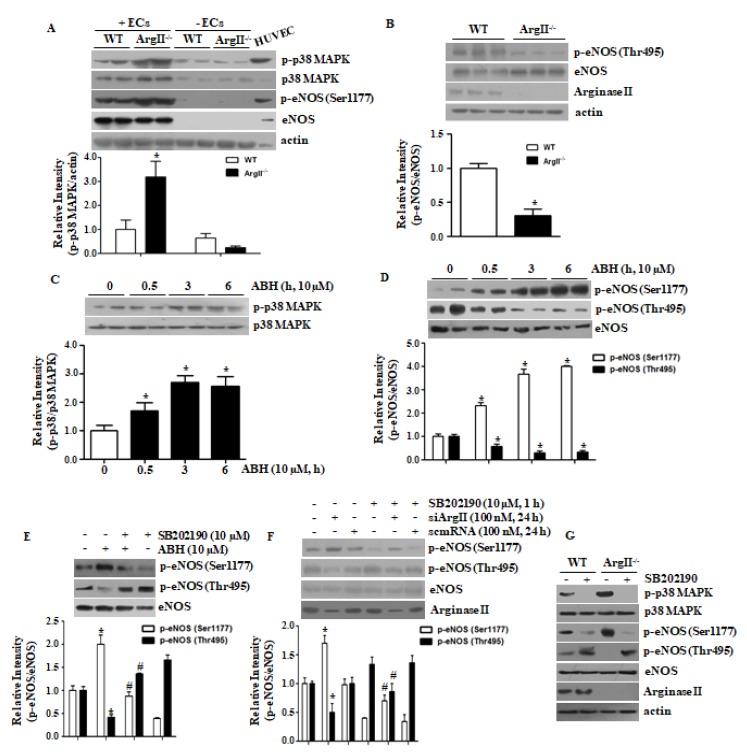
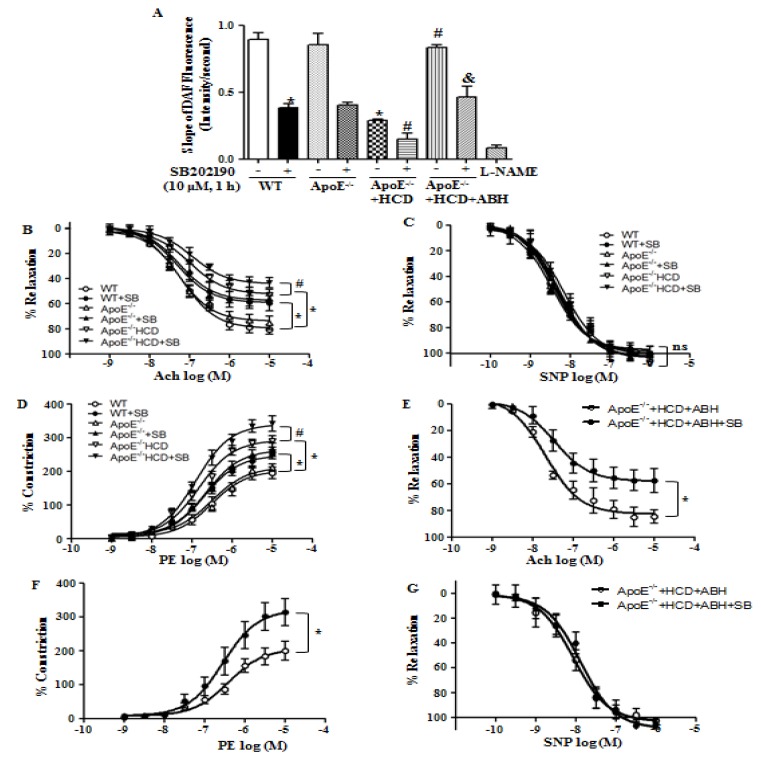
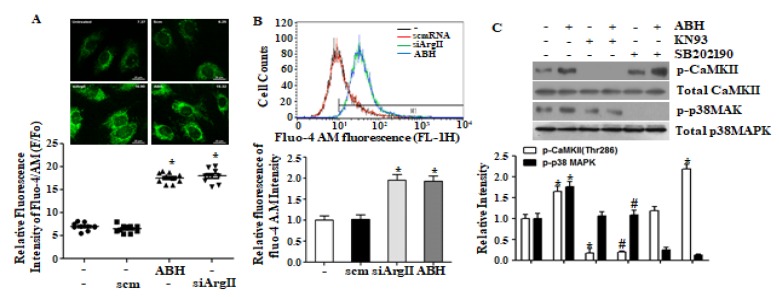
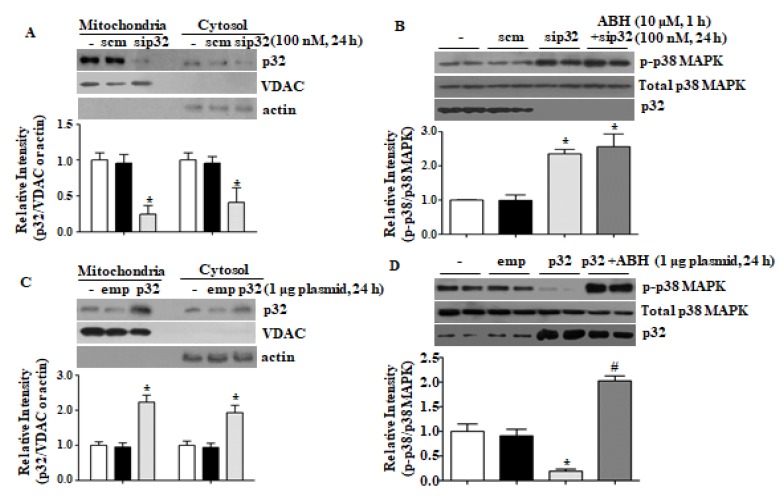
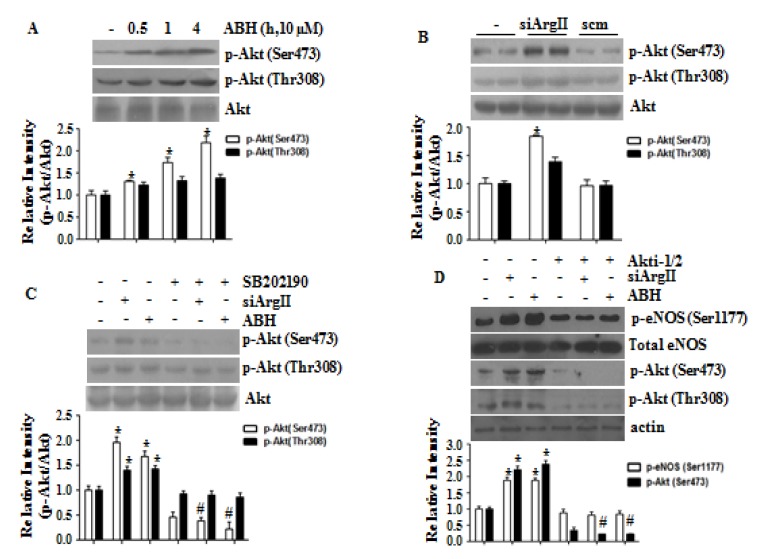
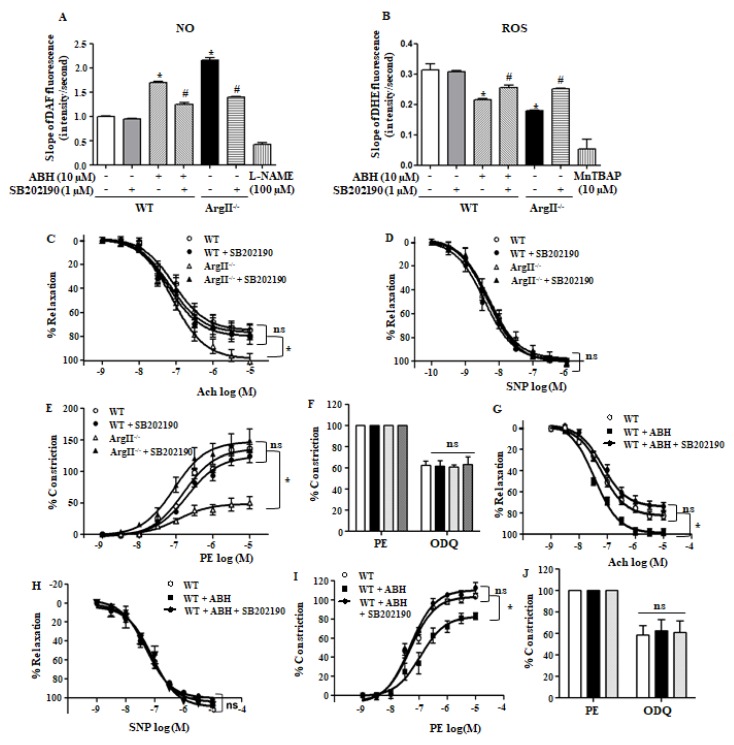
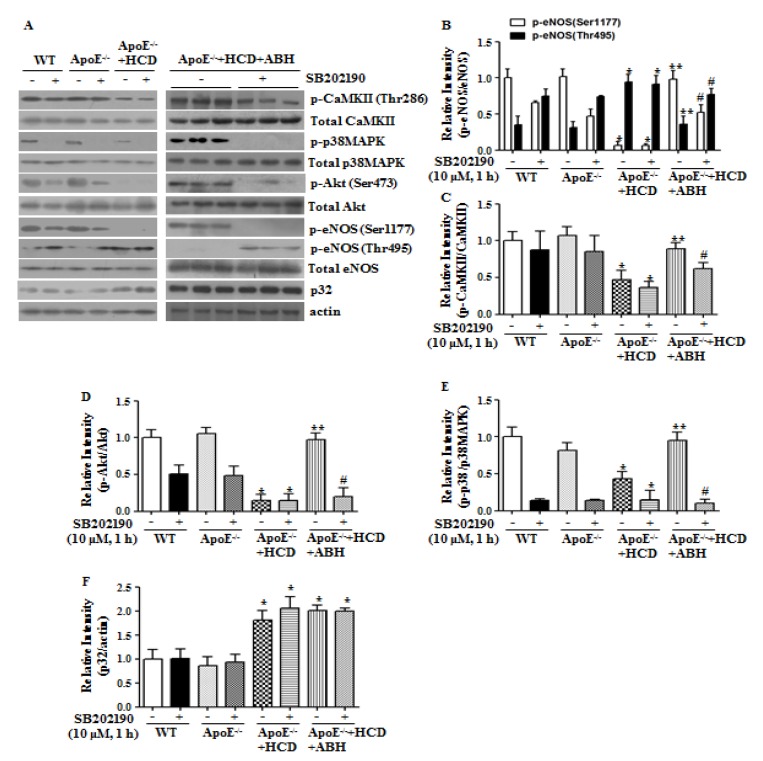
Arginase II reciprocally regulates endothelial nitric oxide synthase (eNOS) through a p32-dependent Ca control. We investigated the signaling pathway of arginase II-dependent eNOS phosphorylation. Western blot analysis was applied for examining protein activation and [Ca]c was analyzed by microscopic and FACS analyses. Nitric oxide (NO) and reactive oxygen species (ROS) productions were measured using specific fluorescent dyes under microscopy. NO signaling pathway was tested by measuring vascular tension. Following arginase II downregulation by chemical inhibition or gene knockout (KO, ArgII), increased eNOS phosphorylation at Ser1177 and decreased phosphorylation at Thr495 was depend on p38 MAPK activation, which induced by CaMKII activation through p32-dependent increase in [Ca]c. The protein amount of p32 negatively regulated p38 MAPK activation. p38 MAPK contributed to Akt-induced eNOS phosphorylation at Ser1177 that resulted in accelerated NO production and reduced reactive oxygen species production in aortic endothelia. In vascular tension assay, p38 MAPK inhibitor decreased acetylcholine-induced vasorelaxation responses and increased phenylephrine-dependent vasoconstrictive responses. In ApoE mice fed a high cholesterol diet, arginase II inhibition restored p32/CaMKII/p38 MAPK/Akt/eNOS signaling cascade that was attenuated by p38 MAPK inhibition. Here, we demonstrated a novel signaling pathway contributing to understanding of the relationship between arginase II, endothelial dysfunction, and atherogenesis.
精氨酸酶 II 通过依赖 p32 的 Ca 调控来反向调节内皮型一氧化氮合酶(eNOS)。我们研究了精氨酸酶 II 依赖性 eNOS 磷酸化的信号通路。采用 Western blot 分析检测蛋白激活,通过显微镜和 FACS 分析检测 [Ca]c。通过显微镜下使用特定的荧光染料测量一氧化氮(NO)和活性氧(ROS)的产生。通过测量血管张力来测试 NO 信号通路。通过化学抑制或基因敲除(ArgII)下调精氨酸酶 II 后,Ser1177 处的 eNOS 磷酸化增加,Thr495 处的磷酸化减少,这依赖于 p38 MAPK 的激活,p38 MAPK 的激活是由 CaMKII 通过依赖 p32 的 [Ca]c 增加诱导的。p32 的蛋白量负调节 p38 MAPK 的激活。p38 MAPK 有助于 Akt 诱导的 eNOS 在 Ser1177 处的磷酸化,导致主动脉内皮中 NO 产生加速和 ROS 产生减少。在血管张力测定中,p38 MAPK 抑制剂降低了乙酰胆碱诱导的血管舒张反应,增加了去甲肾上腺素依赖性血管收缩反应。在喂食高胆固醇饮食的 ApoE 小鼠中,精氨酸酶 II 抑制恢复了 p32/CaMKII/p38 MAPK/Akt/eNOS 信号级联,而 p38 MAPK 抑制则减弱了该信号级联。在这里,我们展示了一个新的信号通路,有助于理解精氨酸酶 II、内皮功能障碍和动脉粥样硬化之间的关系。