Astantri Prima Febri, Prakoso Wredha Sandhi Ardha, Triyana Kuwat, Untari Tri, Airin Claude Mona, Astuti Pudji
Veterinary Science, Faculty of Veterinary Medicine, Gadjah Mada University, Yogyakarta 55281, Indonesia.
Animal Quarantine, Agriculture Quarantine Agency, Ministry of Agriculture, Jakarta 12550, Indonesia.
Vet Sci. 2020 Feb 9;7(1):20. doi: 10.3390/vetsci7010020.
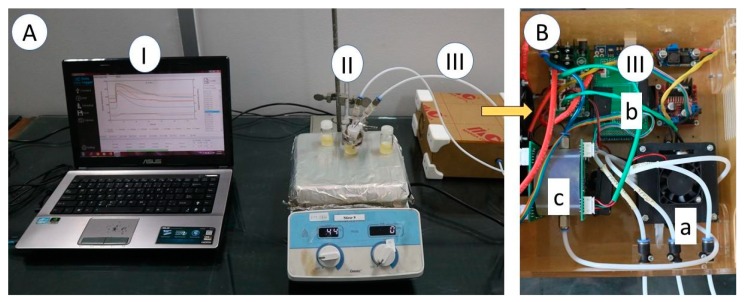
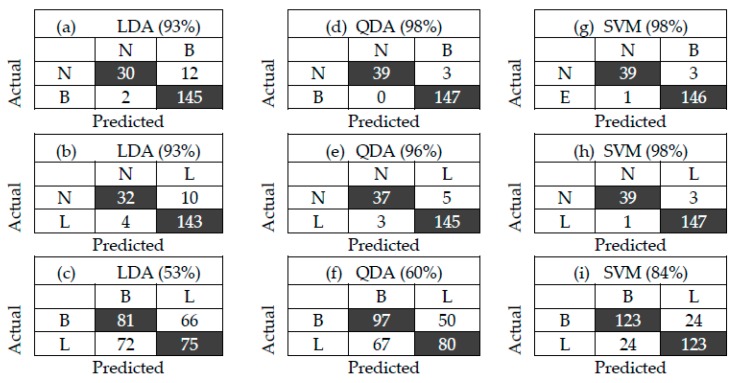
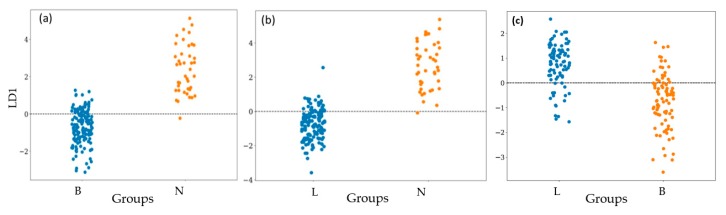
The aim of this study is to determine the performance of a lab-made electronic nose (e-nose) composed of an array of metal oxide semiconductor (MOS) gas sensors in the detection and differentiation of () and () incubated in trypticsoy broth (TSB) media. Conventionally, the detection of and is often performed by enzyme link immunosorbent assay (ELISA) and polymerase chain reaction (PCR). These techniques require trained operators and expert, expensive reagents and specific containment. In this study, three types of samples, namely, TSB media, (serotype 4b American Type Culture Collection (ATCC) 13792), and (ATCC) 10876, were used for this experiment. Prior to measurement using the e-nose, each bacterium was inoculated in TSB at 1 × 10⁻¹⁰ CFU/mL, followed by incubation for 48 h. To evaluate the performance of the e-nose, the measured data were then analyzed with chemometric models, namely linear and quadratic discriminant analysis (LDA and QDA), and support vector machine (SVM). As a result, the e-nose coupled with SVM showeda high accuracy of 98% in discriminating between TSB media and , and between TSB media and . It could be concluded that the lab-made e-nose is able to detect rapidly the presence of bacteria and on TSB media. For the future, it could be used to identify the presence of or contamination in the routine and fast assessment of food products in animal quarantine.
本研究的目的是确定一种实验室自制的电子鼻(e-nose)的性能,该电子鼻由金属氧化物半导体(MOS)气体传感器阵列组成,用于检测和区分在胰蛋白胨大豆肉汤(TSB)培养基中培养的()和()。传统上,()和()的检测通常通过酶联免疫吸附测定(ELISA)和聚合酶链反应(PCR)进行。这些技术需要训练有素的操作人员和专业的、昂贵的试剂以及特定的容器。在本研究中,三种类型的样品,即TSB培养基、(血清型4b美国典型培养物保藏中心(ATCC)13792)和(ATCC)10876,用于该实验。在使用电子鼻进行测量之前,将每种细菌以1×10⁻¹⁰ CFU/mL接种到TSB中,然后培养48小时。为了评估电子鼻的性能,然后使用化学计量模型,即线性和二次判别分析(LDA和QDA)以及支持向量机(SVM)对测量数据进行分析。结果,结合SVM的电子鼻在区分TSB培养基与()以及TSB培养基与()之间显示出98%的高精度。可以得出结论,实验室自制的电子鼻能够快速检测TSB培养基上()和()细菌的存在。在未来,它可用于在动物检疫中食品产品的常规和快速评估中识别()或()污染的存在。