NPS MedicineWise, Level 7, 418A, Elizabeth Street, Surry Hills, NSW, 2010, Australia.
Department of Endocrinology & Metabolism, Concord Repatriation General Hospital, The University of Sydney and Bone Research Program, ANZAC Research Institute, Concord, NSW, 2139, Australia.
BMC Fam Pract. 2020 Feb 12;21(1):32. doi: 10.1186/s12875-020-01103-2.
Among Australians aged 50 and over, an estimated 1 in 4 men and 2 in 5 women will experience a minimal trauma fracture during their remaining lifetime. Effective fracture prevention is hindered by substantial undertreatment, even of patients who clearly warrant pharmacological therapy. Poor adherence to osteoporosis treatment is also a leading cause of repeat fractures and hospitalisation. The aim of this study was to identify current osteoporosis treatment patterns and gaps in practice in Australia, using general practice data, and to explore general practitioners' (GPs') attitudes to osteoporosis treatment and their views on patient factors affecting osteoporosis management.
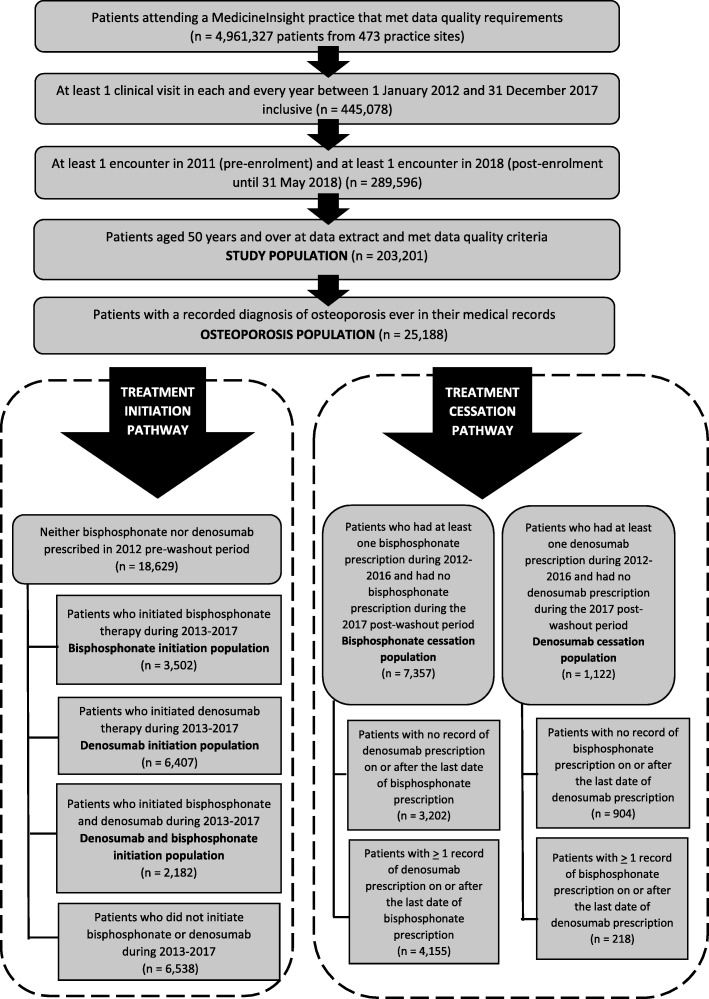
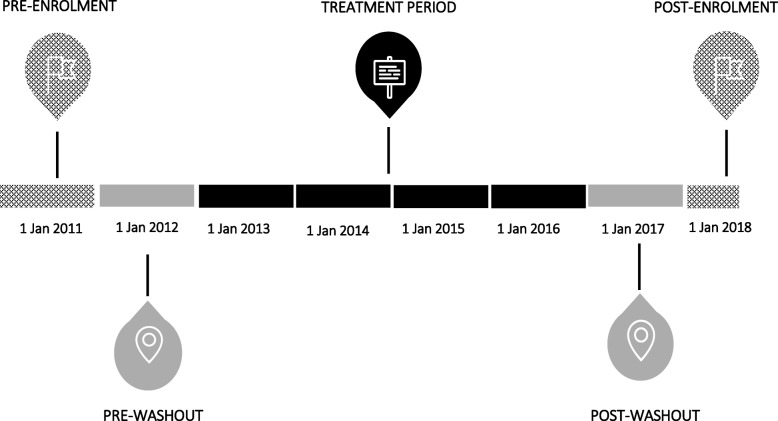
The study was conducted in two phases. Phase 1 was a longitudinal retrospective cohort study which utilised data from MedicineInsight - a national general practice data program that extracts longitudinal, de-identified patient data from clinical information systems (CISs) of participating general practices. Phase 2 included semi-structured, in-depth telephone interviews with a sample of MedicineInsight practice GPs. Data were analysed using an inductive thematic analysis method informed by the theory of planned behaviour.
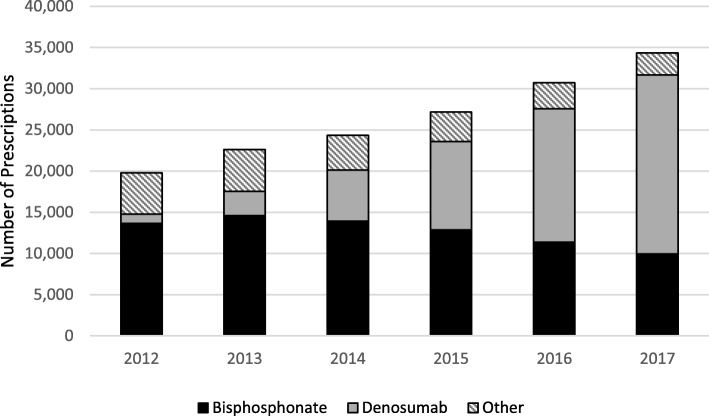
A diagnosis of osteoporosis was recorded in 12.4% of patients over the age of 50 years seen in general practice. Of those diagnosed with osteoporosis, almost a quarter were not prescribed osteoporosis medicines. From 2012 to 17, there was a progressive increase in the number of denosumab prescriptions, while prescriptions for bisphosphonates and other osteoporosis medicines decreased. More than 80% of patients who ceased denosumab treatment had no subsequent bisphosphonate prescription recorded. Interviews with GPs revealed beliefs and attitudes that may have influenced their intentions towards prescribing and osteoporosis management.
This study suggests that within the Australian general practice setting, osteoporosis is underdiagnosed and undertreated. In addition, it appears that most patients who ceased denosumab treatment had no record of subsequent antiresorptive therapy, which would place them at risk of further fractures. The study supports the need for the development of clinical education programs addressing GP knowledge gaps and attitudes, and the implementation of specific interventions such as good reminder/recall systems to avoid delays in reviewing and treating patients with osteoporosis.
在 50 岁及以上的澳大利亚人群中,估计有 1/4 的男性和 2/5 的女性在其剩余寿命中会经历轻微创伤性骨折。尽管明确需要药物治疗,但由于大量治疗不足,有效的骨折预防仍然受到阻碍。骨质疏松症治疗依从性差也是导致再次骨折和住院的主要原因。本研究旨在使用一般实践数据确定澳大利亚当前骨质疏松症治疗模式和实践中的差距,并探讨全科医生(GP)对骨质疏松症治疗的态度以及他们对影响骨质疏松症管理的患者因素的看法。
该研究分为两个阶段进行。第一阶段是一项纵向回顾性队列研究,利用 MedicineInsight-一项全国性的一般实践数据计划,从参与的一般实践的临床信息系统(CIS)中提取纵向、去识别患者数据。第二阶段包括对 MedicineInsight 实践 GP 的样本进行半结构化深入电话访谈。使用基于计划行为理论的归纳主题分析方法对数据进行分析。
在一般实践中,年龄在 50 岁以上的患者中,有 12.4%被诊断患有骨质疏松症。在被诊断患有骨质疏松症的患者中,近四分之一未开具骨质疏松症药物。从 2012 年到 17 年,地舒单抗的处方数量逐渐增加,而双膦酸盐和其他骨质疏松症药物的处方数量减少。超过 80%停止地舒单抗治疗的患者没有记录随后的双膦酸盐处方。对 GP 的访谈揭示了可能影响他们开具处方和骨质疏松症管理意愿的信念和态度。
本研究表明,在澳大利亚的一般实践环境中,骨质疏松症的诊断和治疗不足。此外,似乎大多数停止使用地舒单抗治疗的患者没有记录随后的抗吸收药物治疗,这使他们有再次骨折的风险。该研究支持需要制定针对全科医生知识差距和态度的临床教育计划,并实施具体干预措施,例如良好的提醒/召回系统,以避免延迟审查和治疗骨质疏松症患者。