Department for Pathobiology, Institute of Pathology, University of Veterinary Medicine Vienna, Veterinärplatz 1, 1210, Vienna, Austria.
Department for Pathobiology, Institute of Virology, University of Veterinary Medicine Vienna, Vienna, Austria.
Malar J. 2020 Feb 12;19(1):69. doi: 10.1186/s12936-020-3147-6.
Passerine birds are frequently infected with diverse haemosporidian parasites. While infections are traditionally considered benign in wild birds, recent studies demonstrated mortalities of passerine species due to exo-erythrocytic development of the parasites, which can damage organs in affected hosts. However, exo-erythrocytic development remains insufficiently investigated for most haemosporidian species and thus little is known about the virulence of tissue stages in wild passerine birds. The aim of the present study was to investigate natural haemosporidian infections in deceased Eurasian blackbirds (Turdus merula) and song thrushes (Turdus philomelos) and to determine parasite burden and associated histological effects.
For molecular analysis, blood and tissue samples from 306 thrushes were screened for Plasmodium, Haemoproteus and Leucocytozoon parasites by nested PCR. For the detection of parasite stages in organ samples, tissue sections were subjected to chromogenic in situ hybridization (CISH) using genus- and species-specific probes targeting the rRNAs of parasites. Exo-erythrocytic parasite burden was semi-quantitatively assessed and histological lesions were evaluated in haematoxylin-eosin-stained sections.
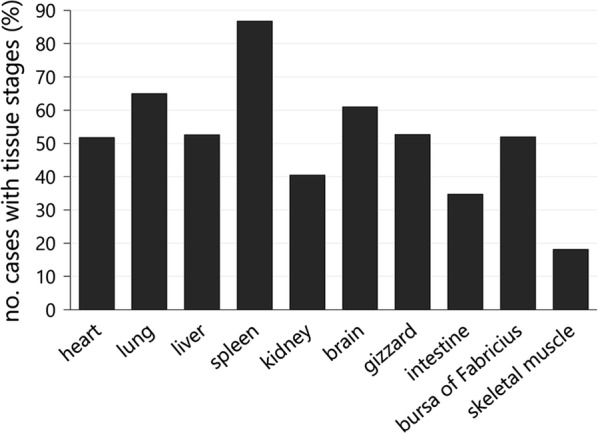
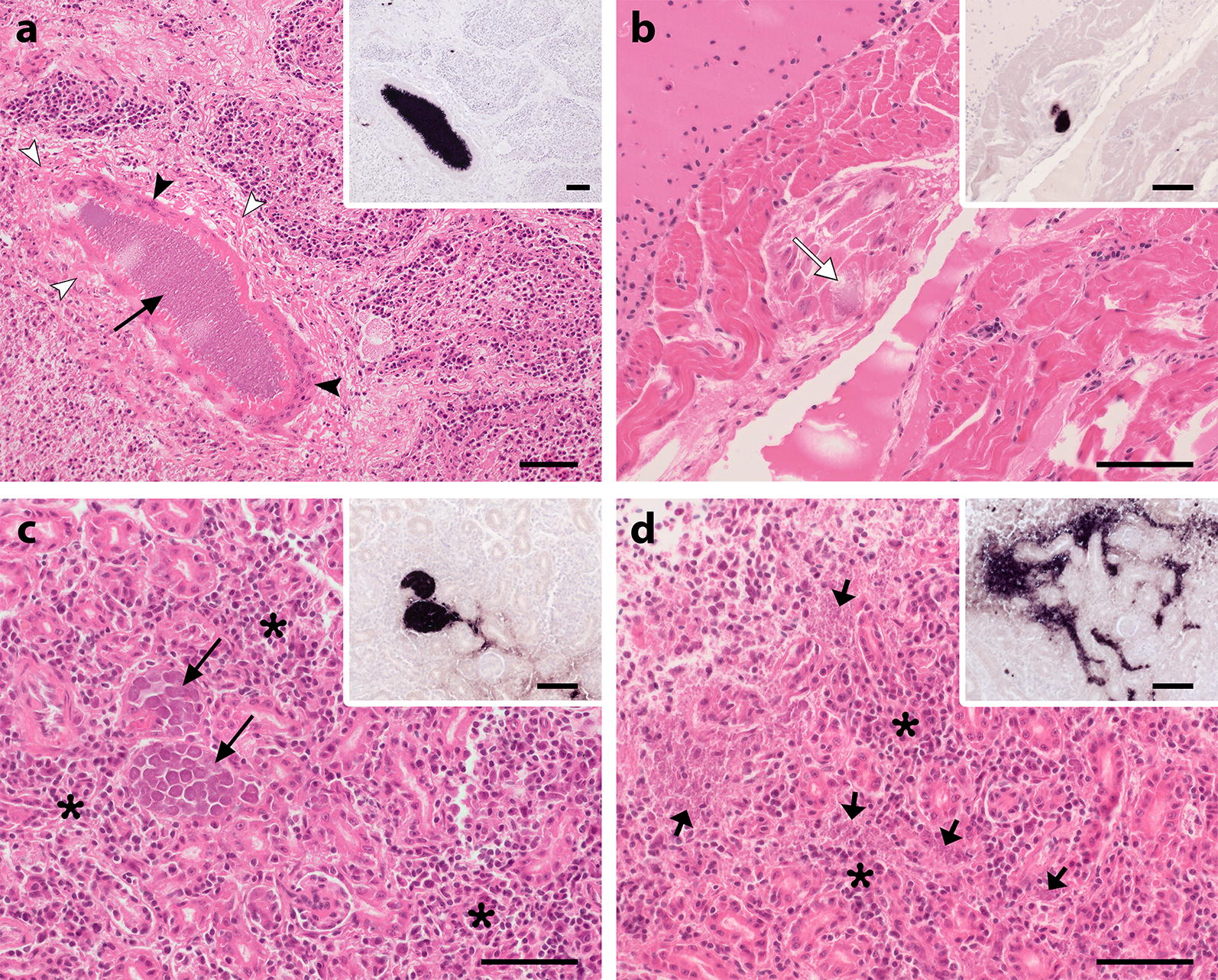
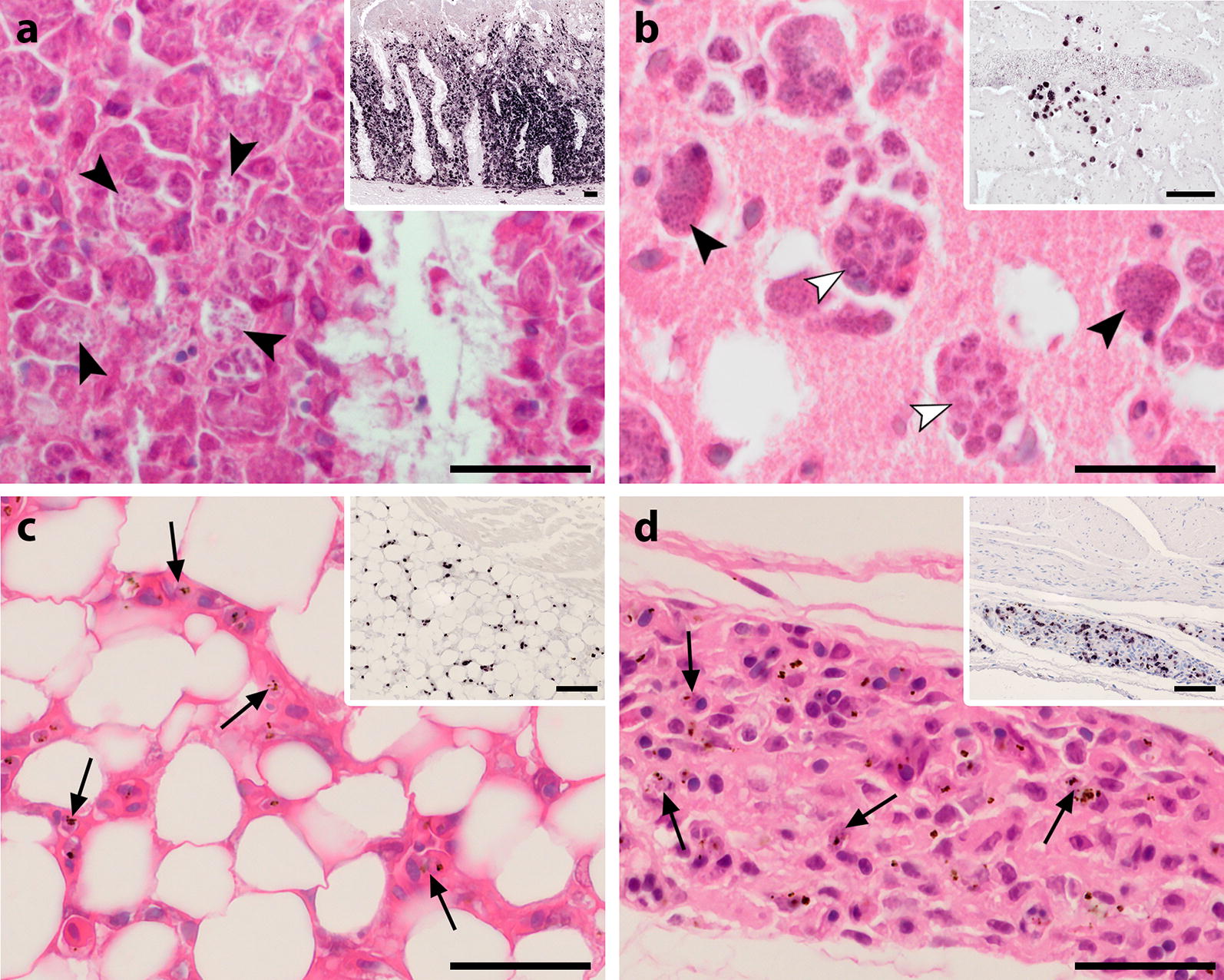
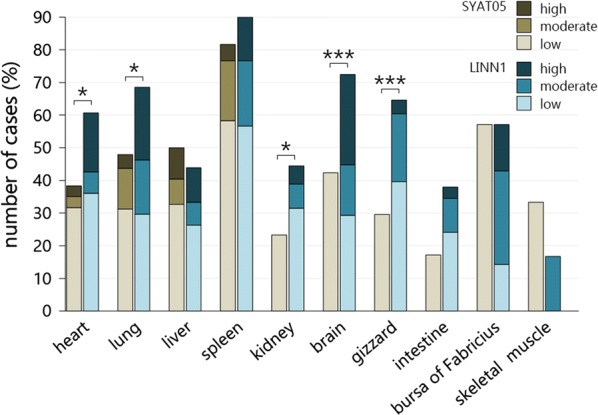
By PCR, 179 of 277 Eurasian blackbirds and 15 of 29 song thrushes were positive for haemosporidians. Parasites of all three genera were detected, with Plasmodium matutinum LINN1 and Plasmodium vaughani SYAT05 showing the highest prevalence. CISH revealed significant differences in exo-erythrocytic parasite burden between lineages in Eurasian blackbirds, with P. matutinum LINN1 frequently causing high exo-erythrocytic parasite burdens in various organs that were associated with histological alterations. Song thrushes infected with P. matutinum LINN1 and birds infected with other haemosporidian lineages showed mostly low exo-erythrocytic parasite burdens. Two Eurasian blackbirds infected with Leucocytozoon sp. TUMER01 showed megalomeronts in various organs that were associated with inflammatory reactions and necroses.
This study suggests that P. matutinum LINN1, a common lineage among native thrushes, regularly causes high exo-erythrocytic parasite burdens in Eurasian blackbirds, which may result in disease and mortalities, indicating its high pathogenic potential. The findings further illustrate that the same parasite lineage may show different levels of virulence in related bird species which should be considered when assessing the pathogenicity of haemosporidian parasite species. Finally, the study provides evidence of virulent Leucocytozoon sp. TUMER01 infections in two Eurasian blackbirds caused by megalomeront formation.
雀形目鸟类经常感染多种血孢子虫寄生虫。虽然在野生鸟类中,感染通常被认为是良性的,但最近的研究表明,由于寄生虫的外红细胞发育,某些雀形目物种会死亡,这会损害受感染宿主的器官。然而,对于大多数血孢子虫物种,外红细胞发育仍未得到充分研究,因此对于野生雀形目鸟类组织阶段的毒力知之甚少。本研究旨在调查死亡的欧亚鸫(Turdus merula)和歌鸫(Turdus philomelos)中的自然血孢子虫感染,并确定寄生虫负担和相关的组织学效应。
为了进行分子分析,通过巢式 PCR 从 306 只画眉鸟中筛选血液和组织样本,以检测疟原虫、血孢子虫和白细胞原生动物寄生虫。为了在器官样本中检测寄生虫阶段,使用针对寄生虫 rRNA 的属和种特异性探针对组织切片进行显色原位杂交(CISH)。半定量评估外红细胞寄生虫负担,并在苏木精-伊红染色切片中评估组织学病变。
通过 PCR,277 只欧亚鸫中有 179 只和 29 只歌鸫中有 15 只呈血孢子虫阳性。检测到所有三种属的寄生虫,其中疟原虫林奈(Plasmodium matutinum LINN1)和疟原虫沃格(Plasmodium vaughani SYAT05)的流行率最高。CISH 显示欧亚鸫中的外红细胞寄生虫负担在谱系之间存在显著差异,疟原虫林奈(Plasmodium matutinum LINN1)经常在各种器官中引起高外红细胞寄生虫负担,这与组织学改变有关。感染疟原虫林奈(Plasmodium matutinum LINN1)和其他血孢子虫谱系的歌鸫表现出的外红细胞寄生虫负担大多较低。两只感染白细胞原生动物 TUMER01 的欧亚鸫在各种器官中显示出巨母细胞,这与炎症反应和坏死有关。
本研究表明,常见于本地画眉鸟的疟原虫林奈(Plasmodium matutinum LINN1)通常会在欧亚鸫中引起高外红细胞寄生虫负担,这可能导致疾病和死亡,表明其具有较高的致病性。研究结果进一步表明,同一寄生虫谱系在相关鸟类物种中可能表现出不同的毒力水平,在评估血孢子虫寄生虫物种的致病性时应考虑到这一点。最后,该研究提供了证据表明,在两只欧亚鸫中,巨母细胞的形成导致了毒力白细胞原生动物 TUMER01 的感染。