National Heart and Lung Institute, Imperial College London, Du Cane Road, London W12 0NN, UK.
Department of Cardiac Surgery, School of Medicine, University of Verona, Piazzale L.A. Scuro 10, 37134 Verona, Italy.
Cardiovasc Res. 2021 Jan 1;117(1):149-161. doi: 10.1093/cvr/cvaa033.
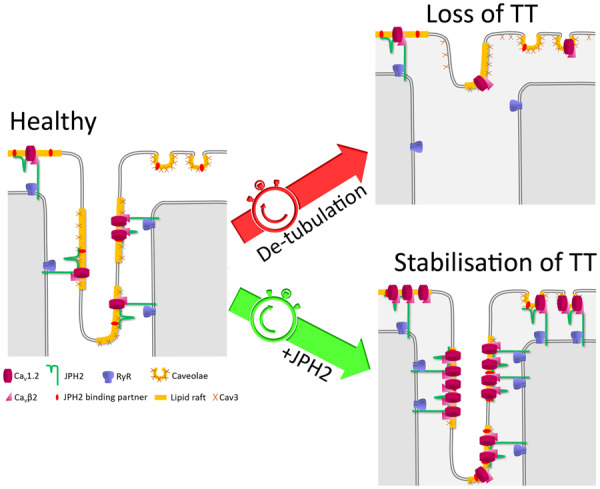
In cardiomyocytes, transverse tubules (T-tubules) associate with the sarcoplasmic reticulum (SR), forming junctional membrane complexes (JMCs) where L-type calcium channels (LTCCs) are juxtaposed to Ryanodine receptors (RyR). Junctophilin-2 (JPH2) supports the assembly of JMCs by tethering T-tubules to the SR membrane. T-tubule remodelling in cardiac diseases is associated with downregulation of JPH2 expression suggesting that JPH2 plays a crucial role in T-tubule stability. Furthermore, increasing evidence indicate that JPH2 might additionally act as a modulator of calcium signalling by directly regulating RyR and LTCCs. This study aimed at determining whether JPH2 overexpression restores normal T-tubule structure and LTCC function in cultured cardiomyocytes.
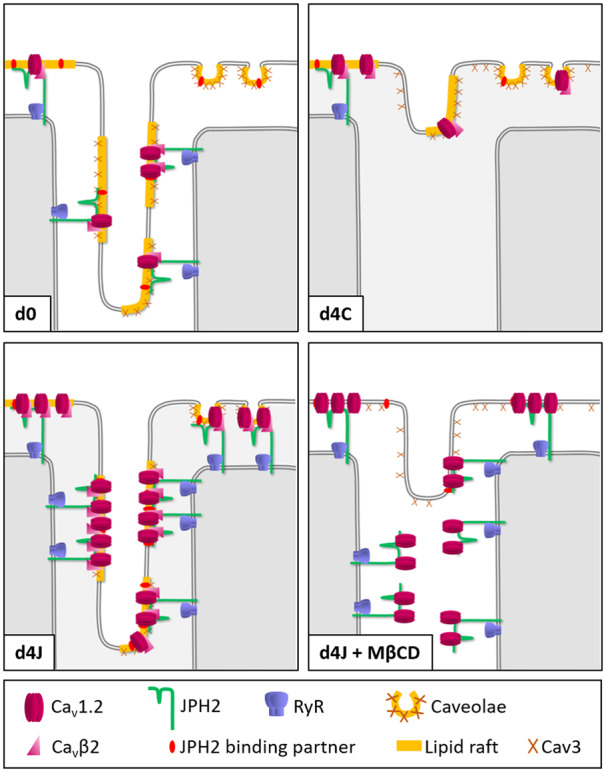
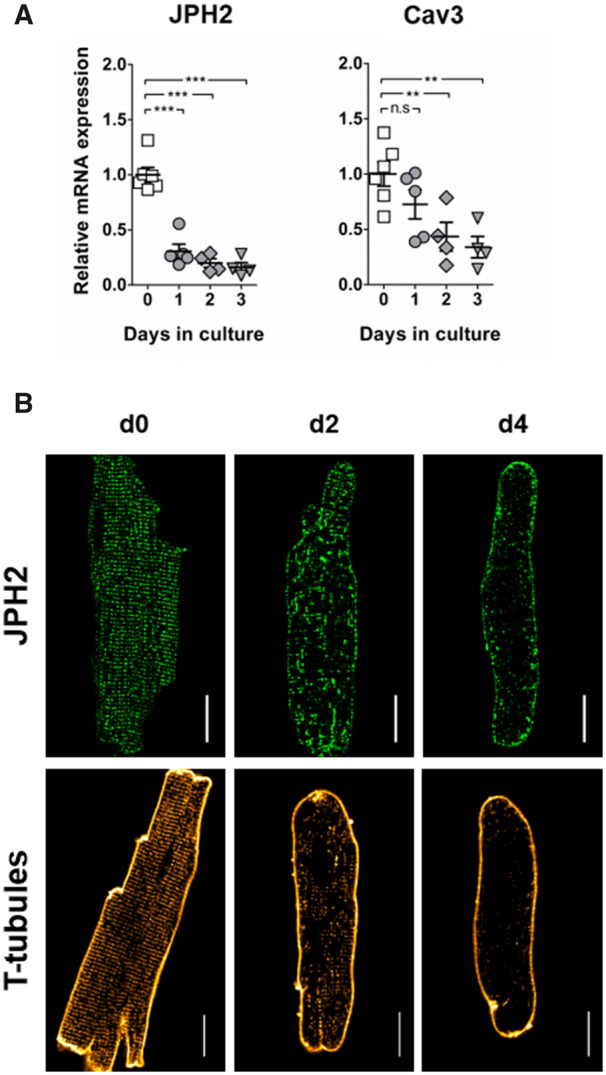
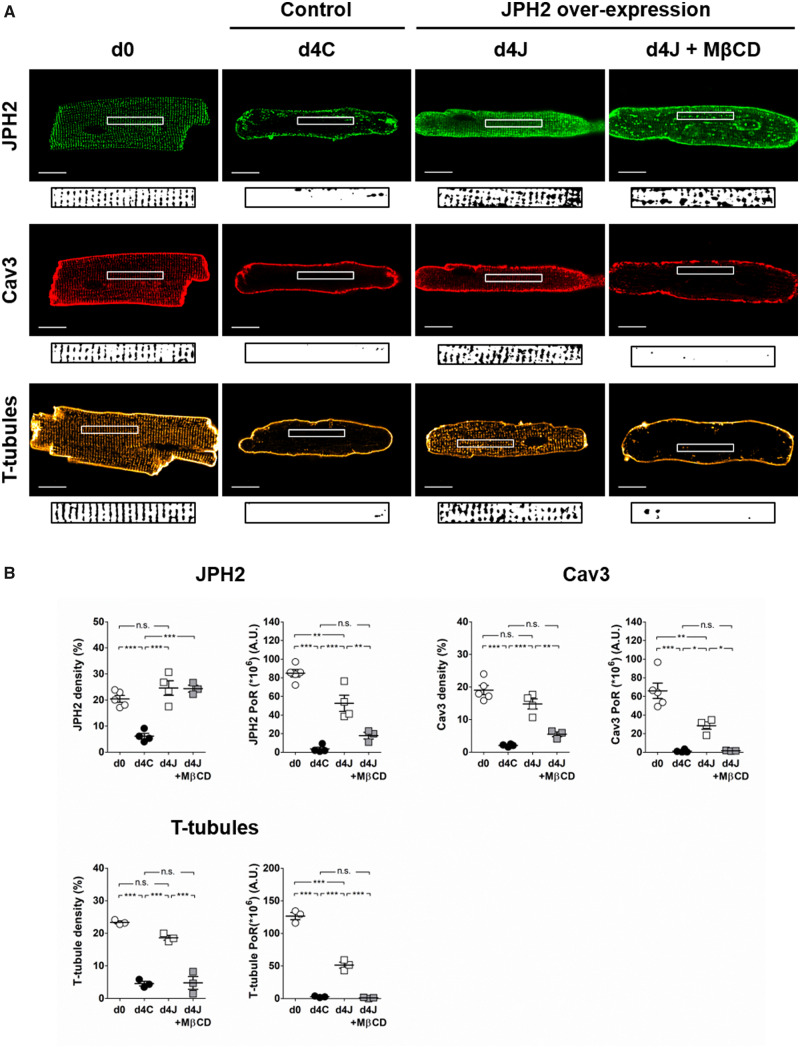
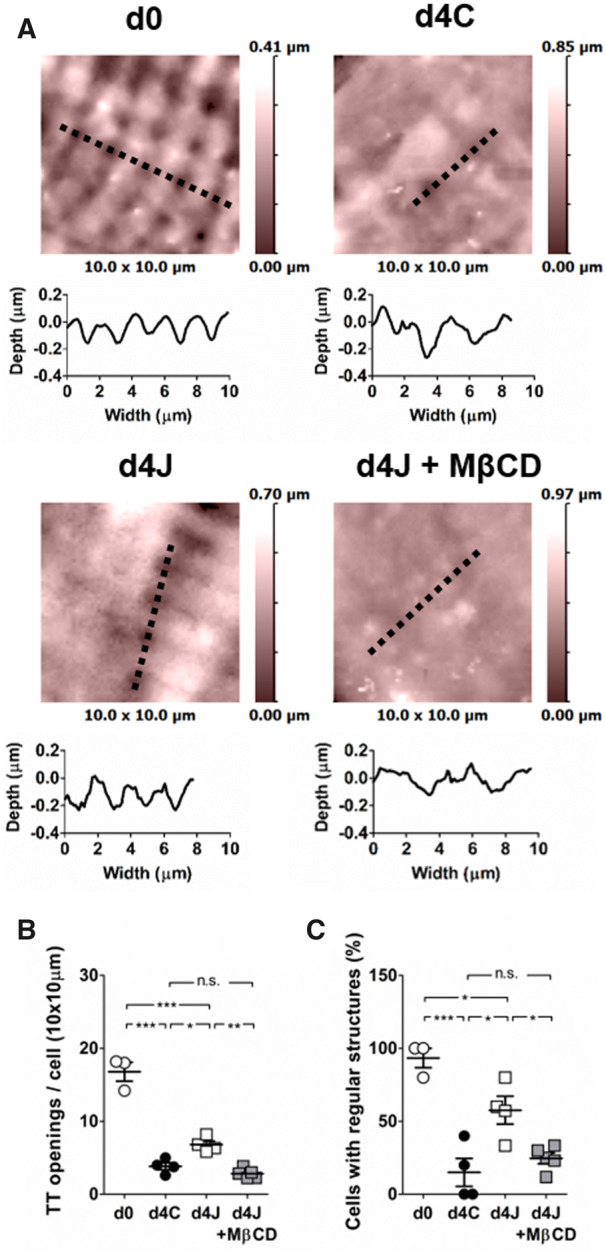
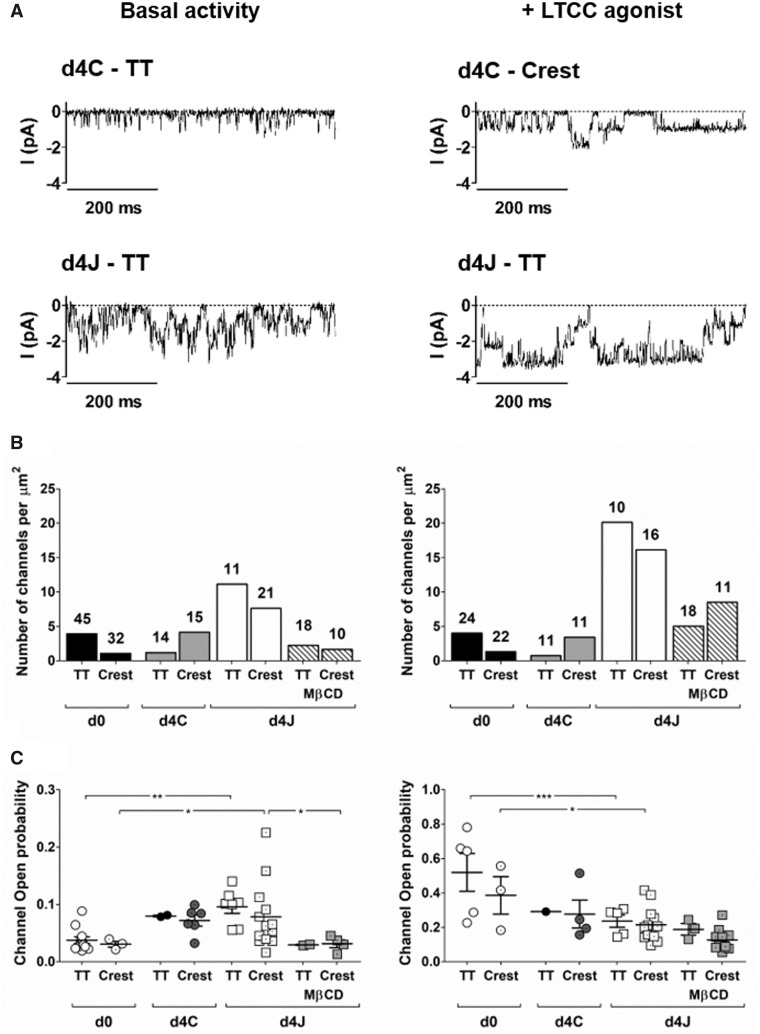
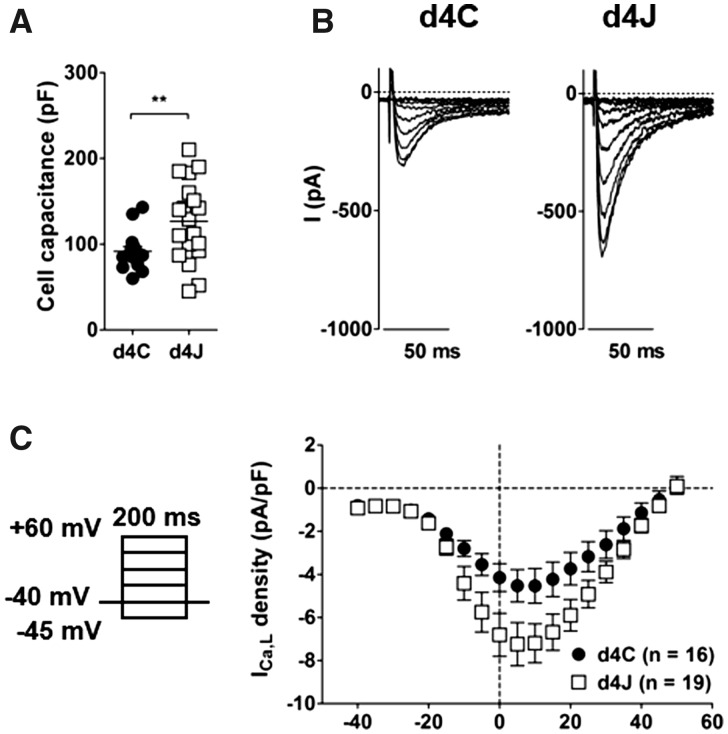
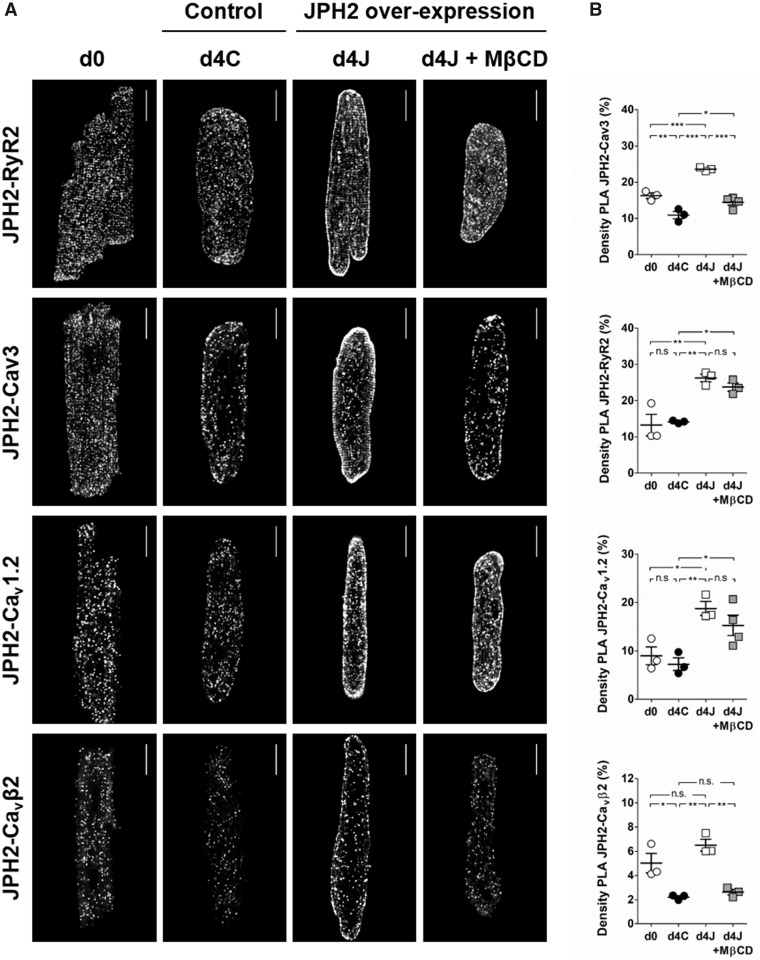
Rat ventricular myocytes kept in culture for 4 days showed extensive T-tubule remodelling with impaired JPH2 localization and relocation of the scaffolding protein Caveolin3 (Cav3) from the T-tubules to the outer membrane. Overexpression of JPH2 restored T-tubule structure and Cav3 relocation. Depletion of membrane cholesterol by chronic treatment with methyl-β-cyclodextrin (MβCD) countered the stabilizing effect of JPH2 overexpression on T-tubules and Cav3. Super-resolution scanning patch-clamp showed that JPH2 overexpression greatly increased the number of functional LTCCs at the plasma membrane. Treatment with MβCD reduced LTCC open probability and activity. Proximity ligation assays showed that MβCD did not affect JPH2 interaction with RyR and the pore-forming LTCC subunit Cav1.2, but strongly impaired JPH2 association with Cav3 and the accessory LTCC subunit Cavβ2.
JPH2 promotes T-tubule structural stability and recruits functional LTCCs to the membrane, most likely by directly binding to the channel. Cholesterol is involved in the binding of JPH2 to T-tubules as well as in the modulation of LTCC activity. We propose a model where cholesterol and Cav3 support the assembly of lipid rafts which provide an anchor for JPH2 to form JMCs and a platform for signalling complexes to regulate LTCC activity.
在心肌细胞中,横管(T 管)与肌质网(SR)相连,形成连接膜复合物(JMC),其中 L 型钙通道(LTCC)与 Ryanodine 受体(RyR)并列。Junctophilin-2(JPH2)通过将 T 管固定在 SR 膜上,支持 JMC 的组装。心脏疾病中的 T 管重塑与 JPH2 表达下调有关,表明 JPH2 在 T 管稳定性中起关键作用。此外,越来越多的证据表明,JPH2 可能通过直接调节 RyR 和 LTCC 来充当钙信号转导的调节剂。本研究旨在确定 JPH2 的过表达是否能恢复培养的心肌细胞中正常的 T 管结构和 LTCC 功能。
在培养 4 天的大鼠心室肌细胞中,T 管广泛重塑,JPH2 定位受损,支架蛋白 Caveolin3(Cav3)从 T 管转移到外膜。JPH2 的过表达恢复了 T 管结构和 Cav3 的重定位。用甲基-β-环糊精(MβCD)慢性处理以耗竭膜胆固醇,抵消了 JPH2 过表达对 T 管和 Cav3 的稳定作用。超分辨率扫描贴片钳显示,JPH2 的过表达大大增加了质膜上功能性 LTCC 的数量。MβCD 的处理降低了 LTCC 的开放概率和活性。接近连接测定表明,MβCD 不影响 JPH2 与 RyR 和形成孔的 LTCC 亚基 Cav1.2 的相互作用,但强烈抑制了 JPH2 与 Cav3 和辅助 LTCC 亚基 Cavβ2 的结合。
JPH2 促进 T 管结构稳定性,并将功能性 LTCC 募集到膜上,这很可能是通过直接与通道结合。胆固醇参与 JPH2 与 T 管的结合以及 LTCC 活性的调节。我们提出了一个模型,其中胆固醇和 Cav3 支持脂筏的组装,脂筏为 JPH2 形成 JMC 提供了一个锚点,并为信号复合物调节 LTCC 活性提供了一个平台。