Cardoso Ramos Felipe, Nottoli Michele, Cupellini Lorenzo, Mennucci Benedetta
Dipartimento di Chimica e Chimica Industriale , Università di Pisa , Via G. Moruzzi 13 , 56124 Pisa , Italy . Email:
Chem Sci. 2019 Sep 27;10(42):9650-9662. doi: 10.1039/c9sc02886b. eCollection 2019 Nov 14.
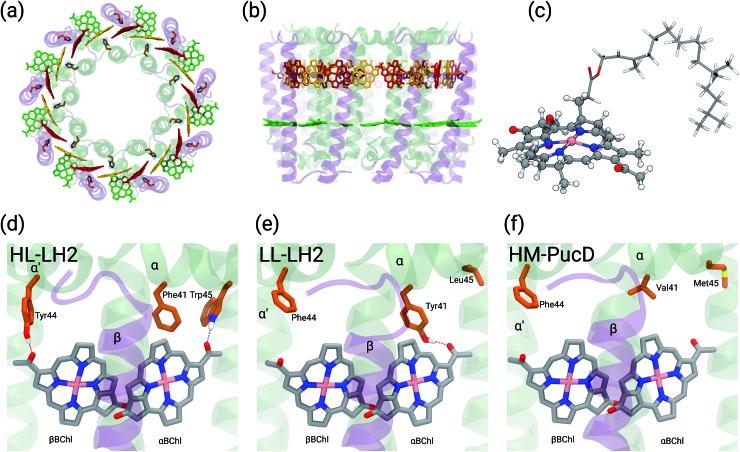
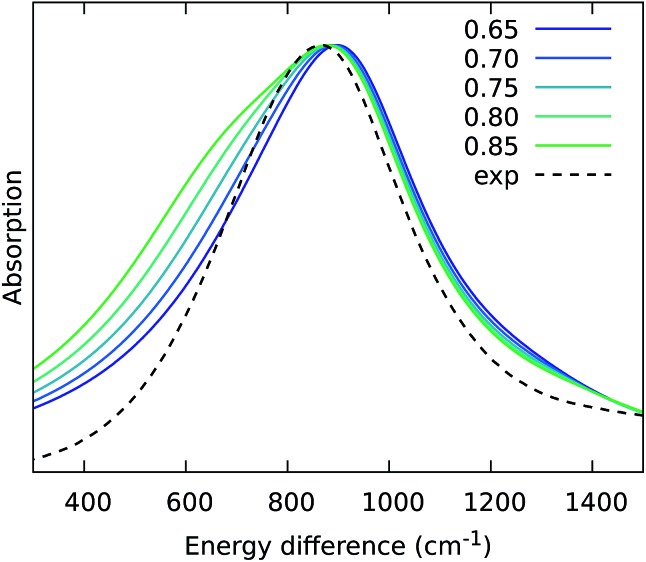
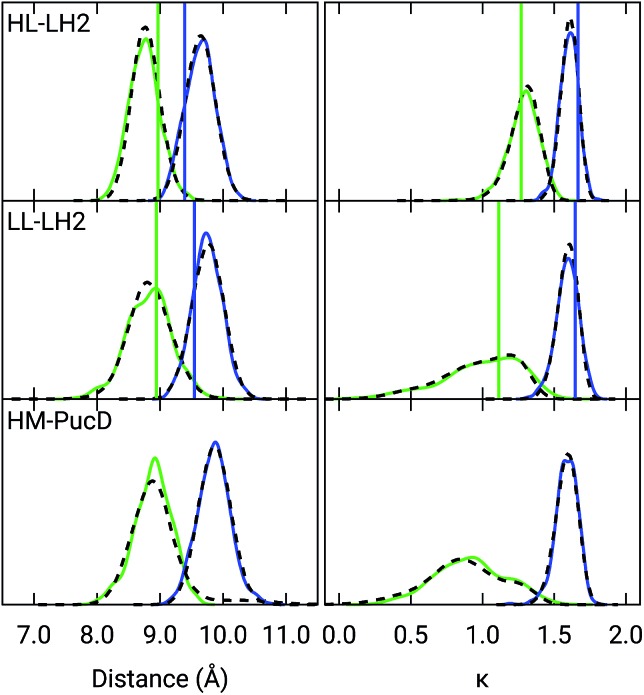
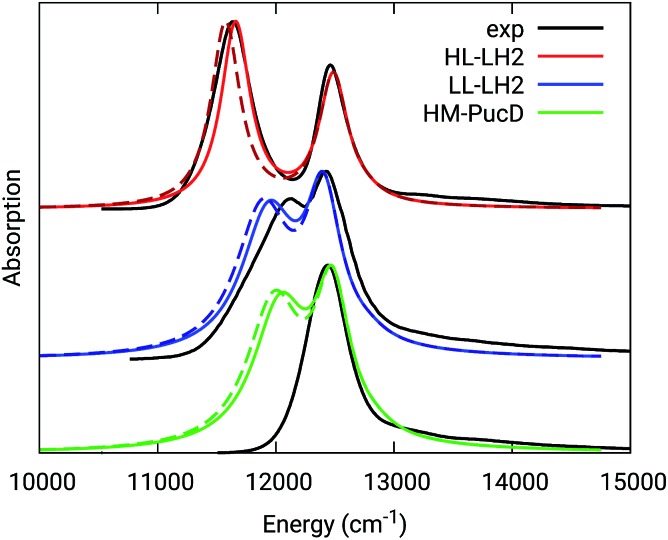
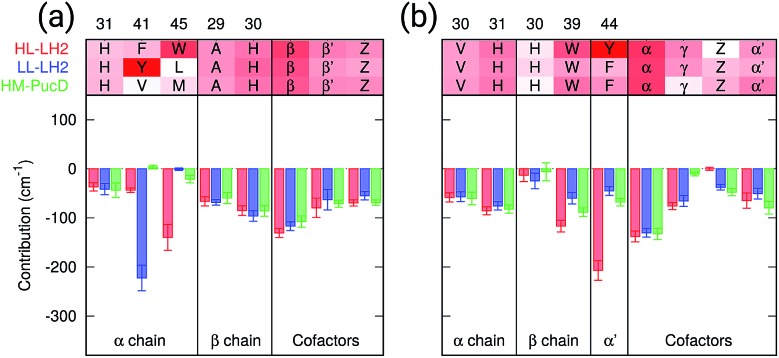
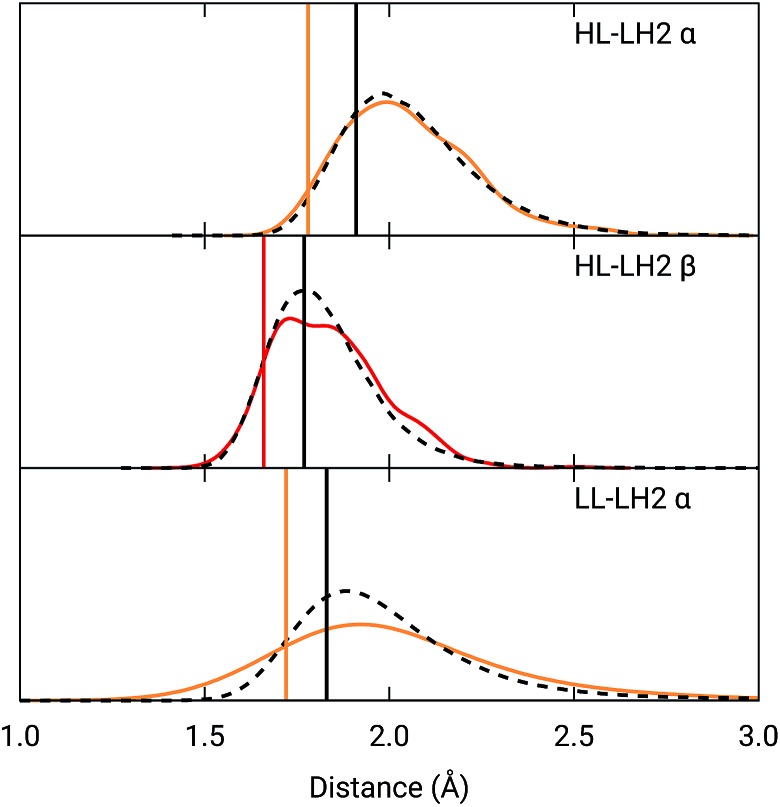
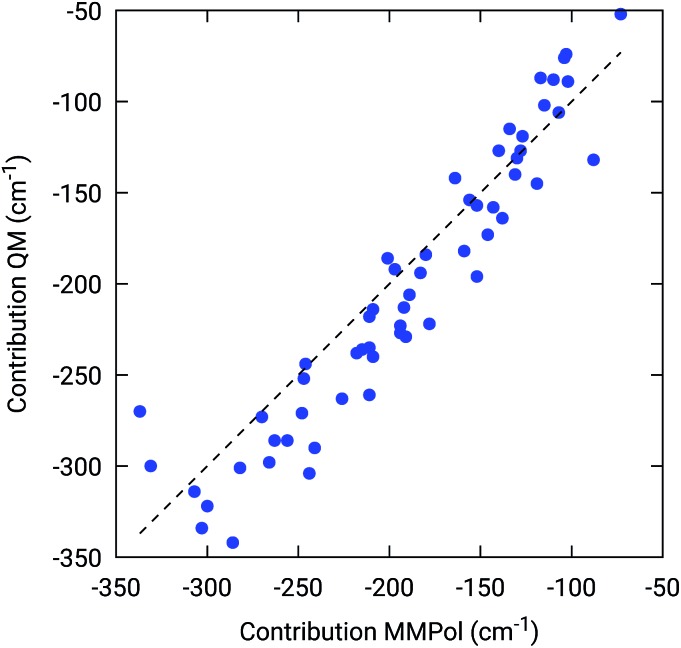
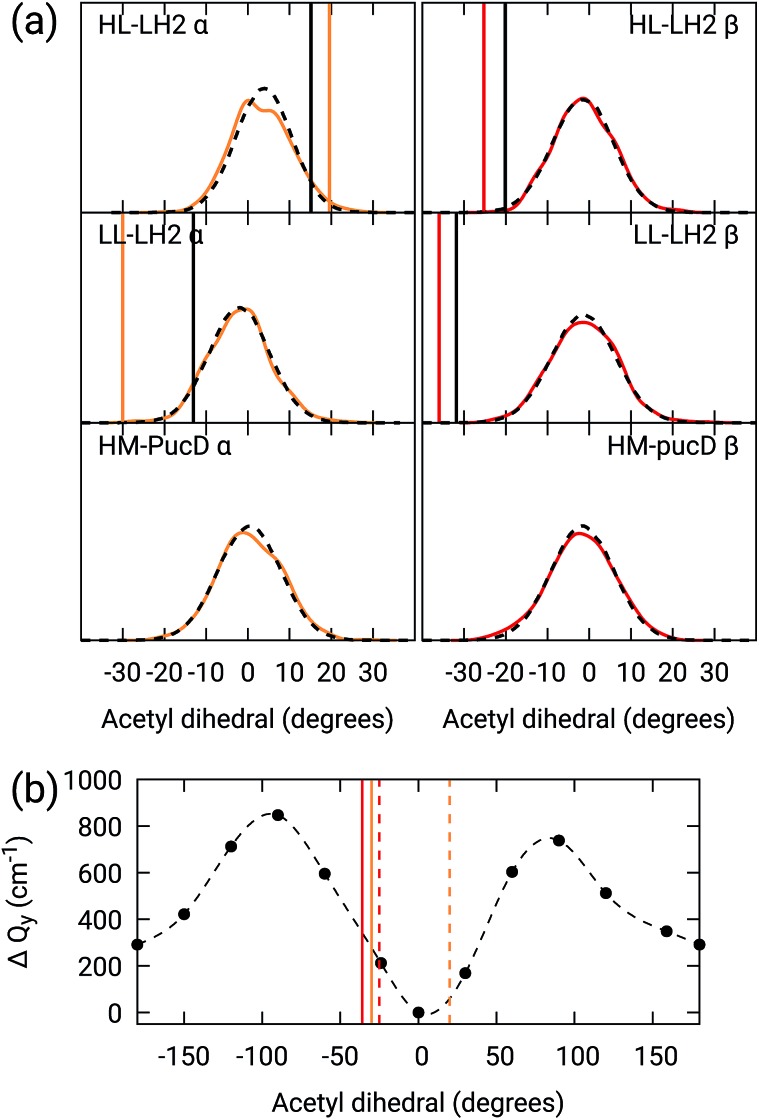
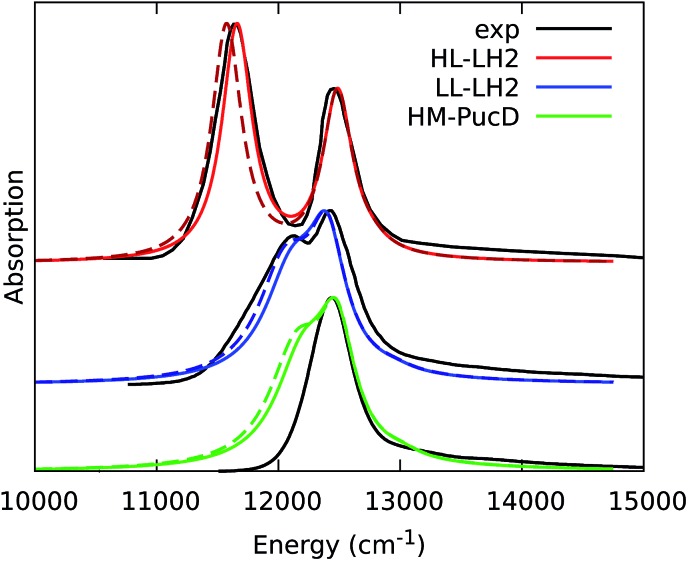
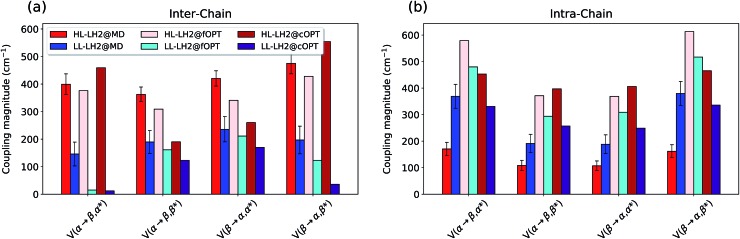
The light-harvesting in photosynthetic purple bacteria can be tuned in response to the light conditions during cell growth. One of the used strategies is to change the energy of the excitons in the major fight-harvesting complex, commonly known as LH2. In the present study we report the first systematic investigation of the microscopic origin of the exciton tuning using three complexes, namely the common (high-light) and the low-light forms of LH2 from plus a third complex analogous to the PucD complex from . The study is based on the combination of classical molecular dynamics of each complex in a lipid membrane and excitonic calculations based on a multiscale quantum mechanics/molecular mechanics approach including a polarizable embedding. From the comparative analysis, it comes out that the mechanisms that govern the adaptation of the complex to different light conditions use the different H-bonding environment around the bacteriochlorophyll pigments to dynamically control both internal and inter-pigment degrees of freedom. While the former have a large effect on the site energies, the latter significantly change the electronic couplings, but only the combination of the two effects can fully reproduce the tuning of the final excitons and explain the observed spectroscopic differences.
光合紫色细菌中的光捕获可以根据细胞生长过程中的光照条件进行调节。一种常用策略是改变主要光捕获复合物(通常称为LH2)中激子的能量。在本研究中,我们报告了首次使用三种复合物对激子调谐的微观起源进行的系统研究,这三种复合物分别是来自 的常见(高光)和低光形式的LH2,以及第三种类似于来自 的PucD复合物的复合物。该研究基于脂质膜中每种复合物的经典分子动力学与基于多尺度量子力学/分子力学方法(包括可极化嵌入)的激子计算相结合。通过比较分析发现,控制复合物适应不同光照条件的机制利用细菌叶绿素色素周围不同的氢键环境来动态控制内部和色素间的自由度。前者对位点能量有很大影响,后者显著改变电子耦合,但只有这两种效应的结合才能完全重现最终激子的调谐并解释观察到的光谱差异。