Ma Yu-Shui, Wang Xiao-Feng, Zhang Yun-Jie, Luo Pei, Long Hui-Deng, Li Liu, Yang Hui-Qiong, Xie Ru-Ting, Jia Cheng-You, Lu Gai-Xia, Chang Zheng-Yan, Zhang Jia-Jia, Xue Shao-Bo, Lv Zhong-Wei, Yu Fei, Xia Qing, Fu Da
Central Laboratory for Medical Research, Shanghai Tenth People's Hospital, Tongji University School of Medicine, Shanghai 200072, China.
Department of Nuclear Medicine, Shanghai Tenth People's Hospital, Tongji University School of Medicine, Shanghai 200072, China.
Mol Ther Oncolytics. 2020 Jan 11;16:147-157. doi: 10.1016/j.omto.2019.12.013. eCollection 2020 Mar 27.
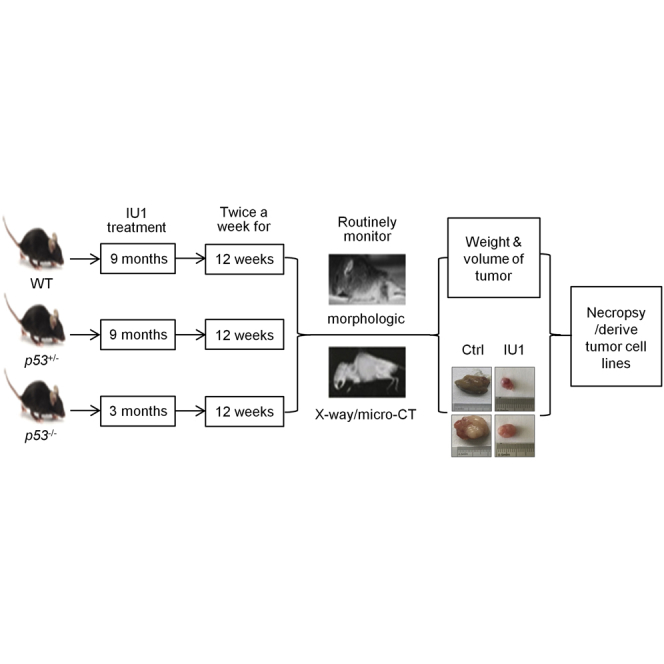
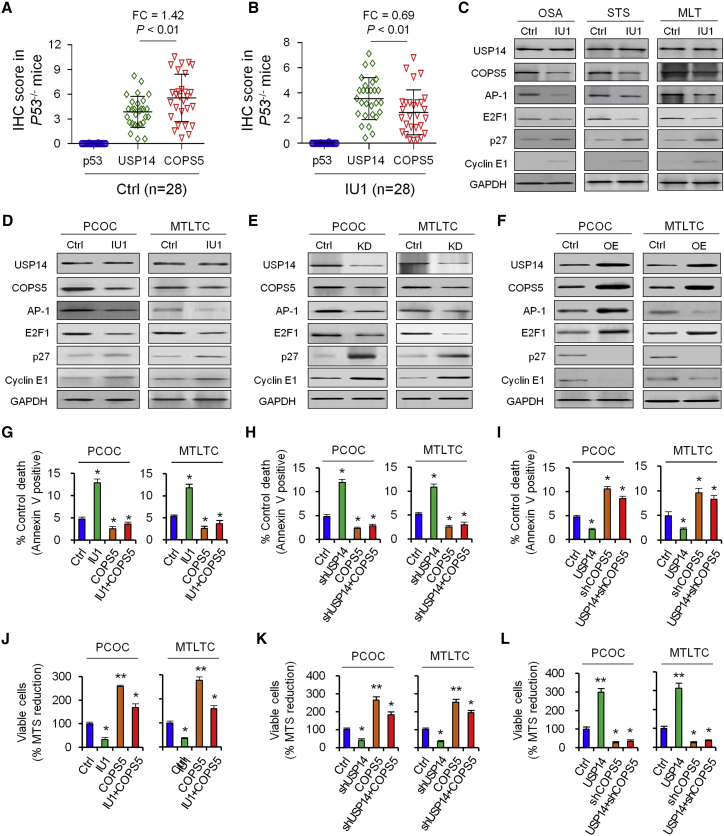
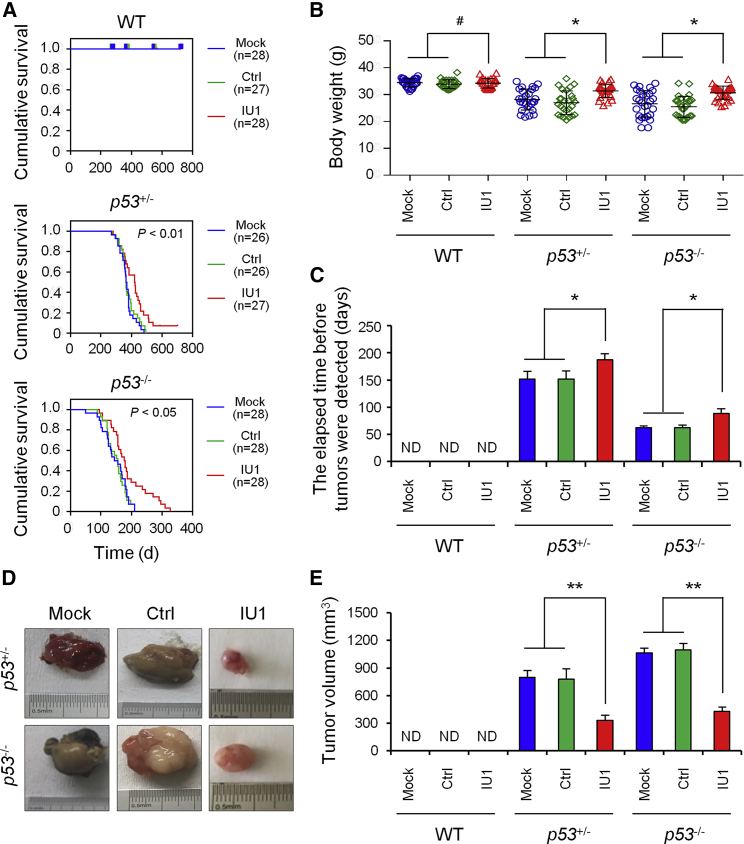
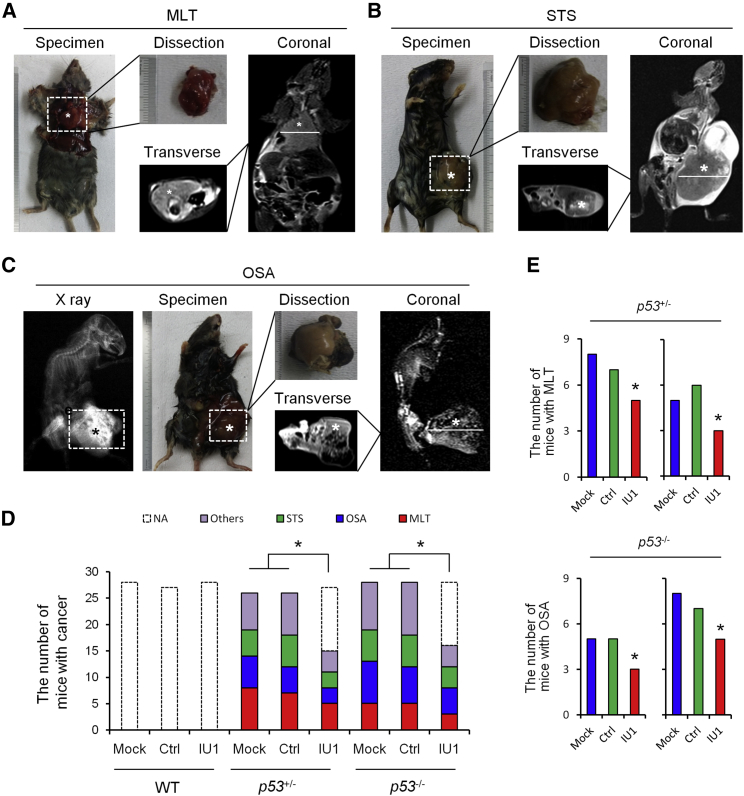
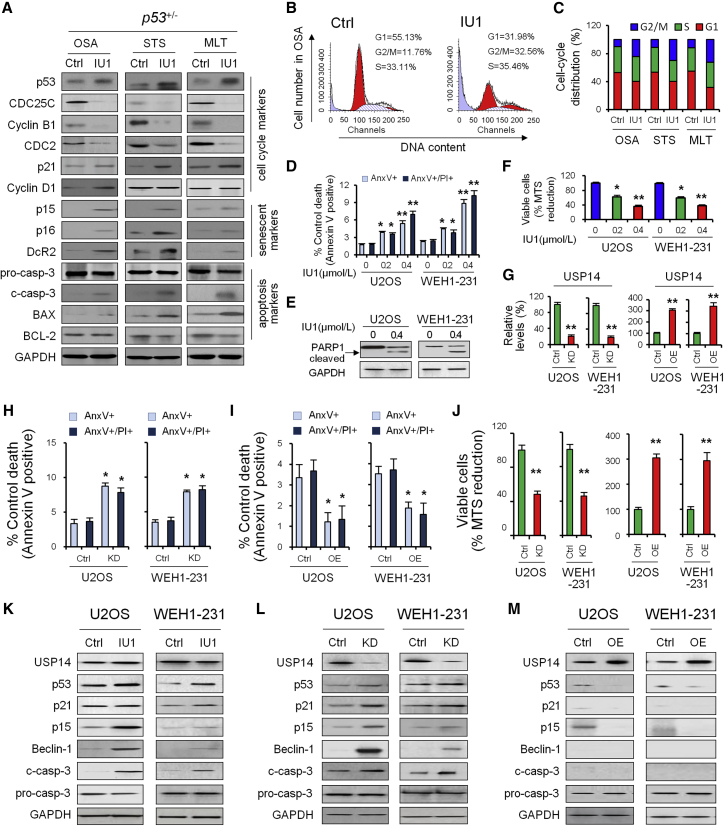
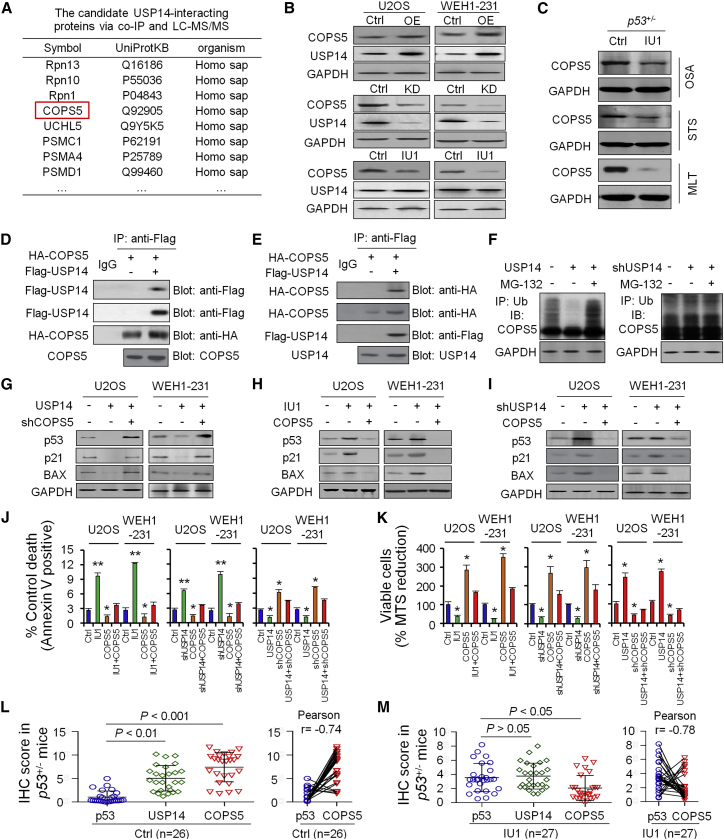
Functional elimination of p53 is a common feature of a large percentage of human malignancies. Here, we report the development of a pharmacological strategy aimed at restoring p53 function and its use for targeted therapy in p53-deficient mice. Specific inhibition of deubiquitinases ubiquitin-specific peptidase 14 (USP14) resulted in durable tumor regressions of autochthonous lymphomas and sarcomas in p53-deficient mice without affecting normal tissues, and therapeutic response was correlated with an increase in the ubiquitination of constitutive photomorphogenesis 9 (COP9) signalosome subunit 5 (COPS5), a key negative regulatory effector for p53. Inhibition of USP14 resulted in durable tumor regression through COPS5 deubiquitilation and a p53-dependent and -independent regulation mechanism by USP14. This series highlights the utility of proteasome deubiquitinating activity inhibition as a novel treatment paradigm for p53-deficient cancers. In addition, it provides preliminary evidence that inhibition of USP14 resulted in durable tumor regression through COPS5 deubiquitilation and p53-dependent and -independent regulation mechanism by USP14. These findings suggest that the deubiquitinating activity of the 19S regulatory particle is a new anticancer drug target for patients with p53 deficiency.
p53功能缺失是大部分人类恶性肿瘤的共同特征。在此,我们报告了一种旨在恢复p53功能的药理学策略的研发及其在p53缺陷小鼠靶向治疗中的应用。特异性抑制去泛素化酶泛素特异性肽酶14(USP14)可使p53缺陷小鼠体内的原发性淋巴瘤和肉瘤发生持久的肿瘤消退,且不影响正常组织,治疗反应与组成型光形态建成9(COP9)信号体亚基5(COPS5)的泛素化增加相关,COPS5是p53的关键负调控效应因子。USP14的抑制通过COPS5去泛素化以及USP14的p53依赖性和非依赖性调控机制导致持久的肿瘤消退。本系列研究突出了蛋白酶体去泛素化活性抑制作为p53缺陷型癌症新型治疗模式的实用性。此外,它提供了初步证据,表明USP14的抑制通过COPS5去泛素化以及USP14的p53依赖性和非依赖性调控机制导致持久的肿瘤消退。这些发现表明,19S调节颗粒的去泛素化活性是p53缺陷患者新的抗癌药物靶点。