Vaden Jada H, Bhattacharyya Bula J, Chen Ping-Chung, Watson Jennifer A, Marshall Andrea G, Phillips Scott E, Wilson Julie A, King Gwendalyn D, Miller Richard J, Wilson Scott M
Department of Neurobiology, University of Alabama at Birmingham, Civitan International Research Center, Evelyn F. McKnight Brain Institute, 1825 University Blvd, Birmingham, AL, 35294, USA.
Department of Molecular Pharmacology and Biological Chemistry, Northwestern University, 303 East Chicago Ave, Chicago, IL, 60611, USA.
Mol Neurodegener. 2015 Jan 10;10:3. doi: 10.1186/1750-1326-10-3.
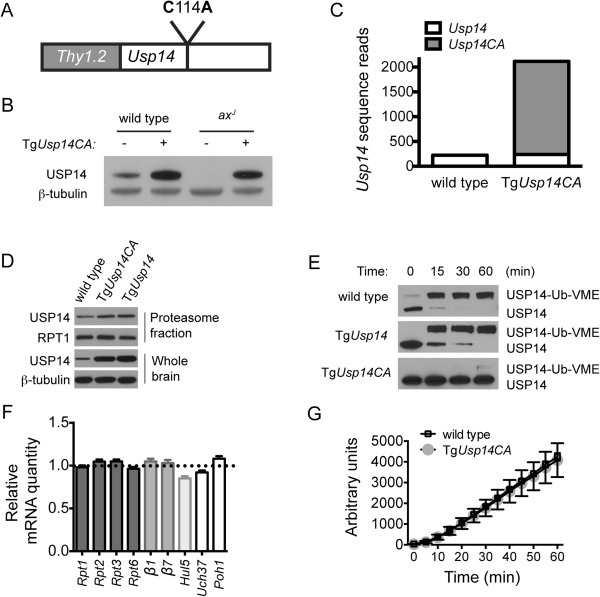
Ubiquitin-specific protease 14 (USP14) is one of three proteasome-associated deubiquitinating enzymes that remove ubiquitin from proteasomal substrates prior to their degradation. In vitro evidence suggests that inhibiting USP14's catalytic activity alters the turnover of ubiquitinated proteins by the proteasome, although whether protein degradation is accelerated or delayed seems to be cell-type and substrate specific. For example, combined inhibition of USP14 and the proteasomal deubiquitinating enzyme UCH37 halts protein degradation and promotes apoptosis in multiple myeloma cells, whereas USP14 inhibition alone accelerates the degradation of aggregate-prone proteins in immortalized cell lines. These findings have prompted interest in USP14 as a therapeutic target both inside and outside of the nervous system. However, loss of USP14 in the spontaneously occurring ataxia mouse mutant leads to a dramatic neuromuscular phenotype and early perinatal lethality, suggesting that USP14 inhibition may have adverse consequences in the nervous system. We therefore expressed a catalytically inactive USP14 mutant in the mouse nervous system to determine whether USP14's catalytic activity is required for neuromuscular junction (NMJ) structure and function.
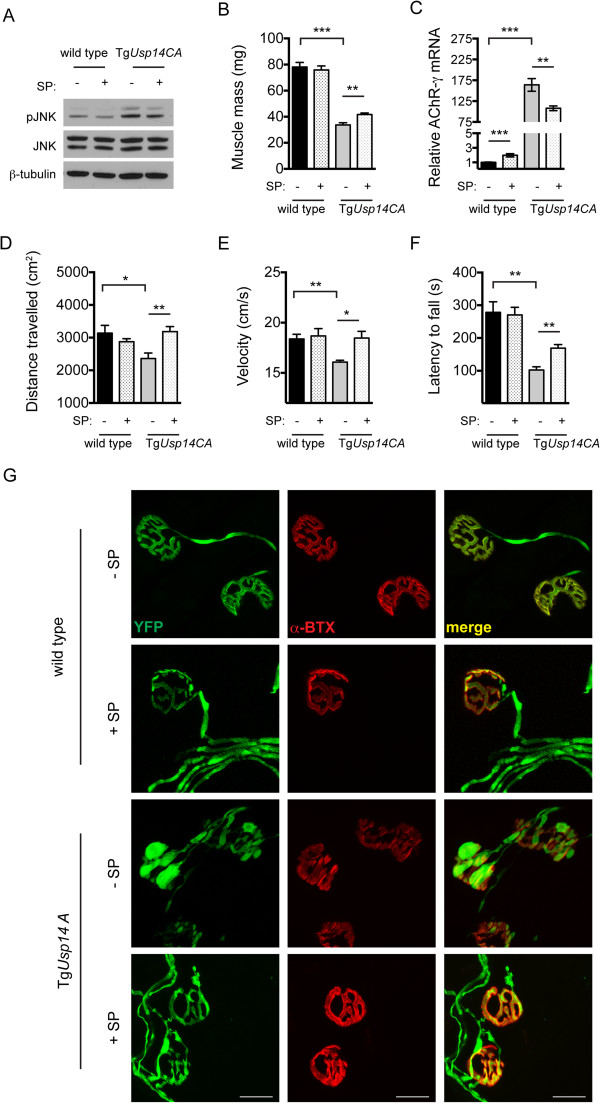
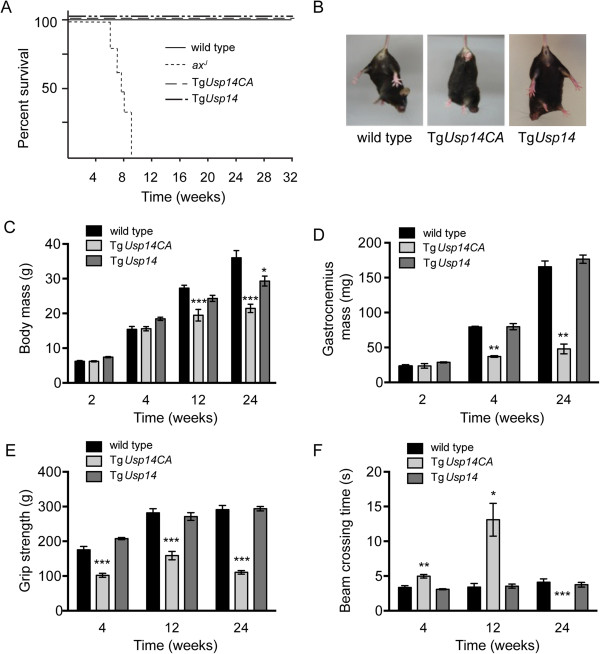
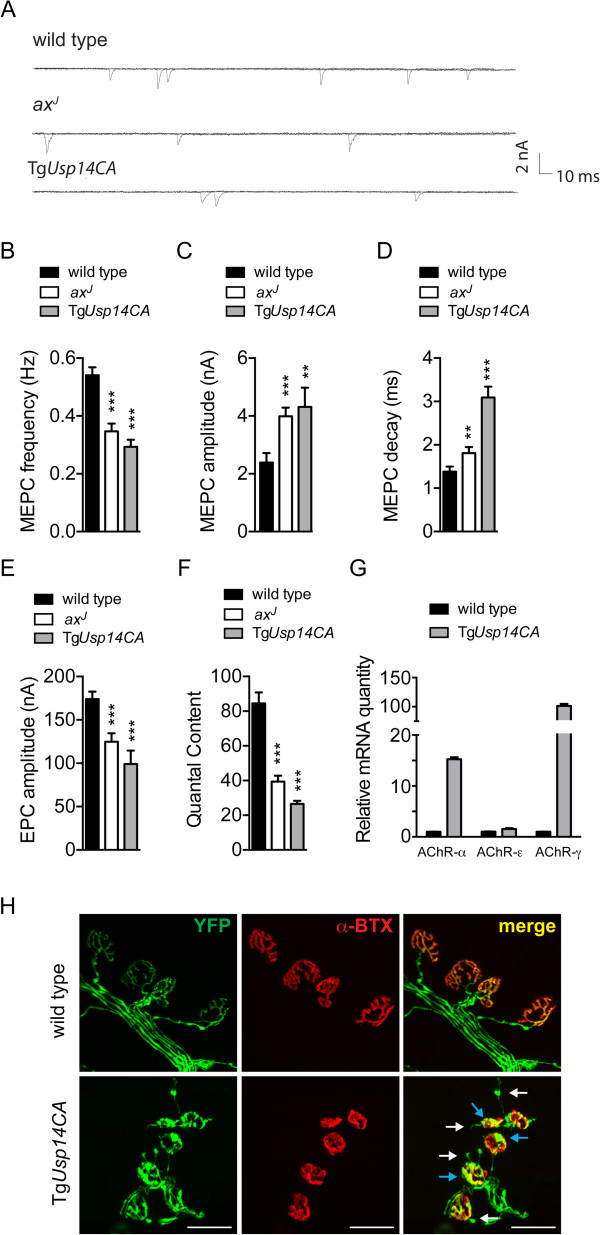
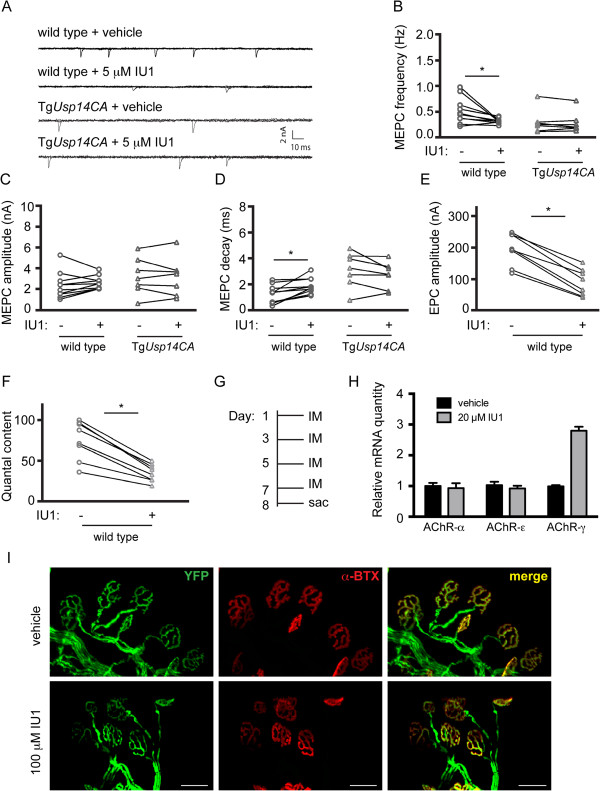
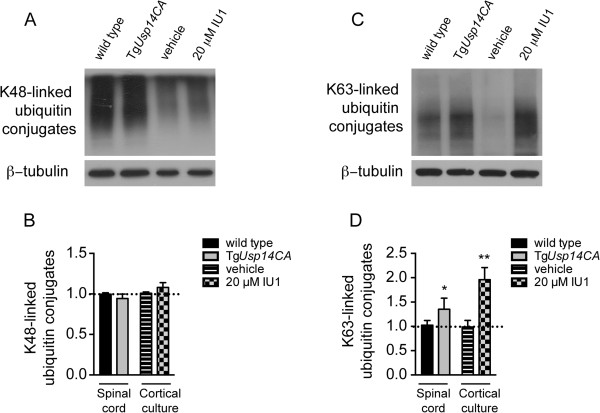
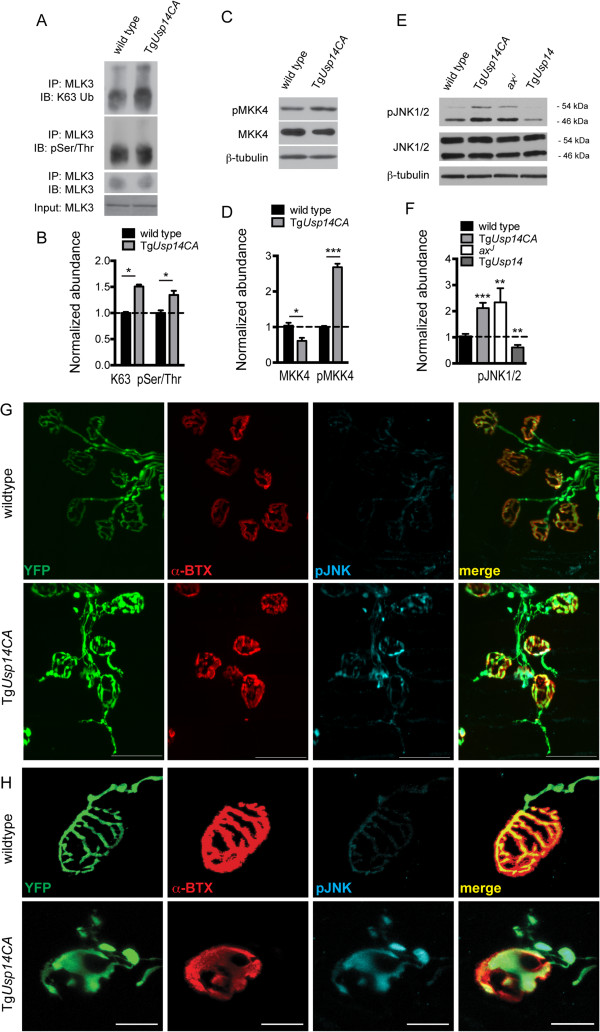
Mice expressing catalytically inactive USP14 in the nervous system exhibited motor deficits, altered NMJ structure, and synaptic transmission deficits that were similar to what is observed in the USP14-deficient ataxia mice. Acute pharmacological inhibition of USP14 in wild type mice also reduced NMJ synaptic transmission. However, there was no evidence of altered proteasome activity when USP14 was inhibited either genetically or pharmacologically. Instead, these manipulations increased the levels of non-proteasome targeting ubiquitin conjugates. Specifically, we observed enhanced proteasome-independent ubiquitination of mixed lineage kinase 3 (MLK3). Consistent with the direct activation of MLK3 by ubiquitination, we also observed increased activation of its downstrea targets MAP kinase kinase 4 (MKK4) and c-Jun N-terminal kinase (JNK). In vivo inhibition of JNK improved motor function and synapse structure in the USP14 catalytic mutant mice.
USP14's catalytic activity is required for nervous system structure and function and has an ongoing role in NMJ synaptic transmission. By regulating the ubiquitination status of protein kinases, USP14 can coordinate the activity of intracellular signaling pathways that control the development and activity of the NMJ.
泛素特异性蛋白酶14(USP14)是三种与蛋白酶体相关的去泛素化酶之一,可在蛋白酶体底物降解之前将泛素去除。体外证据表明,抑制USP14的催化活性会改变蛋白酶体对泛素化蛋白的周转,尽管蛋白质降解是加速还是延迟似乎具有细胞类型和底物特异性。例如,联合抑制USP14和蛋白酶体去泛素化酶UCH37会阻止蛋白质降解并促进多发性骨髓瘤细胞凋亡,而单独抑制USP14会加速永生化细胞系中易于聚集的蛋白质的降解。这些发现引发了人们对USP14作为神经系统内外治疗靶点的兴趣。然而,在自发发生的共济失调小鼠突变体中USP14的缺失会导致严重的神经肌肉表型和围产期早期死亡,这表明USP14抑制可能在神经系统中产生不良后果。因此,我们在小鼠神经系统中表达了一种催化无活性的USP14突变体,以确定USP14的催化活性对于神经肌肉接头(NMJ)的结构和功能是否必需。
在神经系统中表达催化无活性USP14的小鼠表现出运动缺陷、NMJ结构改变和突触传递缺陷,这与在USP14缺陷的共济失调小鼠中观察到的情况相似。对野生型小鼠急性药理学抑制USP14也会降低NMJ突触传递。然而,当通过基因或药理学方法抑制USP14时,没有证据表明蛋白酶体活性发生改变。相反,这些操作增加了非蛋白酶体靶向泛素缀合物的水平。具体而言,我们观察到混合谱系激酶3(MLK3)的蛋白酶体非依赖性泛素化增强。与泛素化直接激活MLK3一致,我们还观察到其下游靶点丝裂原活化蛋白激酶激酶4(MKK4)和c-Jun氨基末端激酶(JNK)的激活增加。体内抑制JNK可改善USP14催化突变小鼠的运动功能和突触结构。
USP14的催化活性对于神经系统结构和功能是必需的,并且在NMJ突触传递中持续发挥作用。通过调节蛋白激酶的泛素化状态,USP14可以协调控制NMJ发育和活性的细胞内信号通路的活性。