Igenomix Foundation-Instituto de Investigación Sanitaria Hospital Clínico (INCLIVA), Valencia, Spain; Igenomix S.L., Valencia, Spain.
Igenomix Foundation-Instituto de Investigación Sanitaria Hospital Clínico (INCLIVA), Valencia, Spain; Department of Pediatrics, Obstetrics and Gynecology, School of Medicine, University of Valencia, Valencia, Spain.
Am J Obstet Gynecol. 2020 Apr;222(4):296-305. doi: 10.1016/j.ajog.2020.01.031. Epub 2020 Feb 10.
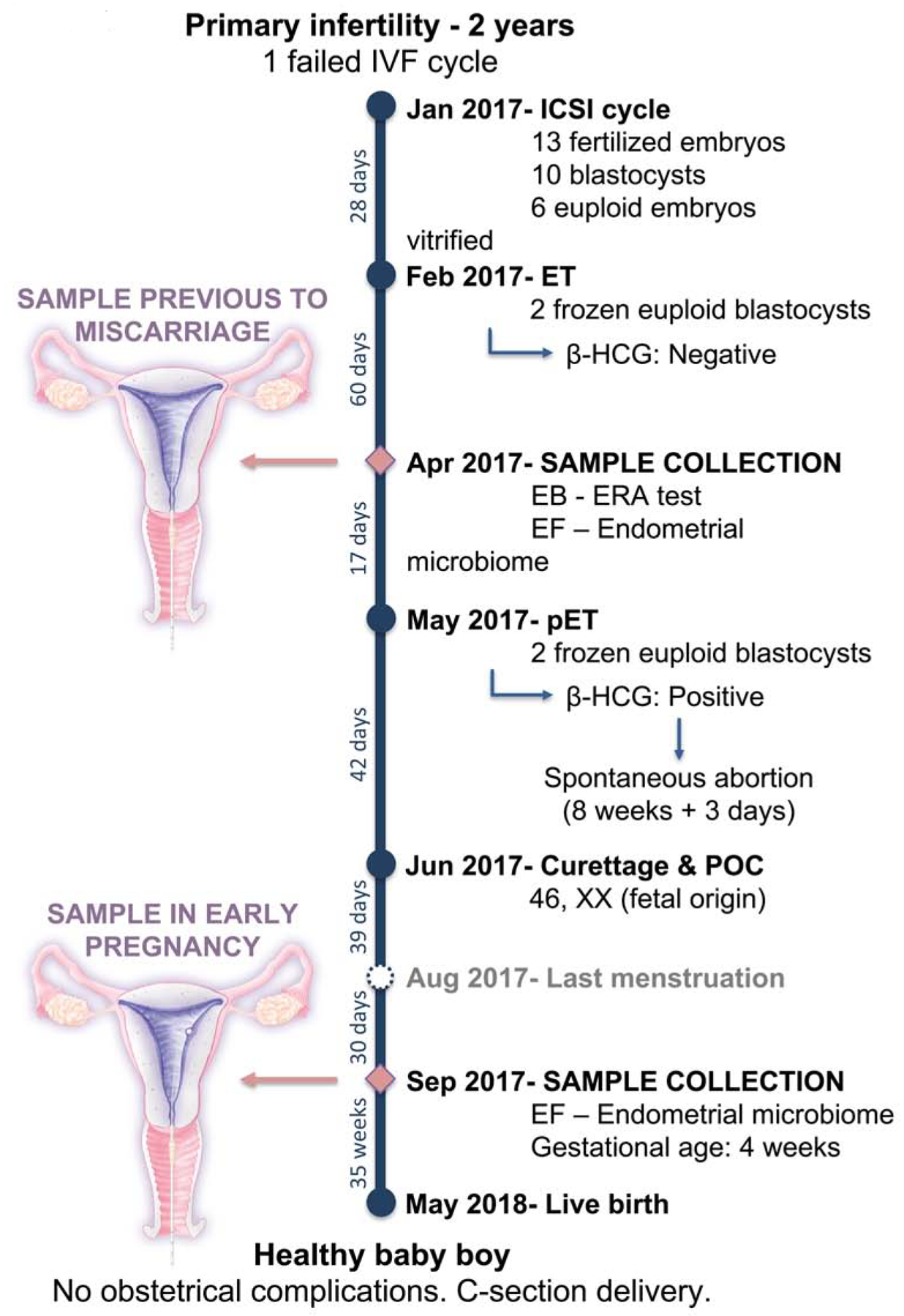
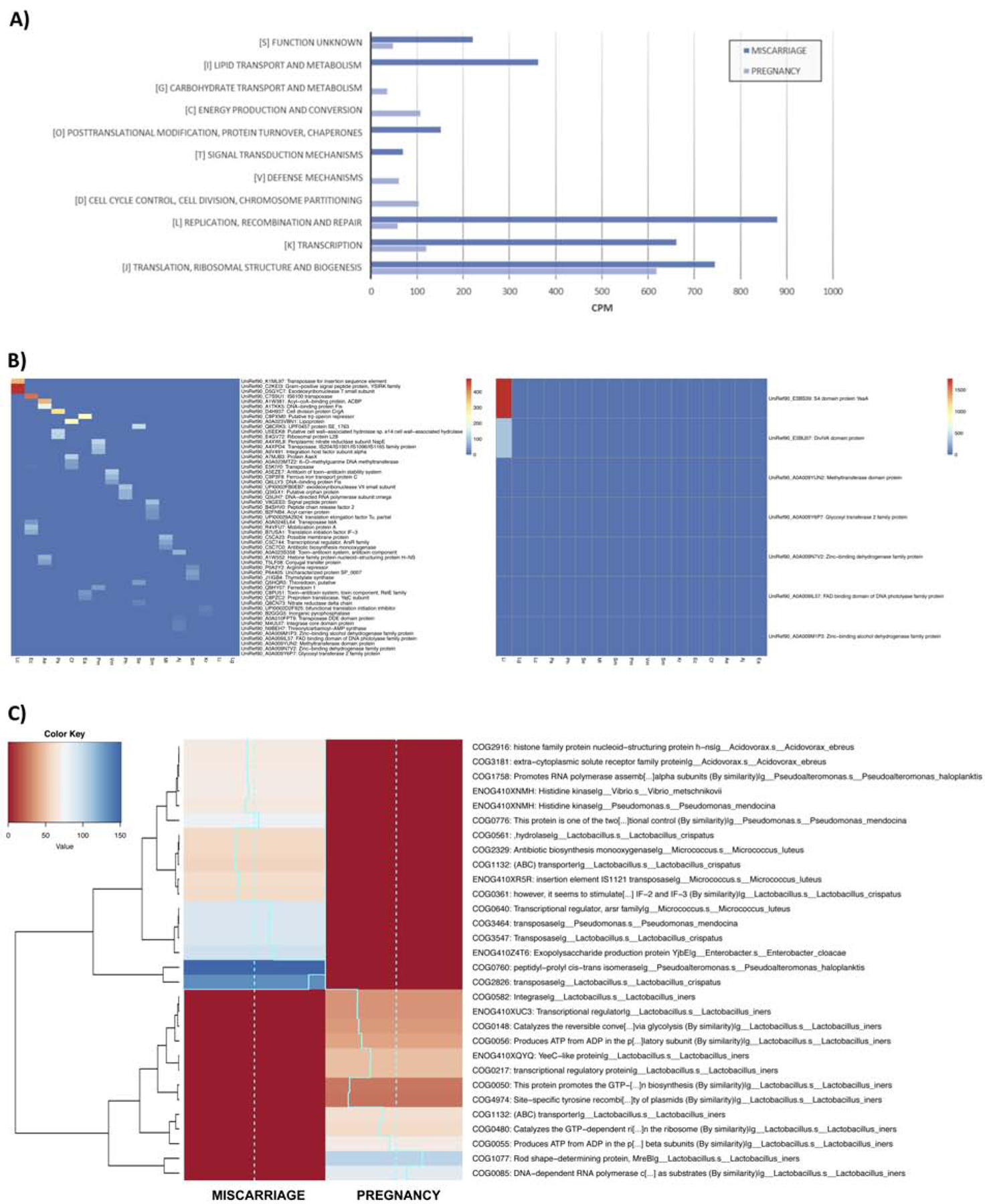
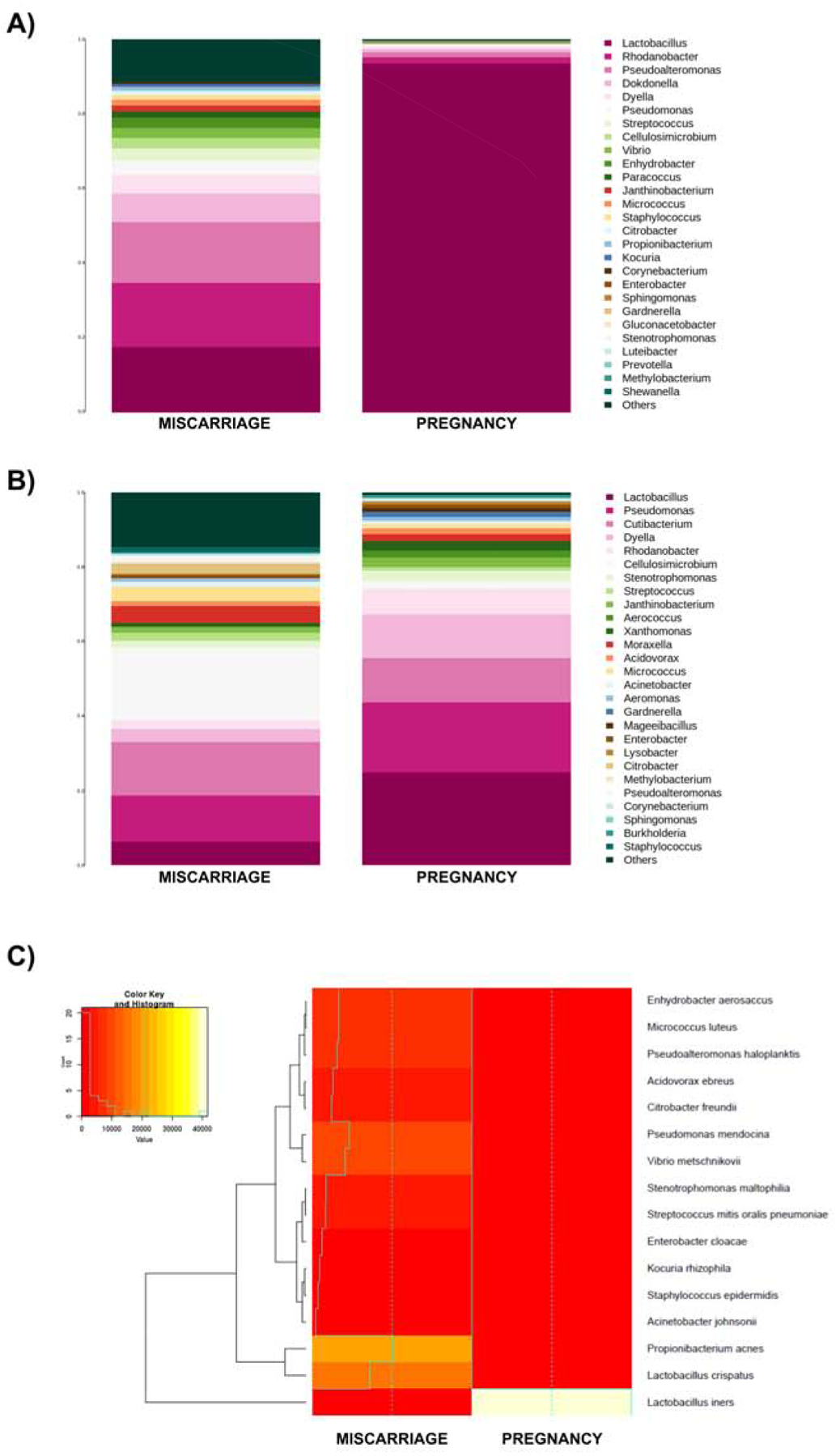
Investigation of the microbial community in the female reproductive tract with the use of sequencing techniques has revealed that endometrial samples obtained through a transvaginal catheter are dominated by Lactobacillus species. Dysbiotic changes in the endometrial microbiota may be associated with implantation failure or early spontaneous abortion in patients who undergo assisted reproductive technology treatment. Whether or not there is an endometrial microbiota in early pregnancy is unknown. Herein we describe, the human endometrial microbiota in a patient who subsequently had an 8th week spontaneous clinical miscarriage with euploid embryos in the next cycle and, for the first time, during a successful pregnancy in which the endometrial fluid was sampled at 4 weeks of gestation. The microbial profile found on the endometrial sample before the spontaneous abortion had higher bacterial diversity and lower Lactobacillus abundance than the endometrial fluid from the healthy pregnancy. Functional metagenomics detected different Lactobacillus species between the 2 samples. Lactobacillus crispatus was present in the endometrium before the spontaneous abortion, as were other bacteria involved in dysbiosis, which had an unstable functional pattern characterized by transposases and insertion elements. Lactobacillus iners was the most prevalent microbe found in the endometrium during early pregnancy; its presence was associated with defense mechanisms and basal functions. These novel observations prompt future investigations to understand the potential implications of microbiology on healthy and pathologic human pregnancy.
利用测序技术研究女性生殖道微生物群落,发现经阴道导管获得的子宫内膜样本主要由乳杆菌属细菌主导。子宫内膜微生物群落的失调变化可能与接受辅助生殖技术治疗的患者的着床失败或早期自然流产有关。是否存在早孕子宫内膜微生物群落尚不清楚。本研究首次描述了下一周期胚胎整倍体但随后发生 8 周自发性临床流产的患者的人子宫内膜微生物群,以及在成功妊娠中 4 周妊娠时取样的子宫内膜液。自发性流产前子宫内膜样本中的微生物谱具有更高的细菌多样性和更低的乳杆菌丰度,而健康妊娠的子宫内膜液则具有较低的细菌多样性和更高的乳杆菌丰度。功能宏基因组学检测到 2 个样本之间存在不同的乳杆菌属细菌。在自发性流产前的子宫内膜中存在乳酸杆菌脆化菌,以及其他参与失调的细菌,其功能模式不稳定,特征为转座酶和插入元件。在早孕期间,乳杆菌属阴道内菌是最常见的存在于子宫内膜的微生物;其存在与防御机制和基础功能有关。这些新的观察结果促使未来的研究探索微生物学对健康和病理妊娠的潜在影响。