Rokosz Krzysztof, Hryniewicz Tadeusz, Kacalak Wojciech, Tandecka Katarzyna, Raaen Steinar, Gaiaschi Sofia, Chapon Patrick, Malorny Winfried, Matýsek Dalibor, Pietrzak Kornel, Czerwińska Ewa, Iwanek Anna, Dudek Łukasz
Faculty of Mechanical Engineering, Koszalin University of Technology, Racławicka 15-17, PL 75-620 Koszalin, Poland.
Department of Physics, Norwegian University of Science and Technology (NTNU), Realfagbygget E3-124 Høgskoleringen 5, NO 7491 Trondheim, Norway.
Materials (Basel). 2020 Feb 12;13(4):828. doi: 10.3390/ma13040828.
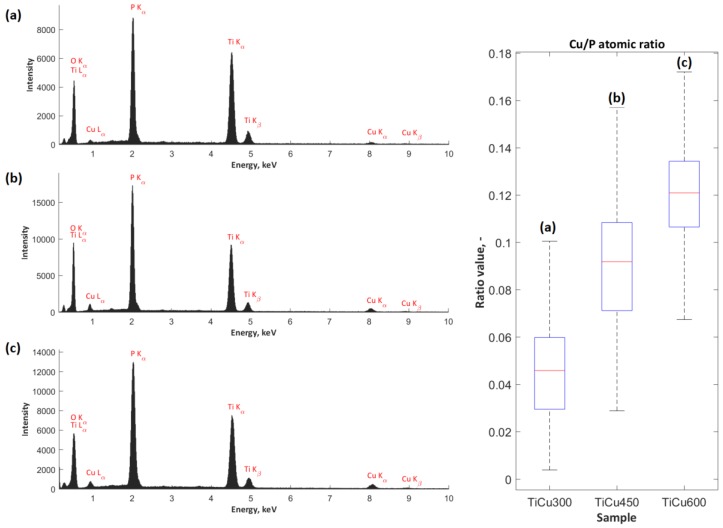
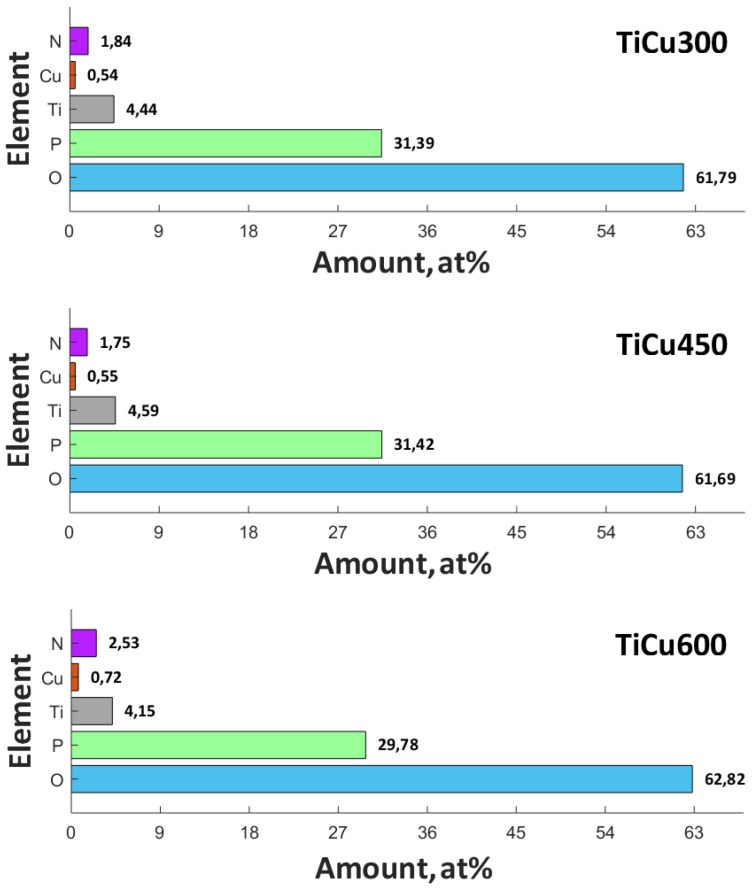
To fabricate porous copper coatings on titanium, we used the process of plasma electrolytic oxidation (PEO) with voltage control. For all experiments, the three-phase step-up transformer with six-diode Graetz bridge was used. The voltage and the amount of salt used in the electrolyte were determined so as to obtain porous coatings. Within the framework of this study, the PEO process was carried out at a voltage of 450 V in four electrolytes containing the salt as copper(II) nitrate(V) trihydrate. Moreover, we showed that the content of salt in the electrolyte needed to obtain a porous PEO coating was in the range 300-600 g/dm. After exceeding this amount of salts in the electrolyte, some inclusions on the sample surface were observed. It is worth noting that this limitation of the amount of salts in the electrolyte was not connected with the maximum solubility of copper(II) nitrate(V) trihydrate in the concentrated (85%) orthophosphoric acid. To characterize the obtained coatings, numerous techniques were used. In this work, we used scanning electron microscopy (SEM) coupled with electron-dispersive X-ray spectroscopy (EDS), conducted surface analysis using confocal laser scanning microscopy (CLSM), and studied the surface layer chemical composition of the obtained coatings by X-ray photoelectron spectroscopy (XPS), X-ray diffraction (XRD), glow discharge of optical emission spectroscopy (GDOES), and biological tests. It was found that the higher the concentration of Cu(NO)∙3HO in the electrolyte, the higher the roughness of the coatings, which may be described by 3D roughness parameters, such as (1.17-1.90 μm) and (7.62-13.91 μm). The thicknesses of PEO coatings obtained in the electrolyte with 300-600 g/dm Cu(NO) ∙3HO were in the range 7.8 to 10 μm. The Cu/P ratio of the whole volume of coating measured by EDS was in the range 0.05-0.12, while the range for the top layer (measured using XPS) was 0.17-0.24. The atomic concentration of copper (0.54-0.72 at%) resulted in antibacterial and fungicidal properties in the fabricated coatings, which can be dedicated to biocompatible applications.
为了在钛表面制备多孔铜涂层,我们采用了电压控制的等离子体电解氧化(PEO)工艺。在所有实验中,均使用了带有六二极管格拉茨桥的三相升压变压器。确定了电解液中的电压和盐用量,以获得多孔涂层。在本研究框架内,PEO工艺在450V电压下于四种含有三水合硝酸铜(II)(V)盐的电解液中进行。此外,我们发现获得多孔PEO涂层所需的电解液中盐的含量范围为300 - 600g/dm³。当电解液中盐的含量超过此量时,在样品表面观察到一些夹杂物。值得注意的是,电解液中盐含量的这种限制与三水合硝酸铜(II)(V)在浓(85%)正磷酸中的最大溶解度无关。为了表征所获得的涂层,使用了多种技术。在这项工作中,我们使用了扫描电子显微镜(SEM)与能量色散X射线光谱(EDS)联用,利用共聚焦激光扫描显微镜(CLSM)进行表面分析,并通过X射线光电子能谱(XPS)、X射线衍射(XRD)、辉光放电光发射光谱(GDOES)和生物学测试研究了所获得涂层的表面层化学成分。结果发现,电解液中Cu(NO₃)∙3H₂O的浓度越高,涂层的粗糙度越高,这可以用三维粗糙度参数来描述,如Rz(1.17 - 1.90μm)和Ry(7.62 - 13.91μm)。在含有300 - 600g/dm³ Cu(NO₃) ∙3H₂O的电解液中获得的PEO涂层厚度在7.8至10μm范围内。通过EDS测量的整个涂层体积的Cu/P比在0.05 - 0.12范围内,而顶层(使用XPS测量)的范围为0.17 - 0.24。铜的原子浓度(0.54 - 0.72 at%)使制备的涂层具有抗菌和杀菌性能,可用于生物相容性应用。