Davis Maxine, Jonson-Reid Melissa, Dahm Charles, Fernandez Bruno, Stoops Charles, Sabri Bushra
School of Social Work, The University of Texas at Arlington, TX, USA.
Brown School of Social Work, Washington University in St. Louis, USA.
Am J Mens Health. 2020 Jan-Feb;14(1):1557988319891287. doi: 10.1177/1557988319891287.
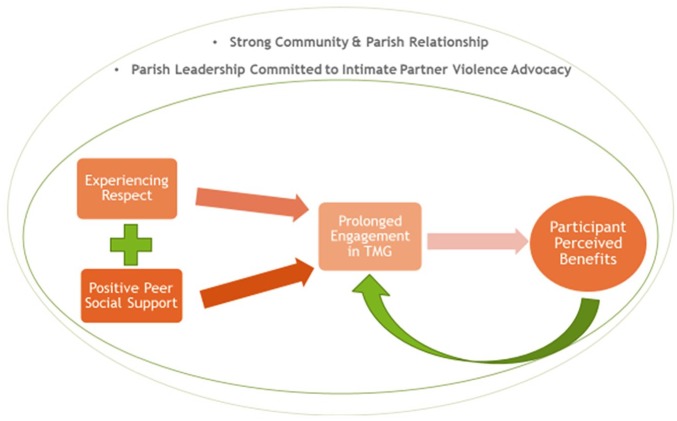
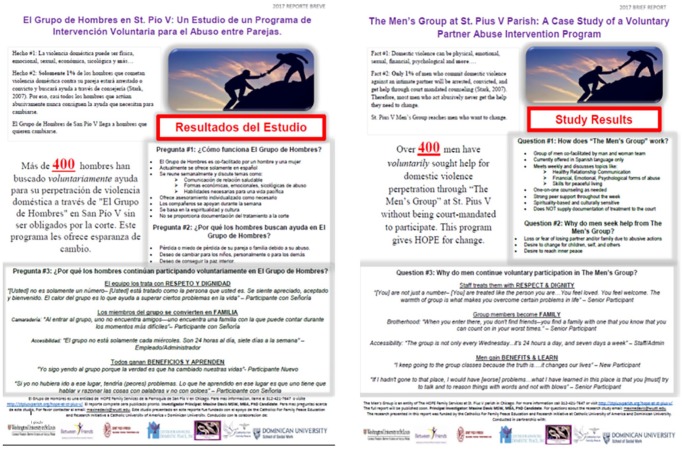
Literature on Latino men and intervention for intimate partner violence/abuse (IPV/A) is slim. Over 100 men have sought help for IPV/A perpetration from "The Men's Group" (TMG) at St. Pius V parish in Chicago, IL (US) and remained engaged for extended periods. Given the rarity of prolonged non-court mandated engagement in batterer intervention programs (BIPs), a case study was conducted to explore how TMG functions. Drawing on multiple data sources, this study examined development and implementation of TMG, while also investigating contextual factors, motivators and facilitators of participants' involvement. Data revealed that TMG functions within a supportive community context by using a mixture of traditional techniques and innovative practices, creating a unique treatment modality. The program was found to be culturally-sensitive and spirituality-based. Reasons for initial attendance varied but included: (1) fear of losing or actual loss of their partner/family; (2) acknowledging a problem and desiring to change for self or others; and (3) a desire to reach inner peace. Three themes shed light on why men remain engaged in TMG, including: (1) being met with respect by facilitators; (2) experiencing TMG as "family"; and (3) gaining benefits. Reliance upon the criminal justice system is not enough to address IPV/A perpetration. This program shows promise as an alternative or supplement to traditional BIPs, which typically rely on clients being court-mandated to attend treatment. Given the widespread nature of IPV/A, understanding the operation of potential community-based alternatives or supplements to BIPs is critical in widening access to treatment.
关于拉丁裔男性以及亲密伴侣暴力/虐待(IPV/A)干预措施的文献资料很少。超过100名男性因实施IPV/A行为,向位于美国伊利诺伊州芝加哥市圣庇护五世教区的“男性团体”(TMG)寻求帮助,并长期参与其中。鉴于在施暴者干预项目(BIPs)中,非法庭强制要求的长期参与情况较为罕见,因此开展了一项案例研究,以探究TMG的运作方式。本研究利用多种数据源,考察了TMG的发展与实施情况,同时还调查了参与者参与其中的背景因素、动机和促进因素。数据显示,TMG在一个支持性的社区环境中运作,采用传统技术与创新实践相结合的方式,创造了一种独特的治疗模式。该项目被发现具有文化敏感性且以精神信仰为基础。最初参与的原因各不相同,但包括:(1)害怕失去或实际已失去伴侣/家庭;(2)认识到问题所在,并希望为自己或他人做出改变;(3)渴望获得内心的平静。三个主题揭示了男性持续参与TMG的原因,包括:(1)受到 facilitators 的尊重;(2)将TMG视为“家庭”;(3)获得益处。仅依靠刑事司法系统不足以解决IPV/A行为。该项目有望成为传统BIPs的替代方案或补充,传统BIPs通常依赖法庭强制要求客户接受治疗。鉴于IPV/A的普遍性,了解BIPs潜在的基于社区的替代方案或补充措施的运作情况,对于扩大治疗途径至关重要。