Department of Biochemistry and Molecular Biology, University of Nebraska Medical Center, Omaha, Nebraska, USA.
Department of Pediatrics, University of Nebraska Medical Center, Omaha, NE, USA.
Mol Cancer. 2020 Feb 15;19(1):29. doi: 10.1186/s12943-020-1140-x.
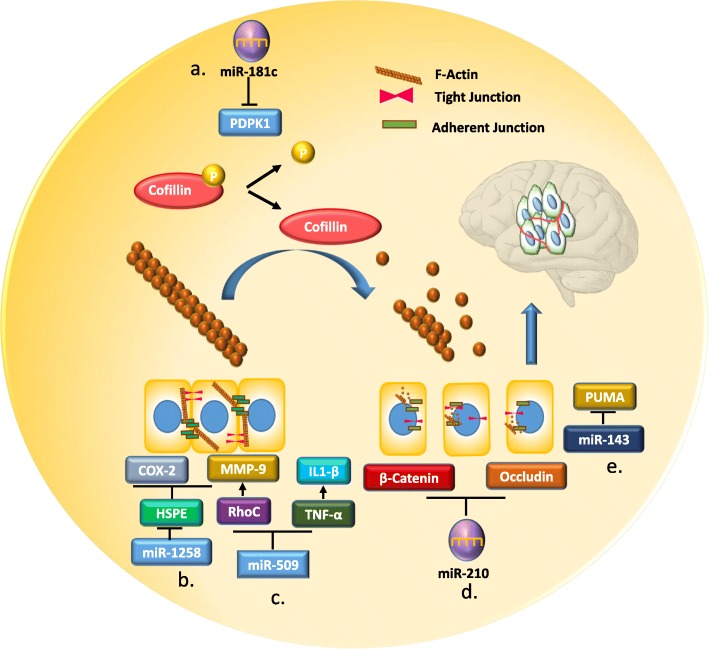
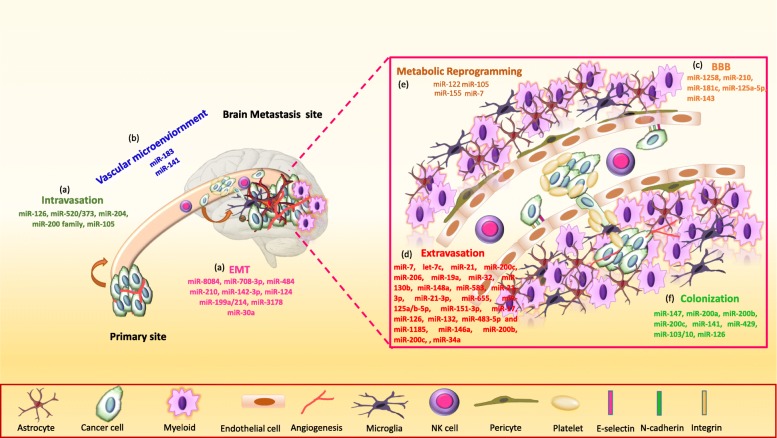
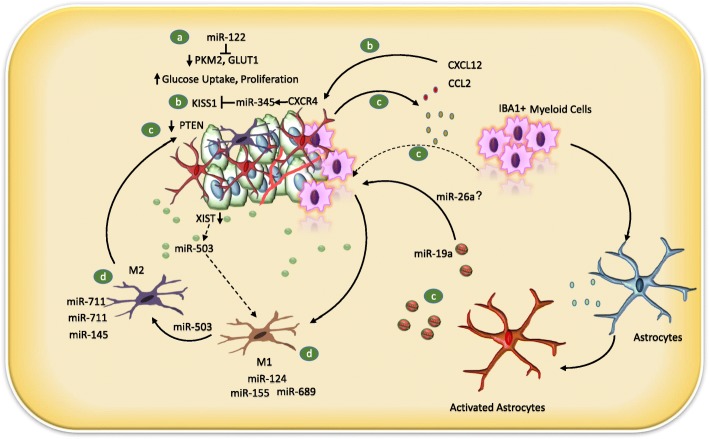
Brain metastasis (BM) predominantly occurs in triple-negative (TN) and epidermal growth factor 2 (HER2)-positive breast cancer (BC) patients, and currently, there is an unmet need for the treatment of these patients. BM is a complex process that is regulated by the formation of a metastatic niche. A better understanding of the brain metastatic processes and the crosstalk between cancer cells and brain microenvironment is essential for designing a novel therapeutic approach. In this context, the aberrant expression of miRNA has been shown to be associated with BM. These non-coding RNAs/miRNAs regulate metastasis through modulating the formation of a metastatic niche and metabolic reprogramming via regulation of their target genes. However, the role of miRNA in breast cancer brain metastasis (BCBM) is poorly explored. Thus, identification and understanding of miRNAs in the pathobiology of BCBM may identify a novel candidate miRNA for the early diagnosis and prevention of this devastating process. In this review, we focus on understanding the role of candidate miRNAs in the regulation of BC brain metastatic processes as well as designing novel miRNA-based therapeutic strategies for BCBM.
脑转移(BM)主要发生在三阴性(TN)和表皮生长因子 2(HER2)阳性乳腺癌(BC)患者中,目前这些患者的治疗存在未满足的需求。BM 是一个由转移龛形成所调控的复杂过程。更好地了解脑转移过程以及癌细胞与脑微环境之间的串扰对于设计新的治疗方法至关重要。在这种情况下,miRNA 的异常表达已被证明与 BM 相关。这些非编码 RNA/miRNA 通过调节其靶基因来调节转移龛的形成和代谢重编程,从而调节转移。然而,miRNA 在乳腺癌脑转移(BCBM)中的作用尚未得到充分探索。因此,鉴定和理解 BCBM 中 miRNA 的作用可能为该破坏性过程的早期诊断和预防确定新的候选 miRNA。在这篇综述中,我们专注于理解候选 miRNA 在调节 BC 脑转移过程中的作用,以及设计针对 BCBM 的新型 miRNA 为基础的治疗策略。