• 文献检索
  • 文档翻译
  • 深度研究
  • 学术资讯
  • Suppr Zotero 插件Zotero 插件
  • 邀请有礼
  • 套餐&价格
  • 历史记录
应用&插件
Suppr Zotero 插件Zotero 插件浏览器插件Mac 客户端Windows 客户端微信小程序
定价
高级版会员购买积分包购买API积分包
服务
文献检索文档翻译深度研究API 文档MCP 服务
关于我们
关于 Suppr公司介绍联系我们用户协议隐私条款
关注我们

Suppr 超能文献

核心技术专利:CN118964589B侵权必究
粤ICP备2023148730 号-1Suppr @ 2026

文献检索

告别复杂PubMed语法,用中文像聊天一样搜索,搜遍4000万医学文献。AI智能推荐,让科研检索更轻松。

立即免费搜索

文件翻译

保留排版,准确专业,支持PDF/Word/PPT等文件格式,支持 12+语言互译。

免费翻译文档

深度研究

AI帮你快速写综述,25分钟生成高质量综述,智能提取关键信息,辅助科研写作。

立即免费体验

鉴定预测乳腺癌分期的 miRNA 特征。

Identifying a miRNA signature for predicting the stage of breast cancer.

机构信息

Institute of Bioinformatics and Systems Biology, National Chiao Tung University, Hsinchu, Taiwan.

Department of Biological Science and Technology, National Chiao Tung University, Hsinchu, Taiwan.

出版信息

Sci Rep. 2018 Oct 31;8(1):16138. doi: 10.1038/s41598-018-34604-3.

DOI:10.1038/s41598-018-34604-3
PMID:30382159
原文链接:https://pmc.ncbi.nlm.nih.gov/articles/PMC6208346/
Abstract

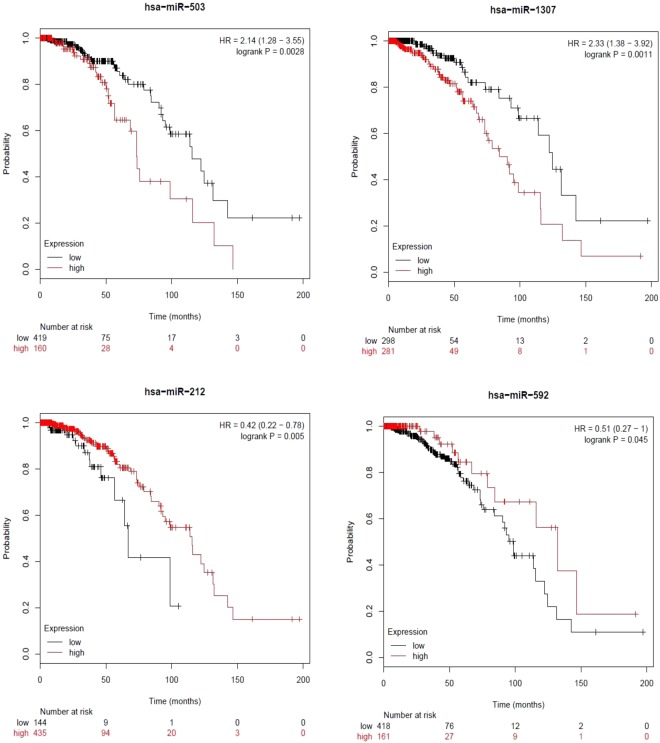
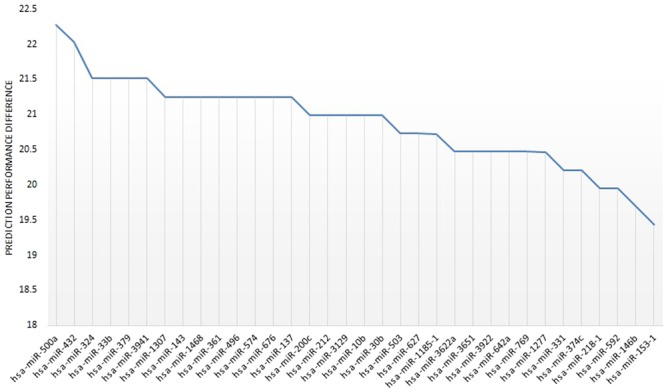
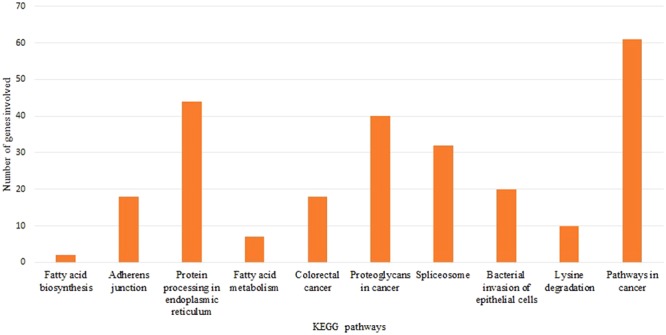
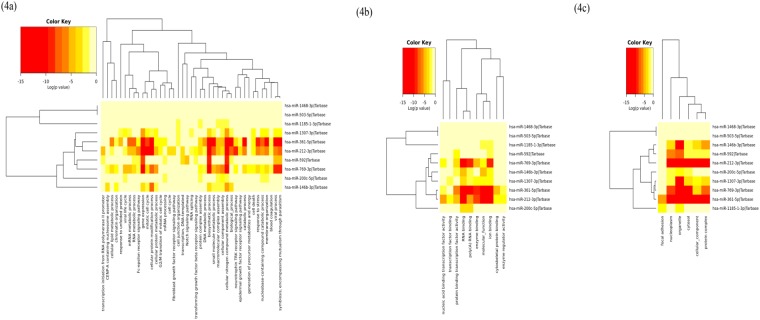
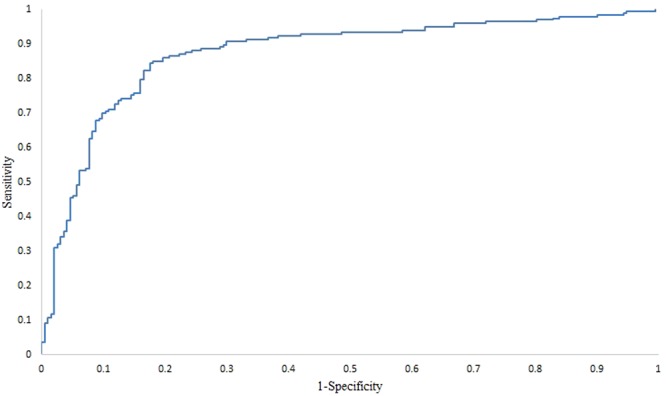
Breast cancer is a heterogeneous disease and one of the most common cancers among women. Recently, microRNAs (miRNAs) have been used as biomarkers due to their effective role in cancer diagnosis. This study proposes a support vector machine (SVM)-based classifier SVM-BRC to categorize patients with breast cancer into early and advanced stages. SVM-BRC uses an optimal feature selection method, inheritable bi-objective combinatorial genetic algorithm, to identify a miRNA signature which is a small set of informative miRNAs while maximizing prediction accuracy. MiRNA expression profiles of a 386-patient cohort of breast cancer were retrieved from The Cancer Genome Atlas. SVM-BRC identified 34 of 503 miRNAs as a signature and achieved a 10-fold cross-validation mean accuracy, sensitivity, specificity, and Matthews correlation coefficient of 80.38%, 0.79, 0.81, and 0.60, respectively. Functional enrichment of the 10 highest ranked miRNAs was analysed in terms of Kyoto Encyclopedia of Genes and Genomes and Gene Ontology annotations. Kaplan-Meier survival analysis of the highest ranked miRNAs revealed that four miRNAs, hsa-miR-503, hsa-miR-1307, hsa-miR-212 and hsa-miR-592, were significantly associated with the prognosis of patients with breast cancer.

摘要

乳腺癌是一种异质性疾病,也是女性中最常见的癌症之一。最近,由于 microRNAs(miRNAs)在癌症诊断中的有效作用,它们已被用作生物标志物。本研究提出了一种基于支持向量机(SVM)的分类器 SVM-BRC,用于将乳腺癌患者分为早期和晚期。SVM-BRC 使用一种最优特征选择方法,可遗传的双目标组合遗传算法,来识别 miRNA 特征,这是一组信息量较小的有意义的 miRNAs,同时最大限度地提高预测准确性。从癌症基因组图谱中检索了 386 名乳腺癌患者的 miRNA 表达谱。SVM-BRC 确定了 34 个 miRNA 作为特征,在 10 倍交叉验证中平均准确率、灵敏度、特异性和 Matthews 相关系数分别为 80.38%、0.79、0.81 和 0.60。根据京都基因与基因组百科全书和基因本体论注释分析了排名前 10 的 miRNA 的功能富集。排名前 10 的 miRNA 的 Kaplan-Meier 生存分析表明,hsa-miR-503、hsa-miR-1307、hsa-miR-212 和 hsa-miR-592 这四个 miRNA 与乳腺癌患者的预后显著相关。
https://cdn.ncbi.nlm.nih.gov/pmc/blobs/bcec/6208346/a4f950ff149d/41598_2018_34604_Fig5_HTML.jpg
https://cdn.ncbi.nlm.nih.gov/pmc/blobs/bcec/6208346/35d3168c0654/41598_2018_34604_Fig1_HTML.jpg
https://cdn.ncbi.nlm.nih.gov/pmc/blobs/bcec/6208346/cf2e78fb7b17/41598_2018_34604_Fig2_HTML.jpg
https://cdn.ncbi.nlm.nih.gov/pmc/blobs/bcec/6208346/73dbd88dcf1d/41598_2018_34604_Fig3_HTML.jpg
https://cdn.ncbi.nlm.nih.gov/pmc/blobs/bcec/6208346/3c8c08f623f8/41598_2018_34604_Fig4_HTML.jpg
https://cdn.ncbi.nlm.nih.gov/pmc/blobs/bcec/6208346/a4f950ff149d/41598_2018_34604_Fig5_HTML.jpg
https://cdn.ncbi.nlm.nih.gov/pmc/blobs/bcec/6208346/35d3168c0654/41598_2018_34604_Fig1_HTML.jpg
https://cdn.ncbi.nlm.nih.gov/pmc/blobs/bcec/6208346/cf2e78fb7b17/41598_2018_34604_Fig2_HTML.jpg
https://cdn.ncbi.nlm.nih.gov/pmc/blobs/bcec/6208346/73dbd88dcf1d/41598_2018_34604_Fig3_HTML.jpg
https://cdn.ncbi.nlm.nih.gov/pmc/blobs/bcec/6208346/3c8c08f623f8/41598_2018_34604_Fig4_HTML.jpg
https://cdn.ncbi.nlm.nih.gov/pmc/blobs/bcec/6208346/a4f950ff149d/41598_2018_34604_Fig5_HTML.jpg

相似文献

1
Identifying a miRNA signature for predicting the stage of breast cancer.鉴定预测乳腺癌分期的 miRNA 特征。
Sci Rep. 2018 Oct 31;8(1):16138. doi: 10.1038/s41598-018-34604-3.
2
Identifying the miRNA signature associated with survival time in patients with lung adenocarcinoma using miRNA expression profiles.利用 miRNA 表达谱鉴定肺腺癌患者生存时间相关的 miRNA 特征。
Sci Rep. 2017 Aug 8;7(1):7507. doi: 10.1038/s41598-017-07739-y.
3
Identification of the miRNA signature associated with survival in patients with ovarian cancer.鉴定与卵巢癌患者生存相关的 miRNA 特征。
Aging (Albany NY). 2021 Apr 27;13(9):12660-12690. doi: 10.18632/aging.202940.
4
Novel miRNA signature for predicting the stage of hepatocellular carcinoma.新型 miRNA 标志物预测肝细胞癌分期。
Sci Rep. 2020 Sep 2;10(1):14452. doi: 10.1038/s41598-020-71324-z.
5
Identification of miRNA-Based Signature as a Novel Potential Prognostic Biomarker in Patients with Breast Cancer.基于 miRNA 的标志物鉴定作为乳腺癌患者新型潜在预后生物标志物。
Dis Markers. 2019 Dec 30;2019:3815952. doi: 10.1155/2019/3815952. eCollection 2019.
6
A novel microRNAs expression signature for hepatocellular carcinoma diagnosis and prognosis.一种用于肝细胞癌诊断和预后的新型微小RNA表达特征。
Oncotarget. 2017 Jan 31;8(5):8775-8784. doi: 10.18632/oncotarget.14452.
7
A nine-miRNA signature as a potential diagnostic marker for breast carcinoma: An integrated study of 1,110 cases.一种作为乳腺癌潜在诊断标志物的九微小RNA特征:对1110例病例的综合研究
Oncol Rep. 2017 Jun;37(6):3297-3304. doi: 10.3892/or.2017.5600. Epub 2017 Apr 25.
8
Prognostic Value of a BCSC-associated MicroRNA Signature in Hormone Receptor-Positive HER2-Negative Breast Cancer.一种与乳腺干细胞相关的微小RNA特征在激素受体阳性、人表皮生长因子受体2阴性乳腺癌中的预后价值
EBioMedicine. 2016 Sep;11:199-209. doi: 10.1016/j.ebiom.2016.08.016. Epub 2016 Aug 17.
9
A Novel Necroptosis-Related miRNA Signature for Predicting the Prognosis of Breast Cancer Metastasis.一种新型的与坏死性凋亡相关的 miRNA 标志物,用于预测乳腺癌转移的预后。
Dis Markers. 2022 Mar 25;2022:3391878. doi: 10.1155/2022/3391878. eCollection 2022.
10
Characterization of a five-microRNA signature as a prognostic biomarker for esophageal squamous cell carcinoma.鉴定五个 microRNA 作为食管鳞癌预后生物标志物的特征。
Sci Rep. 2019 Dec 27;9(1):19847. doi: 10.1038/s41598-019-56367-1.

引用本文的文献

1
microRNAs as Biomarkers of Breast Cancer.微小RNA作为乳腺癌的生物标志物
Int J Mol Sci. 2025 May 6;26(9):4395. doi: 10.3390/ijms26094395.
2
Selective arm-usage of pre-miR-1307 dysregulates angiogenesis and affects breast cancer aggressiveness.前体微小核糖核酸-1307的选择性臂使用失调会影响血管生成并影响乳腺癌的侵袭性。
BMC Biol. 2025 Jan 23;23(1):25. doi: 10.1186/s12915-025-02133-x.
3
Advancing miRNA cancer research through artificial intelligence: from biomarker discovery to therapeutic targeting.通过人工智能推进微小RNA癌症研究:从生物标志物发现到治疗靶点

本文引用的文献

1
MicroRNA in diagnosis and therapy monitoring of early-stage triple-negative breast cancer.微小 RNA 在早期三阴性乳腺癌的诊断和治疗监测中的作用。
Sci Rep. 2018 Aug 2;8(1):11584. doi: 10.1038/s41598-018-29917-2.
2
Tree-based machine learning algorithms identified minimal set of miRNA biomarkers for breast cancer diagnosis and molecular subtyping.基于树的机器学习算法确定了用于乳腺癌诊断和分子分型的最小 miRNA 生物标志物集。
Gene. 2018 Nov 30;677:111-118. doi: 10.1016/j.gene.2018.07.057. Epub 2018 Jul 25.
3
Predicting miRNA-disease association based on inductive matrix completion.
Med Oncol. 2024 Dec 17;42(1):30. doi: 10.1007/s12032-024-02579-z.
4
MiR-592 Attenuates Tamoxifen Resistance in Breast Cancer Through PIK3CA-Mediated PI3K/AKT/mTOR Signaling Pathway.微小RNA-592通过PIK3CA介导的PI3K/AKT/mTOR信号通路减轻乳腺癌中的他莫昔芬耐药性。
Appl Biochem Biotechnol. 2025 Mar;197(3):2051-2065. doi: 10.1007/s12010-024-05123-x. Epub 2024 Dec 11.
5
Exploring prognostic implications of miRNA signatures and telomere maintenance genes in kidney cancer.探索微小RNA特征和端粒维持基因在肾癌中的预后意义。
Mol Ther Oncol. 2024 Sep 10;32(4):200874. doi: 10.1016/j.omton.2024.200874. eCollection 2024 Dec 19.
6
MicroRNA-1307-3p contributes to breast cancer progression through PRM2.miR-1307-3p 通过 PRM2 促进乳腺癌的进展。
Thorac Cancer. 2024 Nov;15(32):2298-2308. doi: 10.1111/1759-7714.15460. Epub 2024 Oct 9.
7
A deep drug prediction framework for viral infectious diseases using an optimizer-based ensemble of convolutional neural network: COVID-19 as a case study.一种基于优化器的卷积神经网络集成的病毒性传染病深度药物预测框架:以COVID-19为例
Mol Divers. 2025 Jun;29(3):2473-2487. doi: 10.1007/s11030-024-11003-7. Epub 2024 Oct 9.
8
CRISPR screens in 3D tumourspheres identified miR-4787-3p as a transcriptional start site miRNA essential for breast tumour-initiating cell growth.CRISPR 筛选 3D 肿瘤球体发现 miR-4787-3p 是一种转录起始位点 miRNA,对乳腺肿瘤起始细胞的生长至关重要。
Commun Biol. 2024 Jul 13;7(1):859. doi: 10.1038/s42003-024-06555-1.
9
Identification of Gene Expression in Different Stages of Breast Cancer with Machine Learning.利用机器学习识别乳腺癌不同阶段的基因表达
Cancers (Basel). 2024 May 14;16(10):1864. doi: 10.3390/cancers16101864.
10
Ensemble-based classification using microRNA expression identifies a breast cancer patient subgroup with an ultralow long-term risk of metastases.基于微小RNA表达的集成分类法可识别出具有超低长期转移风险的乳腺癌患者亚组。
Cancer Med. 2024 May;13(9):e7089. doi: 10.1002/cam4.7089.
基于归纳矩阵补全的 miRNA-疾病关联预测。
Bioinformatics. 2018 Dec 15;34(24):4256-4265. doi: 10.1093/bioinformatics/bty503.
4
BNPMDA: Bipartite Network Projection for MiRNA-Disease Association prediction.BNPMDA:基于二分网络投影的 miRNA-疾病关联预测方法。
Bioinformatics. 2018 Sep 15;34(18):3178-3186. doi: 10.1093/bioinformatics/bty333.
5
PredCRP: predicting and analysing the regulatory roles of CRP from its binding sites in Escherichia coli.PredCRP:从大肠杆菌 CRP 的结合位点预测和分析 CRP 的调控作用。
Sci Rep. 2018 Jan 17;8(1):951. doi: 10.1038/s41598-017-18648-5.
6
EGBMMDA: Extreme Gradient Boosting Machine for MiRNA-Disease Association prediction.EGBMMDA:用于 miRNA-疾病关联预测的极端梯度提升机。
Cell Death Dis. 2018 Jan 5;9(1):3. doi: 10.1038/s41419-017-0003-x.
7
LRSSLMDA: Laplacian Regularized Sparse Subspace Learning for MiRNA-Disease Association prediction.LRSSLMDA:用于miRNA-疾病关联预测的拉普拉斯正则化稀疏子空间学习
PLoS Comput Biol. 2017 Dec 18;13(12):e1005912. doi: 10.1371/journal.pcbi.1005912. eCollection 2017 Dec.
8
MiR-212-5p Suppresses the Epithelial-Mesenchymal Transition in Triple-Negative Breast Cancer by Targeting Prrx2.MiR-212-5p通过靶向Prrx2抑制三阴性乳腺癌中的上皮-间质转化
Cell Physiol Biochem. 2017;44(5):1785-1795. doi: 10.1159/000485785. Epub 2017 Dec 6.
9
MiR-361-5p inhibits glycolytic metabolism, proliferation and invasion of breast cancer by targeting FGFR1 and MMP-1.miR-361-5p 通过靶向 FGFR1 和 MMP-1 抑制乳腺癌的糖酵解代谢、增殖和侵袭。
J Exp Clin Cancer Res. 2017 Nov 13;36(1):158. doi: 10.1186/s13046-017-0630-1.
10
Suppressive role of miR-592 in breast cancer by repressing TGF-β2.miR-592 通过抑制 TGF-β2 在乳腺癌中发挥抑制作用。
Oncol Rep. 2017 Dec;38(6):3447-3454. doi: 10.3892/or.2017.6029. Epub 2017 Oct 12.