Department of Anesthesiology, Zhongnan Hospital, Wuhan University, East Lake Road, Wuhan, 430071, Hubei, China.
Department of Anesthesiology, Maternal and Child Hospital of Hubei Province, Wuluo Road, Wuhan, 430071, Hubei, China.
Mol Brain. 2020 Feb 14;13(1):20. doi: 10.1186/s13041-020-0559-8.
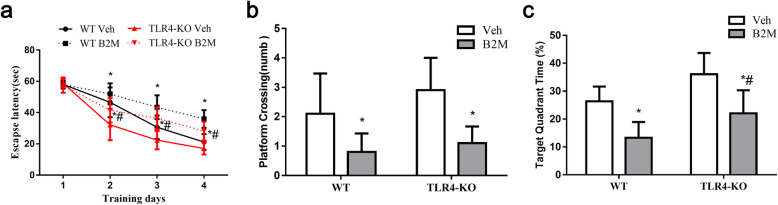
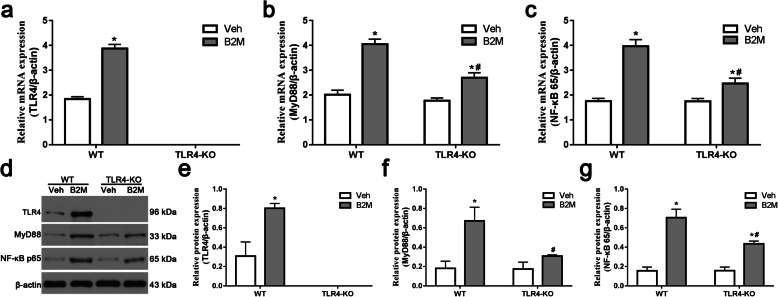
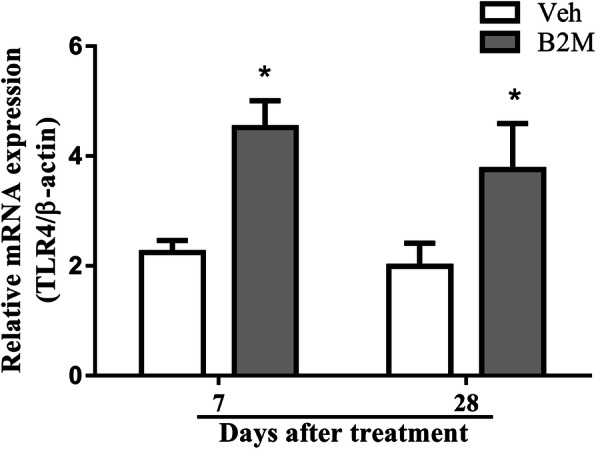
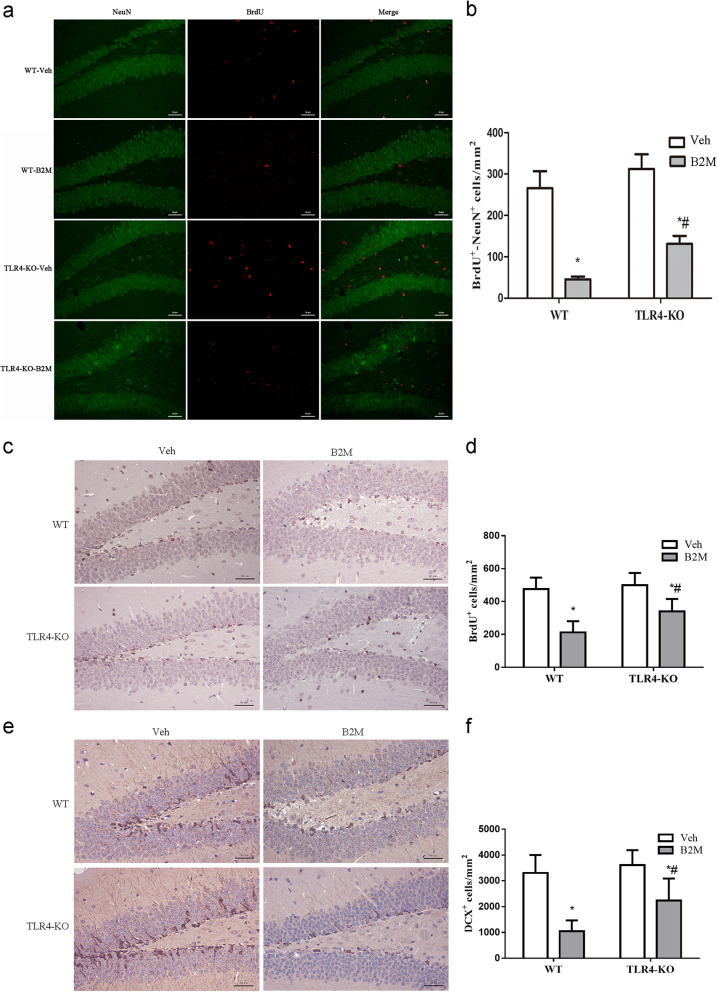
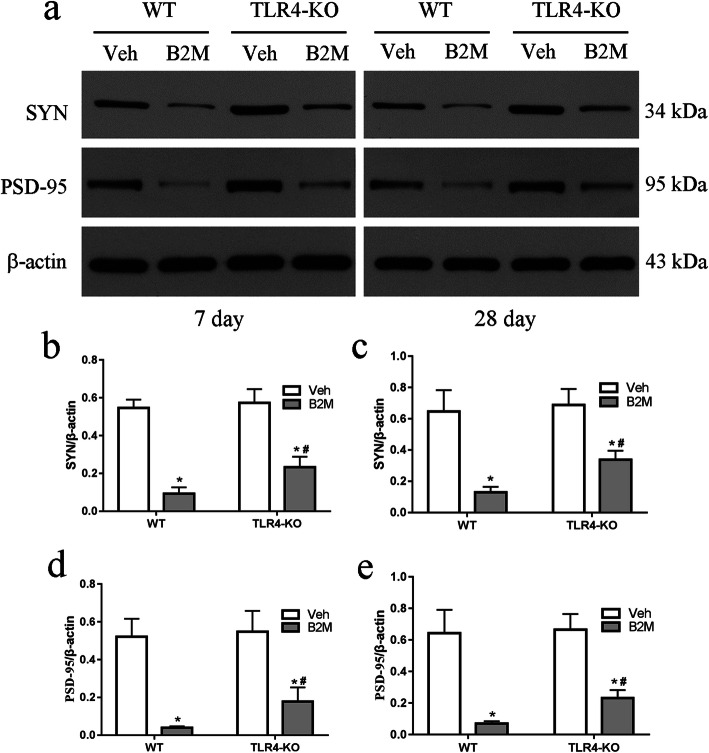
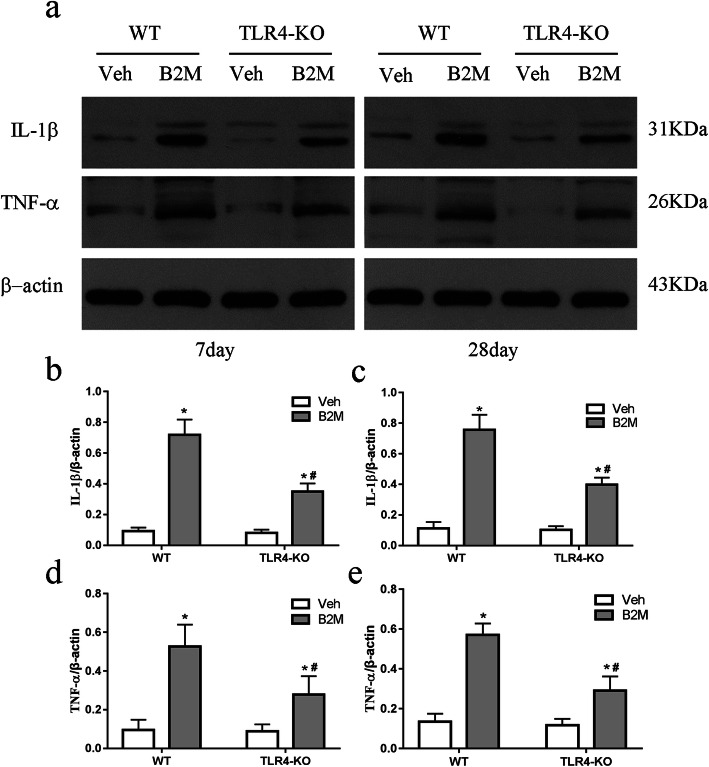
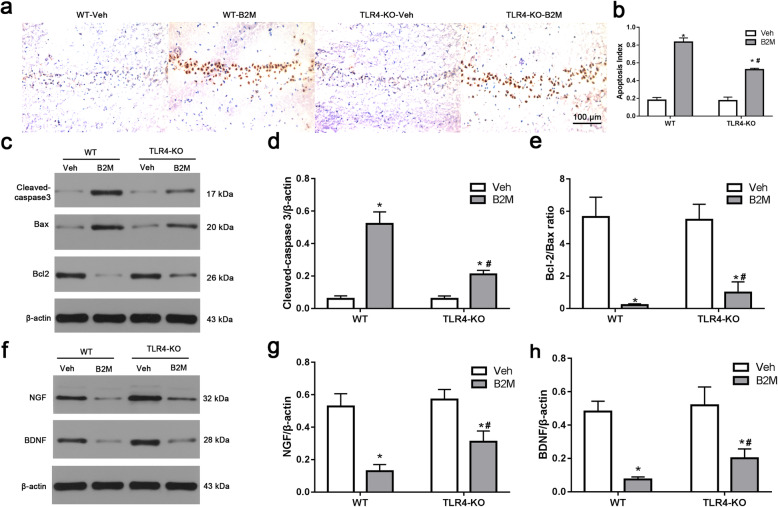
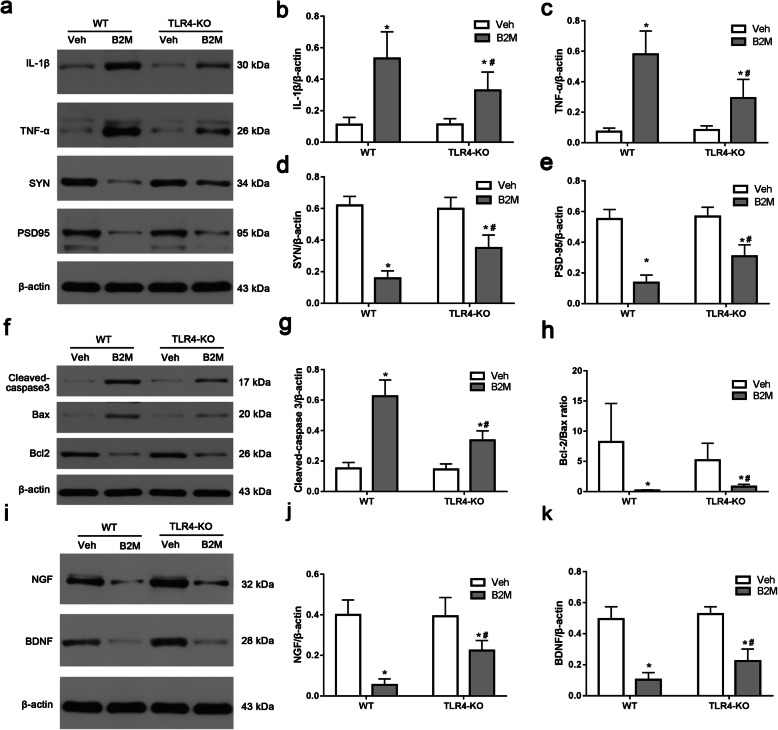
Toll-like receptor 4 (TLR4) is a crucial receptor in neuroinflammation and apoptotic neuronal death, and increasing evidences indicated that β2-microglobulin (B2M) is thought to be a major contributor to age-related cognitive decline. In present study, we designed to investigate the effects of TLR4 on B2M-induced age-related cognitive decline. Wild-type (WT) C57BL/6, TLR4 knockout (TLR4 -KO) mice and hippocampal neurons from the two type mice were respectively divided into two groups: (1) Veh group; (2) B2M-treated group. The behavioral responses of mice were measured using Morris Water Maze. Hippocampal neurogenesis and neuronal damage, inflammatory response, apoptosis, synaptic proteins and neurotrophic factors, and TLR4/MyD88/NF-κB signaling pathway proteins were examined using molecular biological or histopathological methods. The results showed that WT mice received B2M in the DG exhibited age-related cognitive declines, increased TLR4 mRNA expression and high levels of interleukin-1β (IL-1β), tumor necrosis factor-alpha (TNF-α) and apoptotic neuronal death in the hippocampus, which were partially attenuated in TLR4-KO mice. Moreover, in absence of TLR4, B2M treatment improved hippocampus neurogenesis and increased synaptic related proteins. Our cell experiments further demonstrated that deletion of TLR4 could significantly increase synaptic related protein, decrease neuroinflammatory fators, inhibited apoptotic neuronal death, and regulated MyD88/NF-κB signal pathway after B2M treatment. In summary, our results support the TLR4 contributes to B2M-induced age-related cognitive decline due to neuroinflammation and apoptosis through TLR4/MyD88/NF-κB signaling pathway via a modulation of hippocampal neurogenesis and synaptic function. This may provide an important neuroprotective mechanism for improving age-related cognitive decline.
Toll 样受体 4(TLR4)是神经炎症和凋亡性神经元死亡中的关键受体,越来越多的证据表明β2-微球蛋白(B2M)被认为是与年龄相关的认知能力下降的主要原因。在本研究中,我们旨在研究 TLR4 对 B2M 诱导的与年龄相关的认知能力下降的影响。野生型(WT)C57BL/6、TLR4 敲除(TLR4-KO)小鼠和来自两种类型小鼠的海马神经元分别分为两组:(1)Veh 组;(2)B2M 处理组。使用 Morris 水迷宫测量小鼠的行为反应。使用分子生物学或组织病理学方法检测海马神经发生和神经元损伤、炎症反应、细胞凋亡、突触蛋白和神经营养因子以及 TLR4/MyD88/NF-κB 信号通路蛋白。结果表明,WT 小鼠在 DG 中接受 B2M 处理后表现出与年龄相关的认知能力下降,TLR4 mRNA 表达增加,海马中白细胞介素-1β(IL-1β)、肿瘤坏死因子-α(TNF-α)和凋亡性神经元死亡水平升高,而 TLR4-KO 小鼠中这些变化则部分减弱。此外,在缺乏 TLR4 的情况下,B2M 处理可改善海马神经发生并增加突触相关蛋白。我们的细胞实验进一步表明,TLR4 缺失可显著增加突触相关蛋白,减少神经炎症因子,抑制凋亡性神经元死亡,并调节 B2M 处理后的 MyD88/NF-κB 信号通路。综上所述,我们的研究结果支持 TLR4 通过 TLR4/MyD88/NF-κB 信号通路通过调节海马神经发生和突触功能,参与 B2M 诱导的与年龄相关的认知能力下降,导致神经炎症和细胞凋亡。这可能为改善与年龄相关的认知能力下降提供了重要的神经保护机制。