The Ken & Ruth Davee Department of Neurology, Northwestern University Feinberg School of Medicine, Chicago, IL 60611, USA.
Department of Pediatrics, Children's Hospital of Pittsburgh, University of Pittsburgh School of Medicine, Pittsburgh, PA 15224, USA.
Neuron. 2020 Apr 8;106(1):90-107.e13. doi: 10.1016/j.neuron.2020.01.020. Epub 2020 Feb 13.
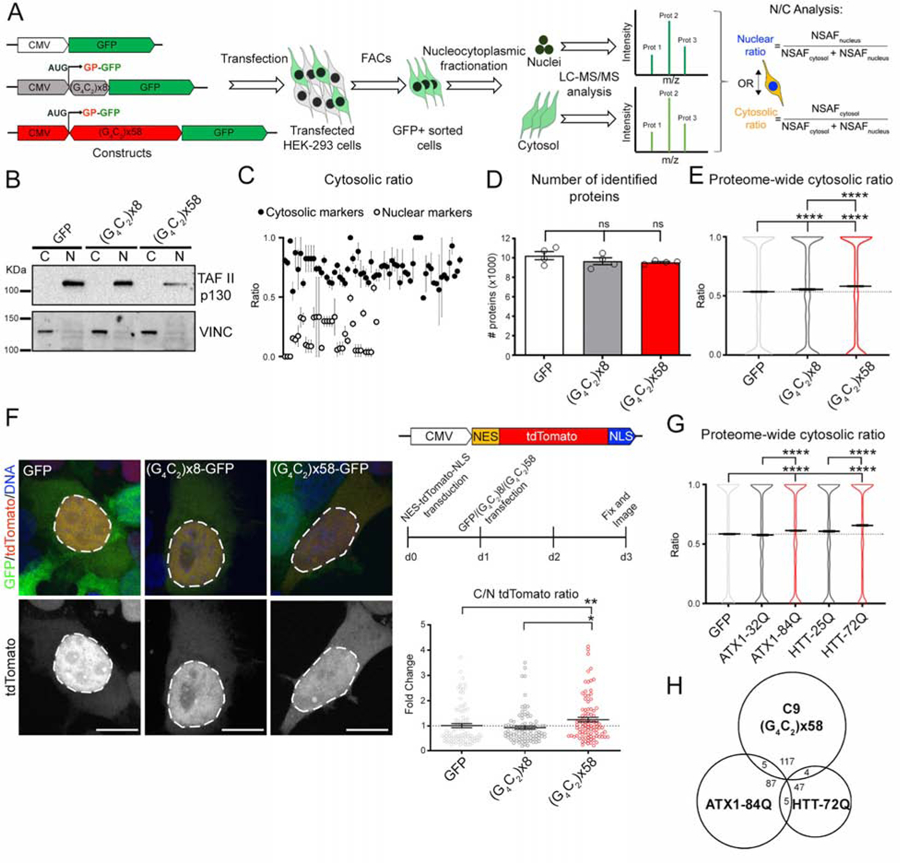
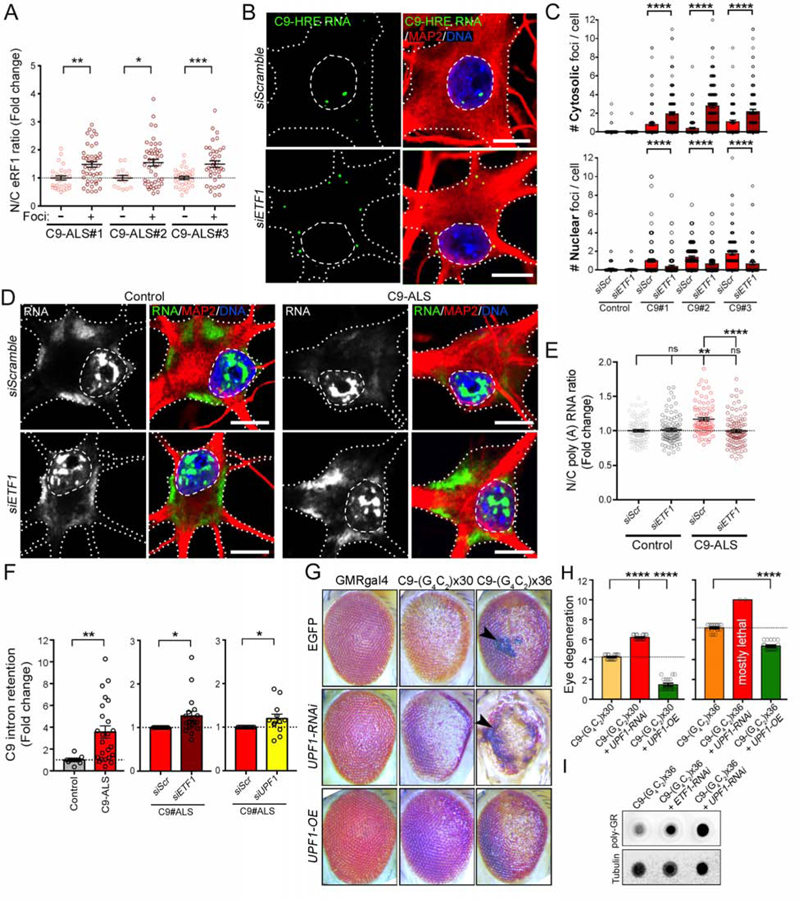
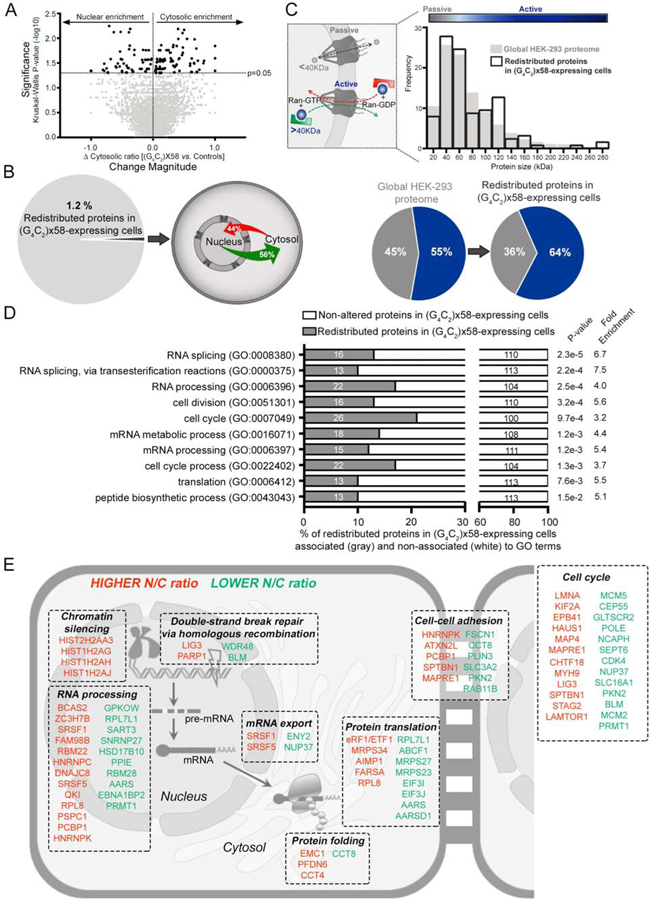
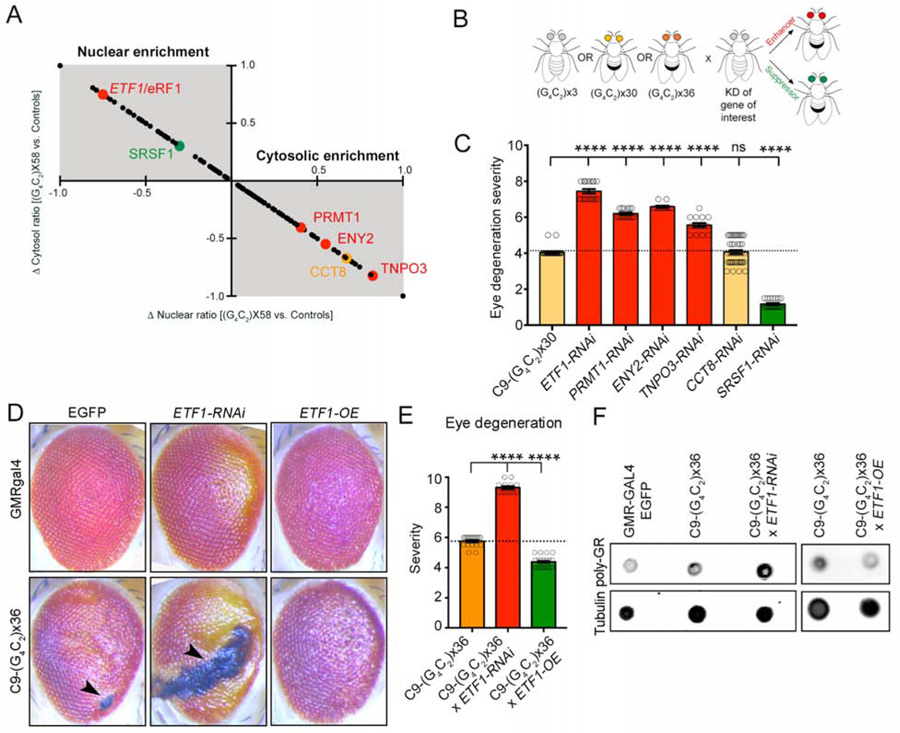
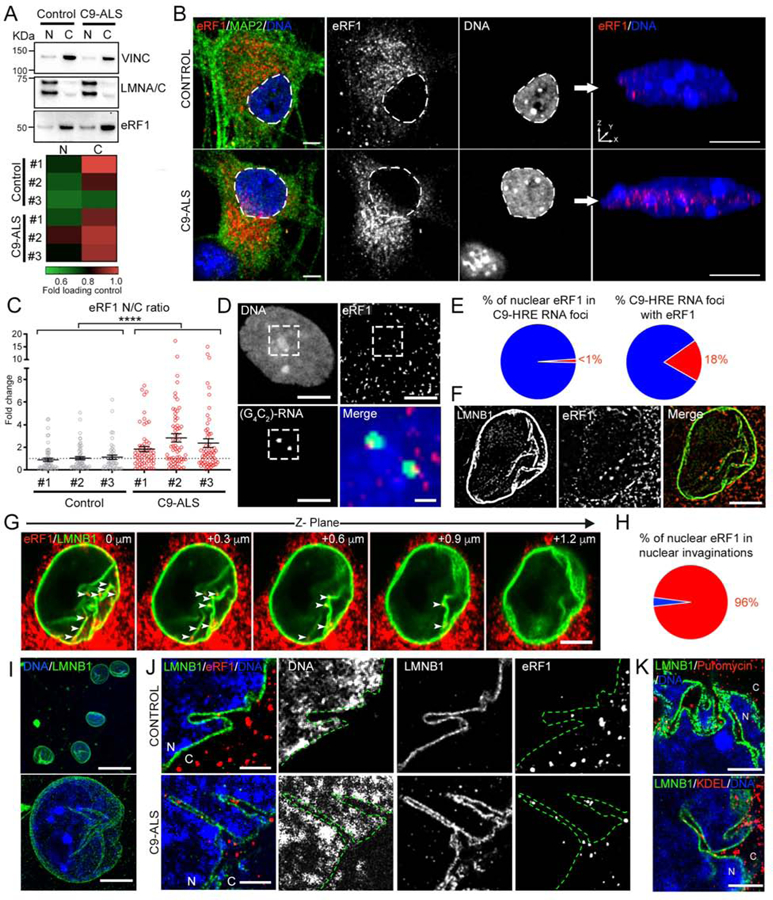
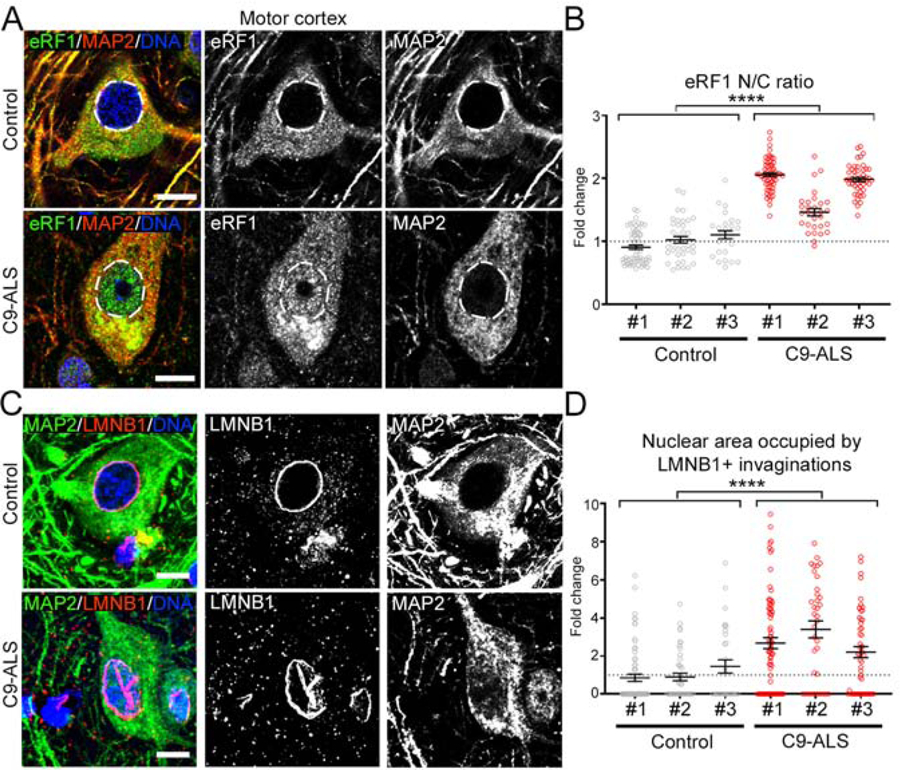
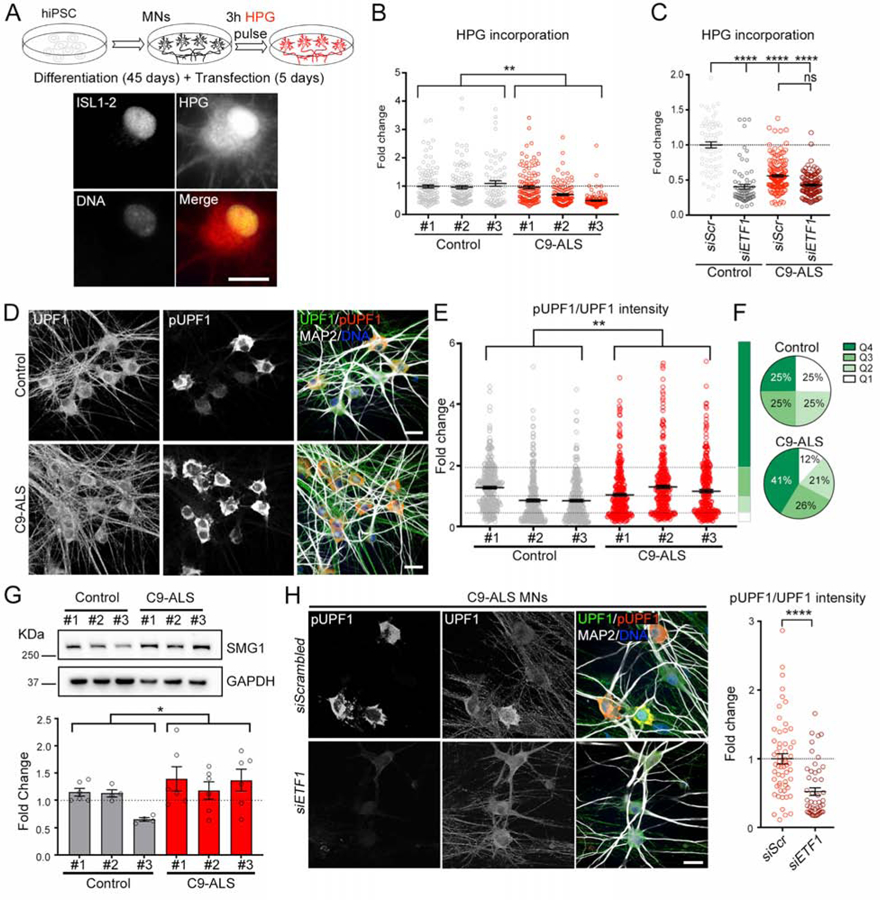
The most common genetic cause of amyotrophic lateral sclerosis (ALS) and frontotemporal dementia (FTD) is a hexanucleotide repeat expansion in C9orf72 (C9-HRE). While RNA and dipeptide repeats produced by C9-HRE disrupt nucleocytoplasmic transport, the proteins that become redistributed remain unknown. Here, we utilized subcellular fractionation coupled with tandem mass spectrometry and identified 126 proteins, enriched for protein translation and RNA metabolism pathways, which collectively drive a shift toward a more cytosolic proteome in C9-HRE cells. Among these was eRF1, which regulates translation termination and nonsense-mediated decay (NMD). eRF1 accumulates within elaborate nuclear envelope invaginations in patient induced pluripotent stem cell (iPSC) neurons and postmortem tissue and mediates a protective shift from protein translation to NMD-dependent mRNA degradation. Overexpression of eRF1 and the NMD driver UPF1 ameliorate C9-HRE toxicity in vivo. Our findings provide a resource for proteome-wide nucleocytoplasmic alterations across neurodegeneration-associated repeat expansion mutations and highlight eRF1 and NMD as therapeutic targets in C9orf72-associated ALS and/or FTD.
最常见的肌萎缩性侧索硬化症(ALS)和额颞叶痴呆(FTD)的遗传原因是 C9orf72 中的六核苷酸重复扩展(C9-HRE)。虽然 C9-HRE 产生的 RNA 和二肽重复扰乱了核质运输,但重新分布的蛋白质仍然未知。在这里,我们利用亚细胞分级分离结合串联质谱法,鉴定了 126 种蛋白质,这些蛋白质富含蛋白质翻译和 RNA 代谢途径,它们共同推动 C9-HRE 细胞中的蛋白质组向更细胞质的转变。其中包括 eRF1,它调节翻译终止和无意义介导的衰变(NMD)。eRF1 在患者诱导多能干细胞(iPSC)神经元和死后组织中的精细核膜内陷中积累,并介导从蛋白质翻译到依赖 NMD 的 mRNA 降解的保护性转变。eRF1 和 NMD 驱动因子 UPF1 的过表达可改善 C9-HRE 在体内的毒性。我们的发现为神经退行性相关重复扩展突变的全蛋白质组核质改变提供了资源,并强调了 eRF1 和 NMD 作为 C9orf72 相关 ALS 和/或 FTD 的治疗靶点。