Heidelberg University Biochemistry Center, Heidelberg, Germany.
Department of Physics, University of Osnabrück, Osnabrück, Germany.
Commun Biol. 2020 Feb 14;3(1):73. doi: 10.1038/s42003-020-0800-0.
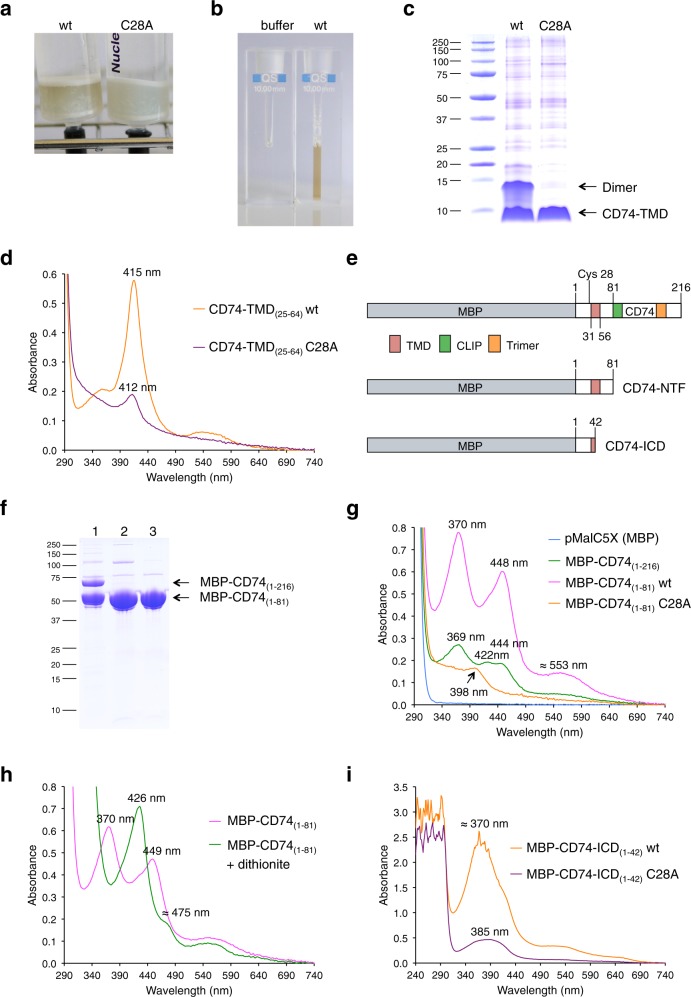
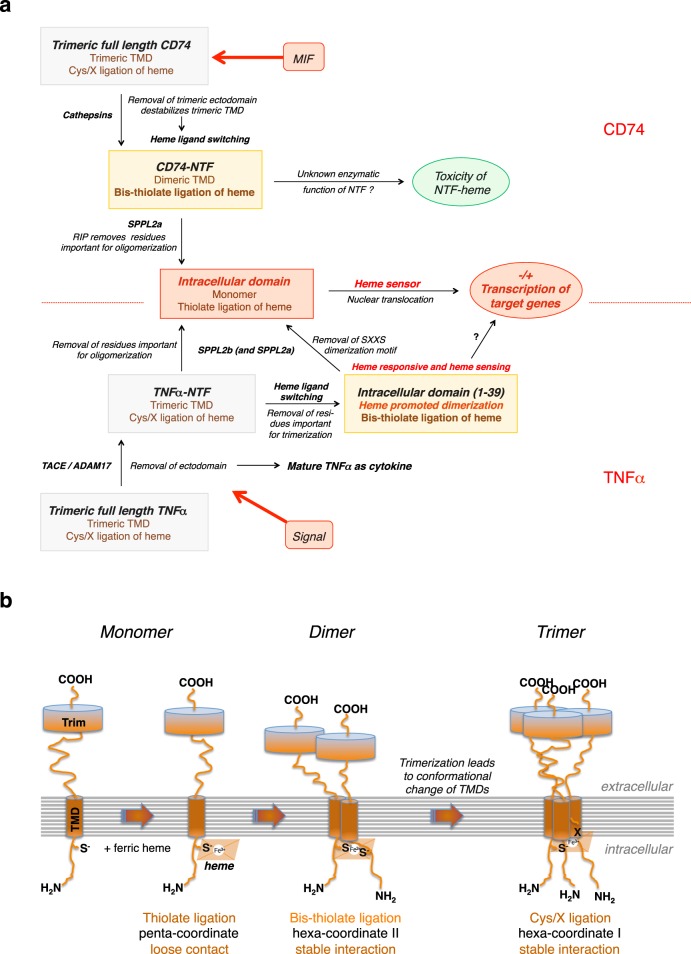
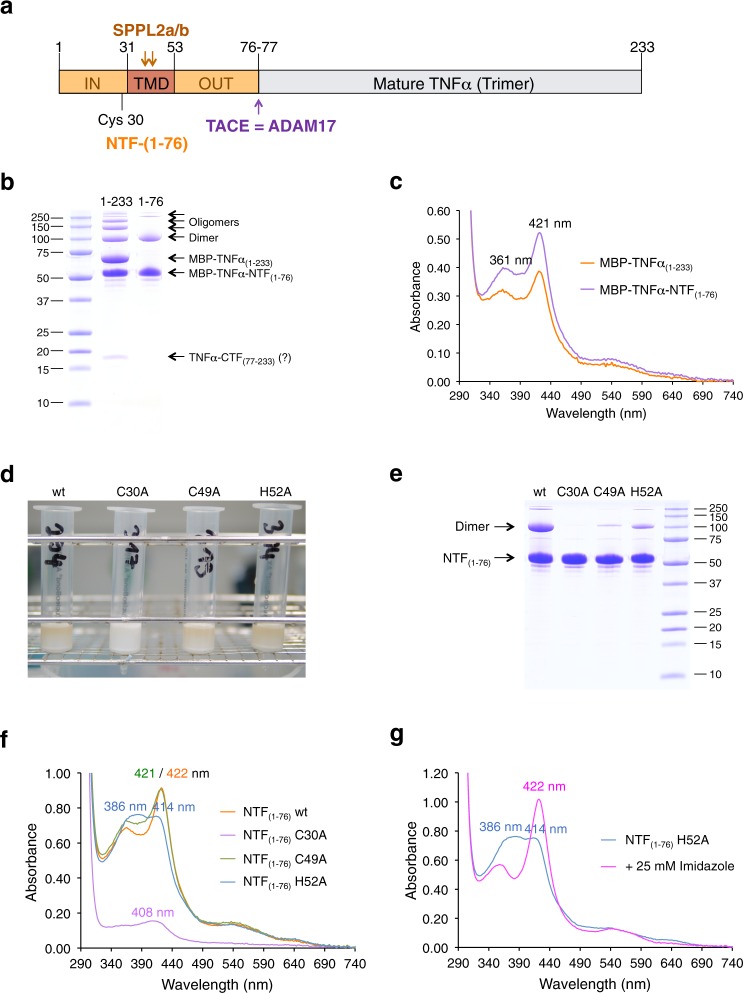
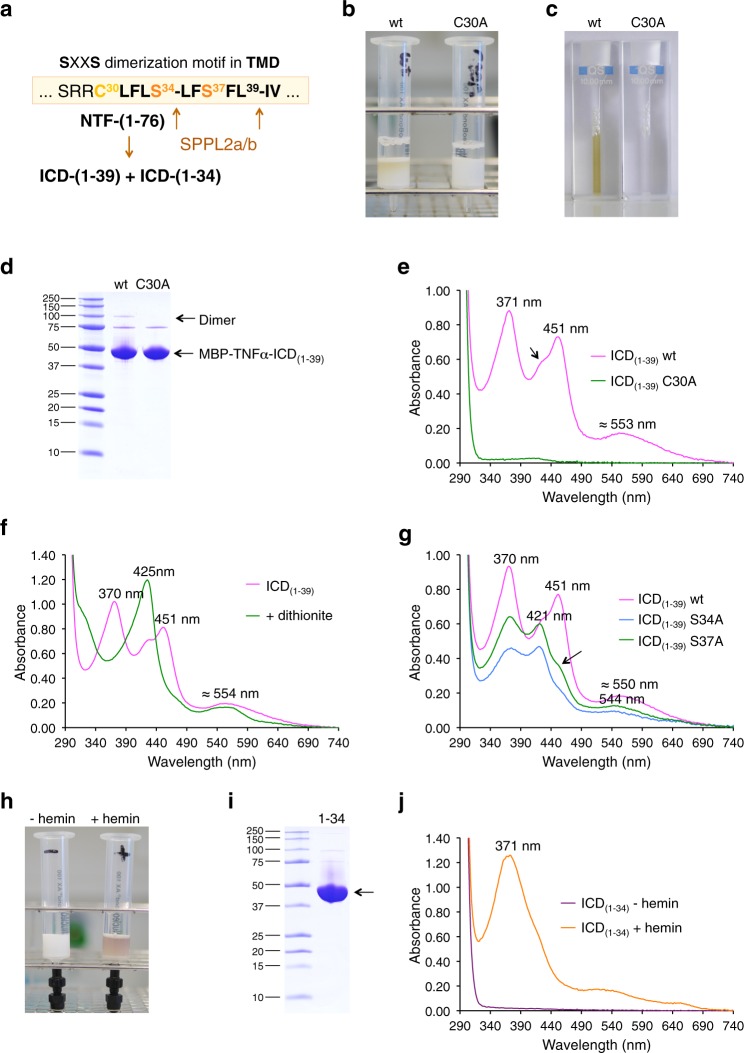
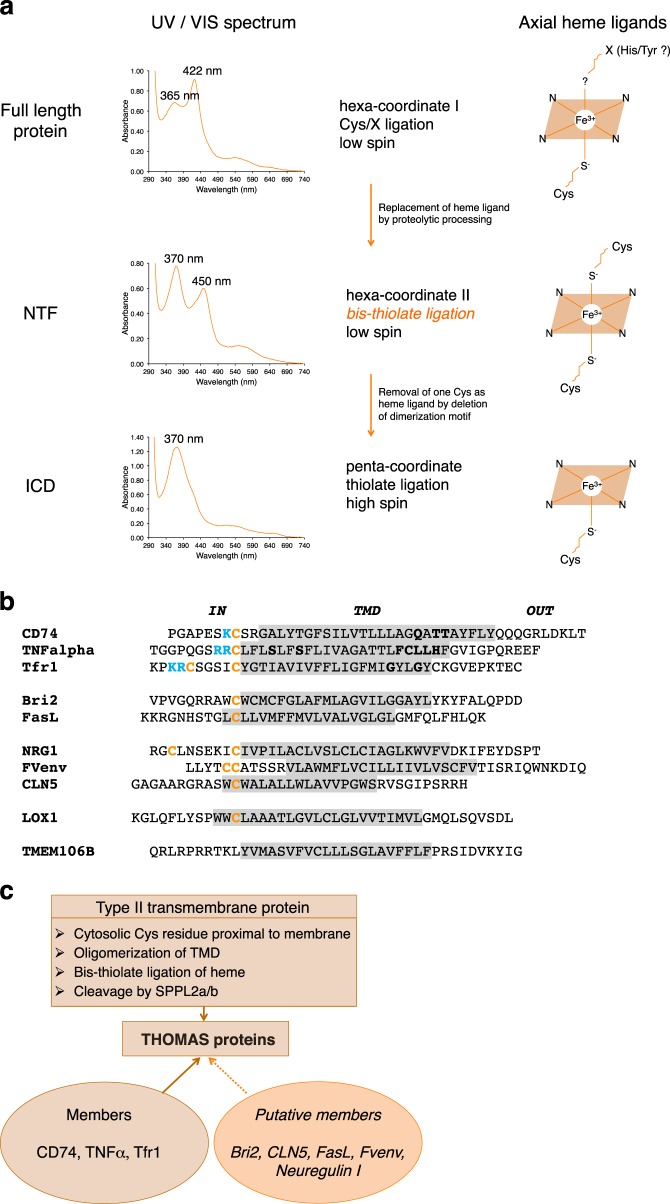
Transmembrane signaling proteins play a crucial role in the transduction of information across cell membranes. One function of regulated intramembrane proteolysis (RIP) is the release of signaling factors from transmembrane proteins. To study the role of transmembrane domains (TMDs) in modulating structure and activity of released signaling factors, we purified heterologously expressed human transmembrane proteins and their proteolytic processing products from Escherichia coli. Here we show that CD74 and TNFα are heme binding proteins. Heme coordination depends on both a cysteine residue proximal to the membrane and on the oligomerization of the TMD. Furthermore, we show that the various processing products have different modes of heme coordination. We suggest that RIP changes the mode of heme binding of these proteins and generates heme binding peptides with yet unexplored functions. The identification of a RIP modulated cofactor binding of transmembrane signaling proteins sheds new light on the regulation of cell signaling pathways.
跨膜信号蛋白在细胞跨膜信息转导中起着至关重要的作用。调节性跨膜蛋白水解 (RIP) 的一个功能是将信号因子从跨膜蛋白中释放出来。为了研究跨膜结构域 (TMD) 在调节释放的信号因子的结构和活性中的作用,我们从大肠杆菌中纯化了异源表达的人类跨膜蛋白及其蛋白水解加工产物。在这里,我们表明 CD74 和 TNFα 是血红素结合蛋白。血红素配位取决于靠近膜的半胱氨酸残基和 TMD 的寡聚化。此外,我们表明,各种加工产物具有不同的血红素配位模式。我们认为 RIP 改变了这些蛋白质的血红素结合模式,并产生了具有尚未探索功能的血红素结合肽。RIP 调节跨膜信号蛋白的辅助因子结合的鉴定为细胞信号通路的调节提供了新的视角。