Translational Health Science, Bristol Medical School, University of Bristol, Bristol, UK.
Endocr Rev. 2020 Jun 1;41(3). doi: 10.1210/endrev/bnaa002.
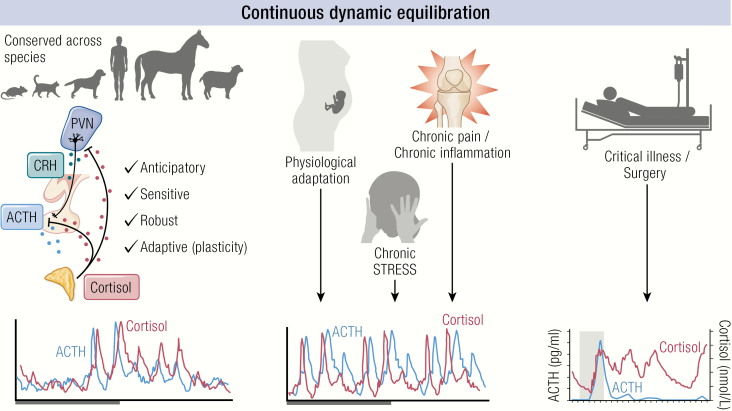
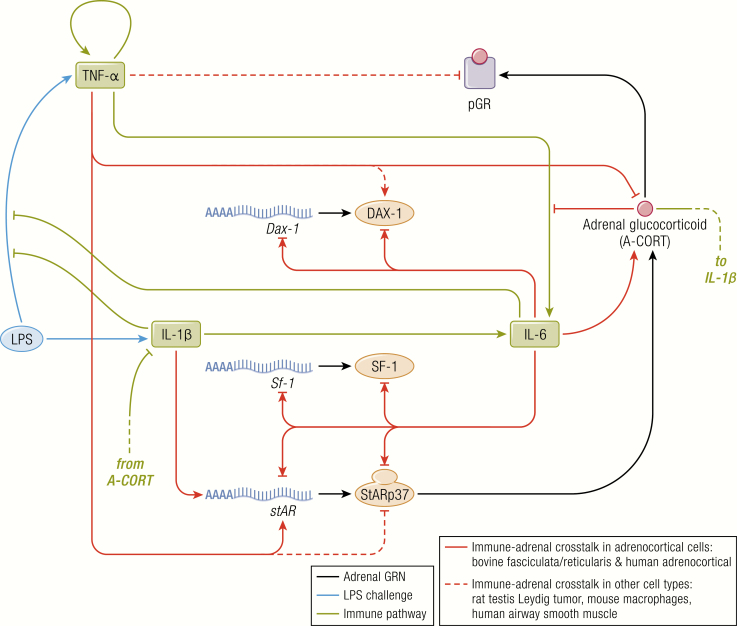
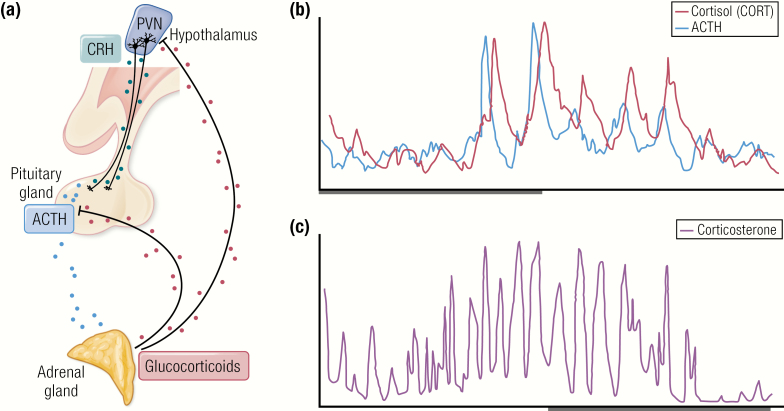
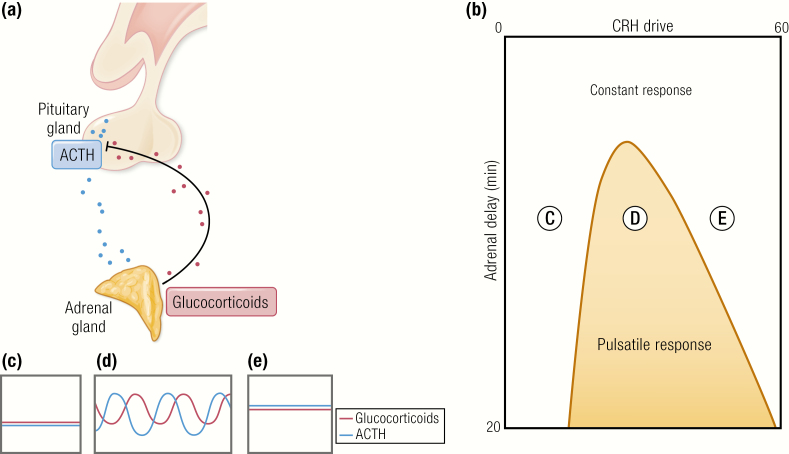
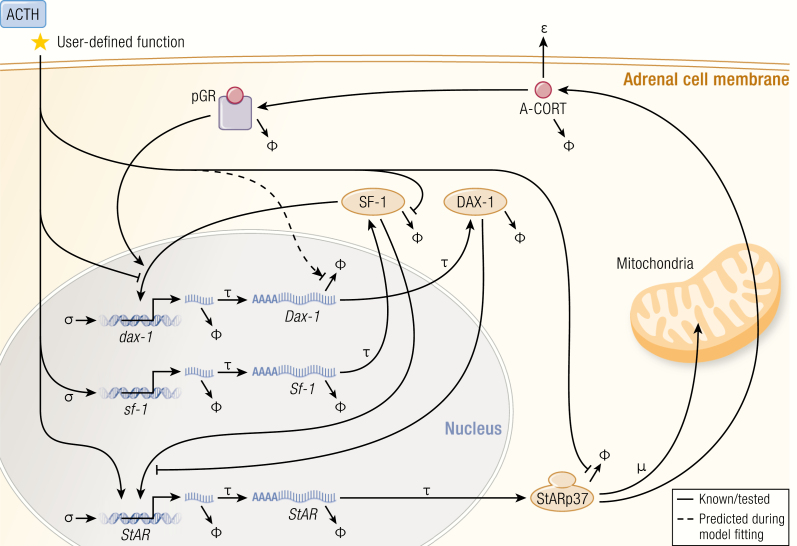
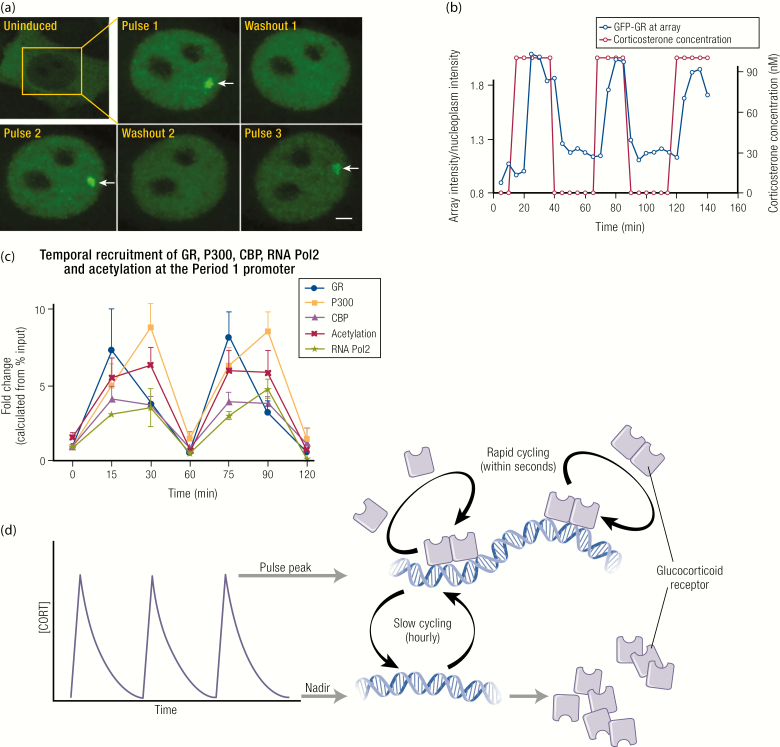
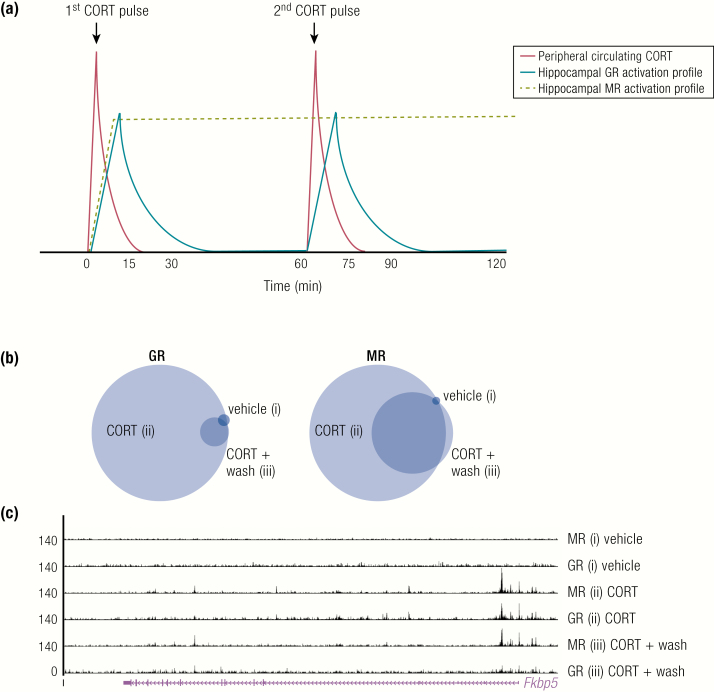
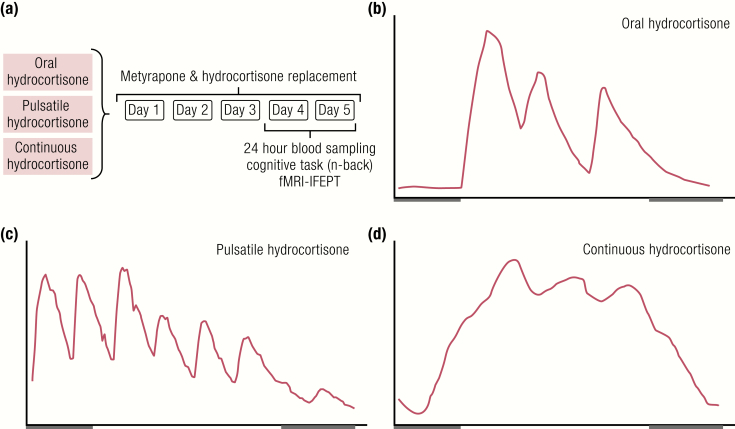
The past decade has seen several critical advances in our understanding of hypothalamic-pituitary-adrenal (HPA) axis regulation. Homeostatic physiological circuits need to integrate multiple internal and external stimuli and provide a dynamic output appropriate for the response parameters of their target tissues. The HPA axis is an example of such a homeostatic system. Recent studies have shown that circadian rhythmicity of the major output of this system-the adrenal glucocorticoid hormones corticosterone in rodent and predominately cortisol in man-comprises varying amplitude pulses that exist due to a subhypothalamic pulse generator. Oscillating endogenous glucocorticoid signals interact with regulatory systems within individual parts of the axis including the adrenal gland itself, where a regulatory network can further modify the pulsatile release of hormone. The HPA axis output is in the form of a dynamic oscillating glucocorticoid signal that needs to be decoded at the cellular level. If the pulsatile signal is abolished by the administration of a long-acting synthetic glucocorticoid, the resulting disruption in physiological regulation has the potential to negatively impact many glucocorticoid-dependent bodily systems. Even subtle alterations to the dynamics of the system, during chronic stress or certain disease states, can potentially result in changes in functional output of multiple cells and tissues throughout the body, altering metabolic processes, behavior, affective state, and cognitive function in susceptible individuals. The recent development of a novel chronotherapy, which can deliver both circadian and ultradian patterns, provides great promise for patients on glucocorticoid treatment.
过去十年中,我们对下丘脑-垂体-肾上腺(HPA)轴调节的理解取得了几项重要进展。内稳态生理回路需要整合多种内部和外部刺激,并为其靶组织的反应参数提供适当的动态输出。HPA 轴就是这样一个内稳态系统的一个例子。最近的研究表明,该系统的主要输出——啮齿动物的肾上腺糖皮质激素皮质酮和主要的人类皮质醇——的昼夜节律性由下丘脑下脉冲发生器产生的不同幅度的脉冲组成。内源性糖皮质激素信号的振荡与轴内的调节系统相互作用,包括肾上腺本身,其中调节网络可以进一步调节激素的脉冲释放。HPA 轴输出的形式是一种动态的振荡糖皮质激素信号,需要在细胞水平上进行解码。如果通过给予长效合成糖皮质激素来消除脉冲信号,那么生理调节的中断有可能对许多依赖糖皮质激素的身体系统产生负面影响。即使在慢性应激或某些疾病状态下,对系统动力学的细微改变也可能导致全身多个细胞和组织的功能输出发生变化,改变代谢过程、行为、情绪状态和认知功能。新型时间治疗学的最新发展可以提供昼夜和超昼夜模式,为接受糖皮质激素治疗的患者带来了很大的希望。