Department of Animal Sciences, Graduate School of Bioagricultural Sciences, Nagoya University, Nagoya 464-8601, Japan.
Asian Satellite Campuses Institute, Nagoya University, Nagoya 464-8601, Japan.
J Reprod Dev. 2020 Jun 12;66(3):271-275. doi: 10.1262/jrd.2019-097. Epub 2020 Feb 17.
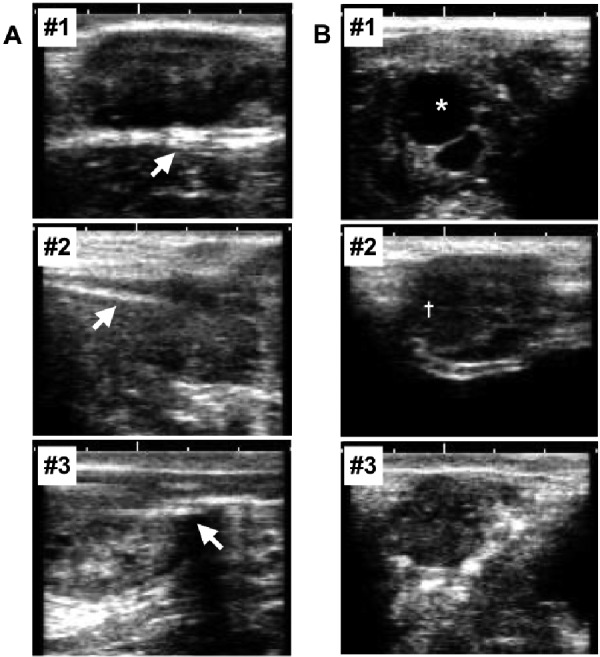
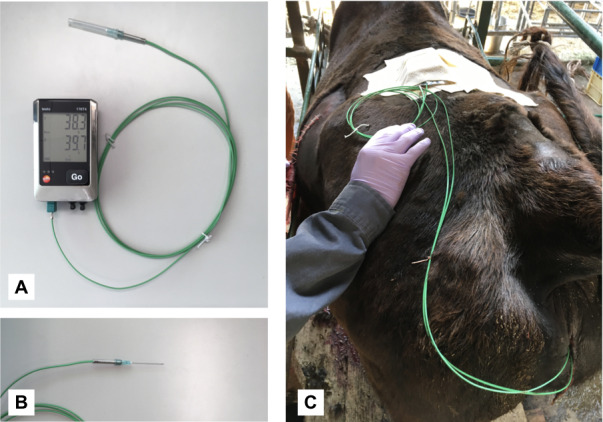
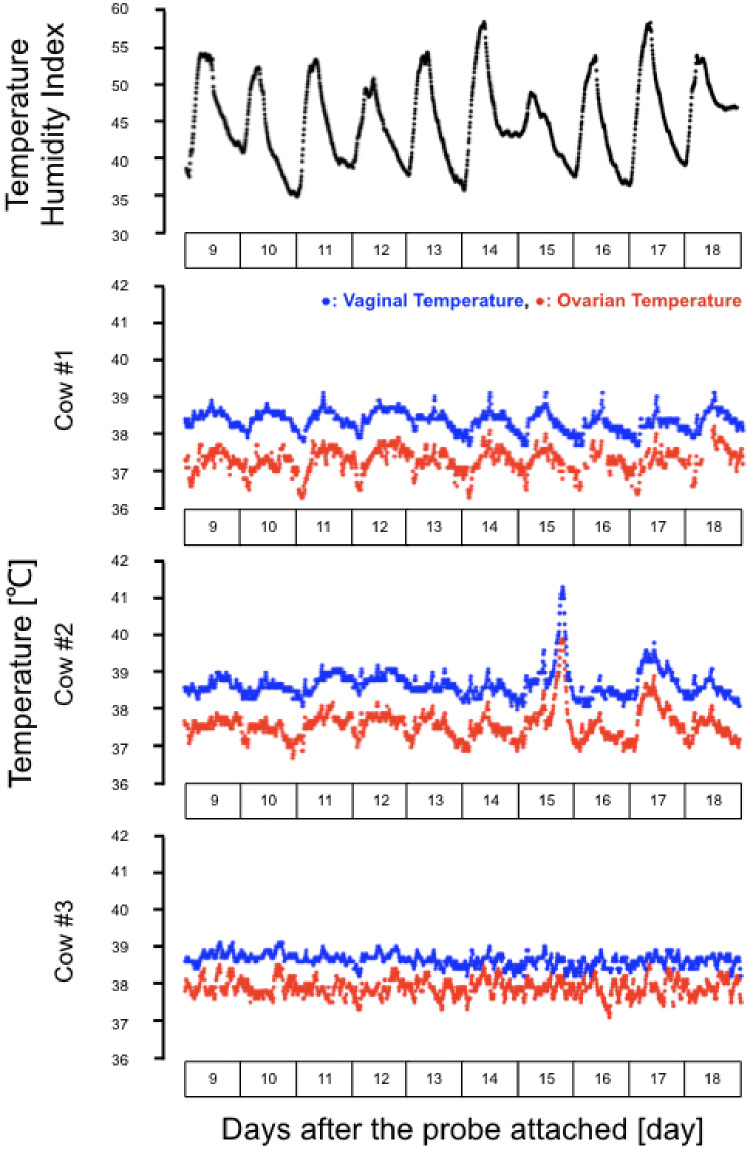
The reproductive performance of cattle can be suppressed by heat stress. Reproductive organ temperature, especially ovarian temperature, may affect follicle development and ovulation. The establishment of a technique for long-term measurement of ovarian temperature could prove useful in understanding the mechanisms underlying the temperature-dependent changes in follicular development and subsequent ovulation in cows. Here we report a novel method facilitating long-term and continuous recording of ovarian parenchymal temperature in cows. The method revealed that the ovarian temperature in the luteal phase was constantly maintained lower than the vaginal temperature, and that the diurnal temperature variation in the ovary was significantly greater than that in the vagina, suggesting that the ovaries may require a lower temperature than other organs to maintain their functions. This novel method could be used for the further understanding of ovarian functions during estrous cycles in cows.
热应激会抑制牛的繁殖性能。生殖器官的温度,特别是卵巢温度,可能会影响卵泡发育和排卵。建立一种长期测量卵巢温度的技术可能有助于理解奶牛卵泡发育和随后排卵过程中温度依赖性变化的机制。在这里,我们报告了一种新的方法,可以方便地在奶牛中进行长期和连续的卵巢实质温度记录。该方法表明,黄体期的卵巢温度始终保持低于阴道温度,并且卵巢的昼夜温度变化明显大于阴道,这表明卵巢可能需要比其他器官更低的温度来维持其功能。这种新方法可用于进一步了解奶牛发情周期中卵巢的功能。