Division of Systems Biomedicine and Pharmacology, LACDR, Leiden University, P.O. Box 9502, 2300 RA, Leiden, The Netherlands.
Certara QSP, 4818 SJ, Breda, The Netherlands.
Bull Math Biol. 2020 Feb 15;82(2):33. doi: 10.1007/s11538-020-00708-z.
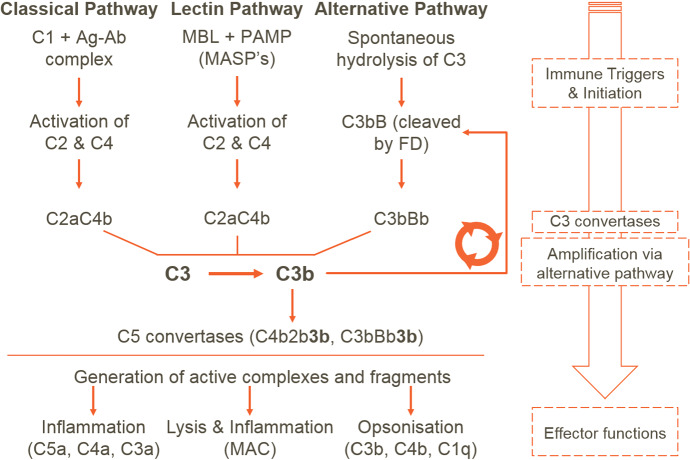
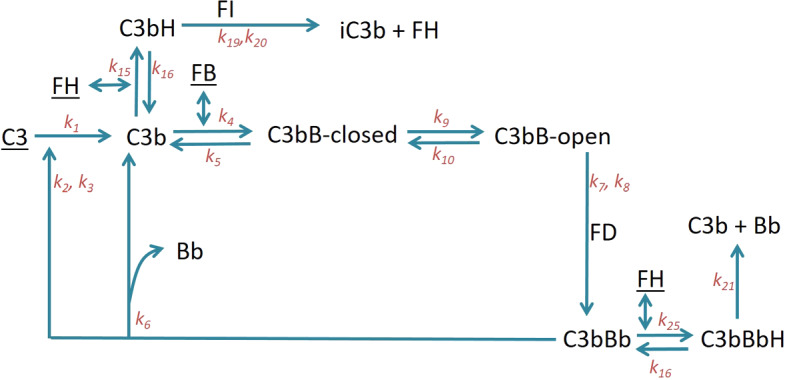
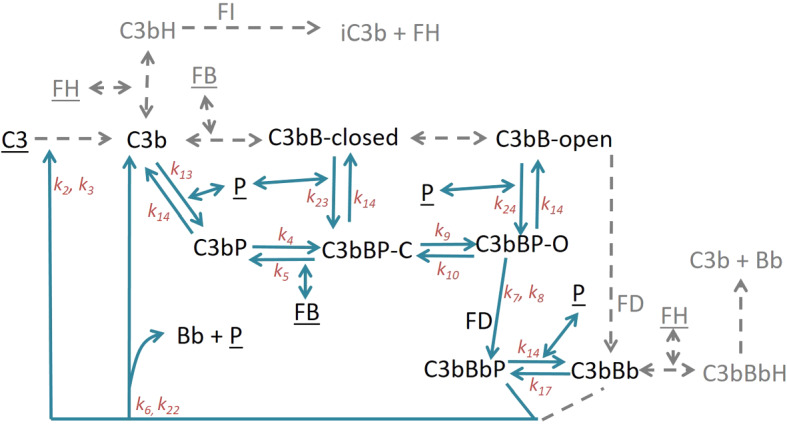
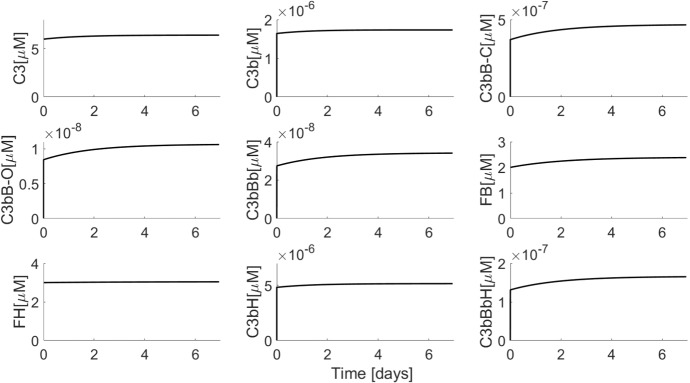
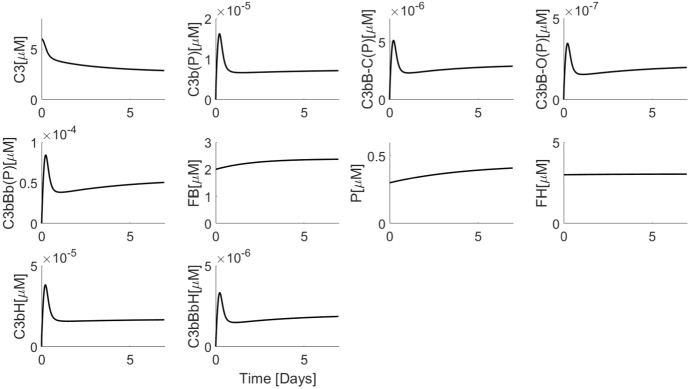
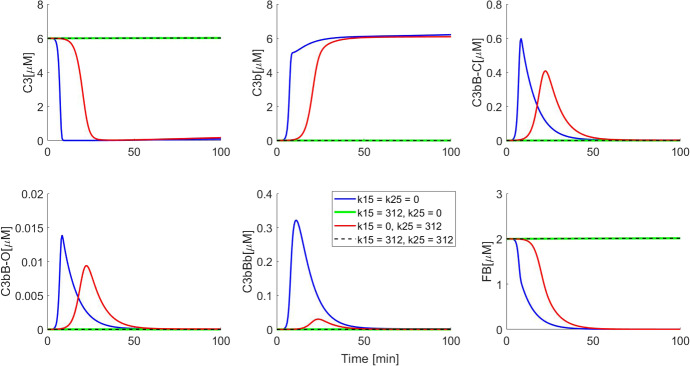
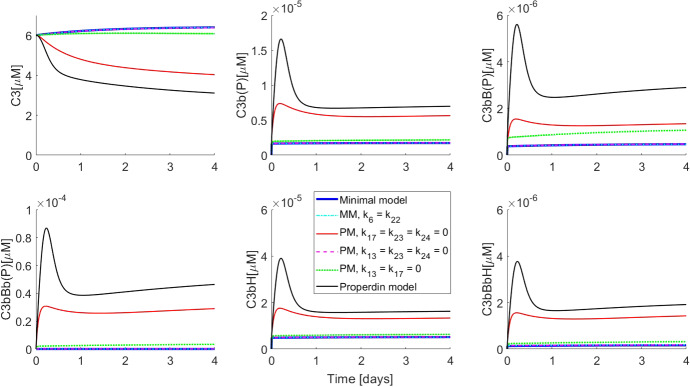
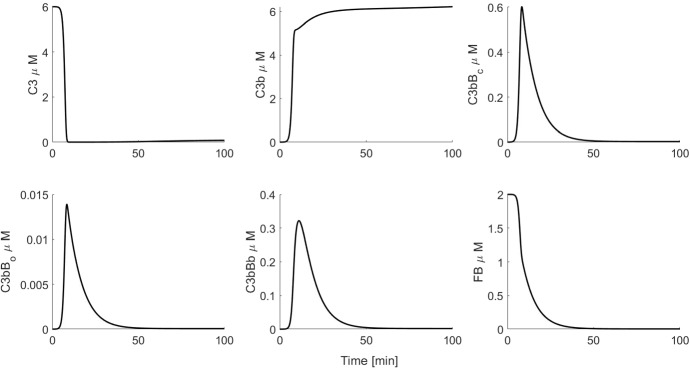
The complement system (CS) is an integral part of innate immunity and can be activated via three different pathways. The alternative pathway (AP) has a central role in the function of the CS. The AP of complement system is implicated in several human disease pathologies. In the absence of triggers, the AP exists in a time-invariant resting state (physiological steady state). It is capable of rapid, potent and transient activation response upon challenge with a trigger. Previous models of AP have focused on the activation response. In order to understand the molecular machinery necessary for AP activation and regulation of a physiological steady state, we built parsimonious AP models using experimentally supported kinetic parameters. The models further allowed us to test quantitative roles played by negative and positive regulators of the pathway in order to test hypotheses regarding their mechanisms of action, thus providing more insight into the complex regulation of AP.
补体系统(CS)是先天免疫的一个组成部分,可通过三种不同途径激活。替代途径(AP)在 CS 的功能中起着核心作用。补体系统的 AP 与几种人类疾病病理有关。在没有触发物的情况下,AP 处于时间不变的静止状态(生理稳态)。它能够在受到触发物挑战时快速、有效和短暂地激活。以前的 AP 模型侧重于激活反应。为了了解 AP 激活和生理稳态调节所需的分子机制,我们使用经过实验验证的动力学参数构建了简约的 AP 模型。这些模型还使我们能够测试途径的负调节因子和正调节因子的定量作用,以测试关于它们作用机制的假设,从而更深入地了解 AP 的复杂调节。