Franco-Luzón Lidia, González-Murillo África, Alcántara-Sánchez Cristina, García-García Lorena, Tabasi Maryam, Huertas Ana Luis, Chesler Louis, Ramírez Manuel
Fundación Oncohematología Infantil, Madrid, Spain.
Unidad de Terapias Avanzadas, Oncología, Hospital Infantil Universitario Niño Jesús, Madrid, Spain.
Oncotarget. 2020 Jan 28;11(4):347-361. doi: 10.18632/oncotarget.27401.
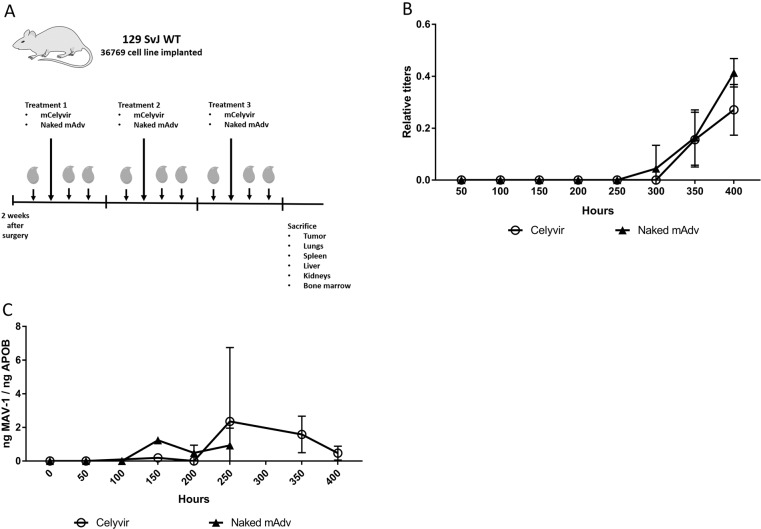
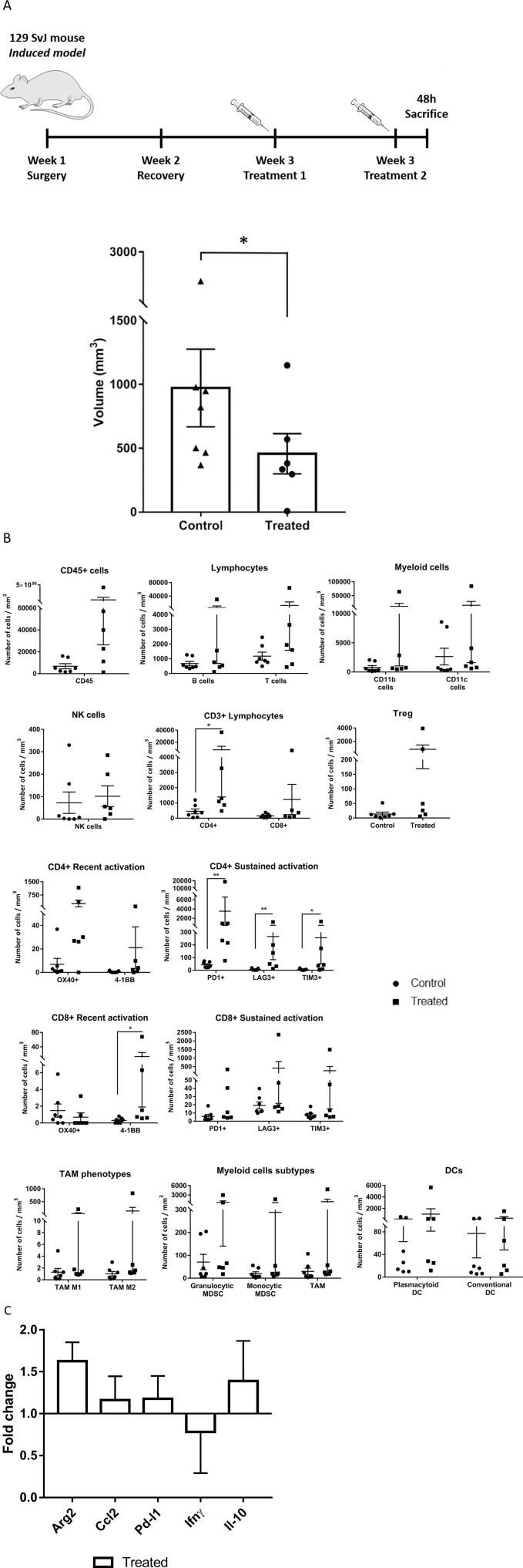
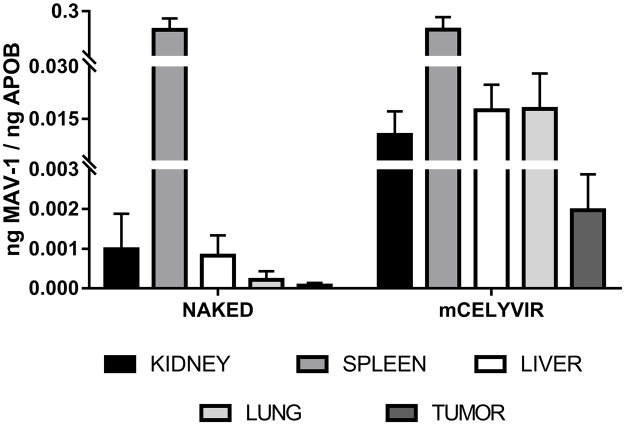
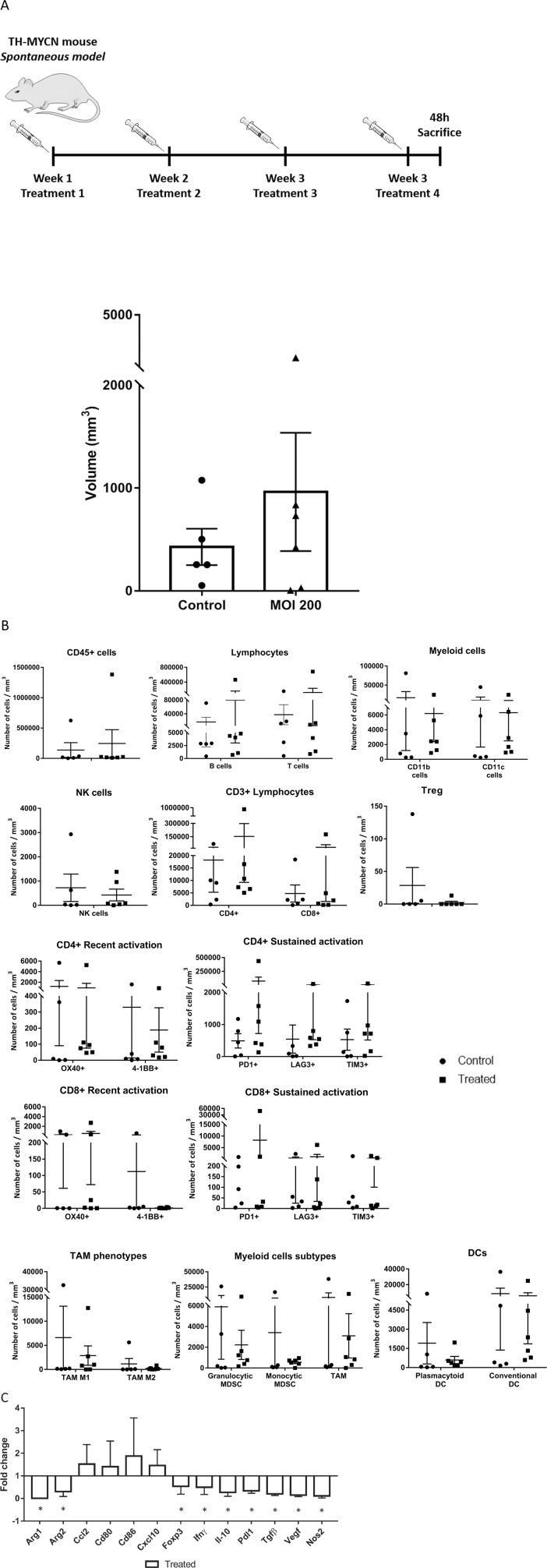
Celyvir (autologous mesenchymal cells -MSCs- that carry an oncolytic adenovirus) is a new therapeutic strategy for metastatic tumors developed by our research group over the last decade. There are limitations for studying the immune effects of human oncolytic adenoviruses in murine models since these viruses do not replicate naturally in these animals. The use of xenografts in immunodeficient mice prevent assessing important clinical aspects of this therapy such as the antiadenoviral immune response or the possible intratumoral immune changes, both of tumor infiltrating leukocytes and of the microenvironment. In our strategy, the presence of MSCs in the medicinal product adds an extra level of complexity. We present here a murine model that overcomes many of these limitations. We found that carrier cells outcompeted intravenous administration of naked particles in delivering the oncolytic virus into the tumor masses. The protection that MSCs could provide to the oncolytic adenovirus did not preclude the development of an antiadenoviral immune response. However, the presence of circulating antiadenoviral antibodies did not prevent changes detected at the tumor masses: increased infiltration and changes in the quality of immune cells per unit of tumor volume, and a less protumoral and more inflammatory profile of the tumor microenvironment. We believe that the model described here will enable the study of crucial events related to the immune responses affecting both the medicinal product and the tumor.
Celyvir(携带溶瘤腺病毒的自体间充质细胞 -MSCs-)是我们研究小组在过去十年中开发的一种针对转移性肿瘤的新治疗策略。由于人类溶瘤腺病毒不会在小鼠模型中自然复制,因此在该模型中研究其免疫效应存在局限性。在免疫缺陷小鼠中使用异种移植物无法评估该疗法的重要临床方面,如抗腺病毒免疫反应或肿瘤内可能的免疫变化,包括肿瘤浸润白细胞和微环境的变化。在我们的策略中,药用产品中MSCs的存在增加了额外的复杂程度。我们在此展示一种克服了许多这些局限性的小鼠模型。我们发现,在将溶瘤病毒递送至肿瘤块方面,载体细胞比静脉注射裸病毒颗粒更具优势。MSCs对溶瘤腺病毒的保护作用并不排除抗腺病毒免疫反应的发生。然而,循环抗腺病毒抗体的存在并未阻止在肿瘤块中检测到的变化:浸润增加以及每单位肿瘤体积内免疫细胞质量的变化,以及肿瘤微环境中促肿瘤作用减弱和炎症特征增强。我们相信,这里描述的模型将有助于研究与影响药用产品和肿瘤的免疫反应相关的关键事件。