Karim Ahasanul, Aider Mohammed
Department of Soil Sciences and Agri-food Engineering, Université Laval, Quebec, QC G1V 0A6, Canada.
Institute of Nutrition and Functional Food (INAF), Université Laval, Quebec, QC G1V 0A6, Canada.
ACS Omega. 2020 Jan 30;5(5):2318-2333. doi: 10.1021/acsomega.9b03705. eCollection 2020 Feb 11.
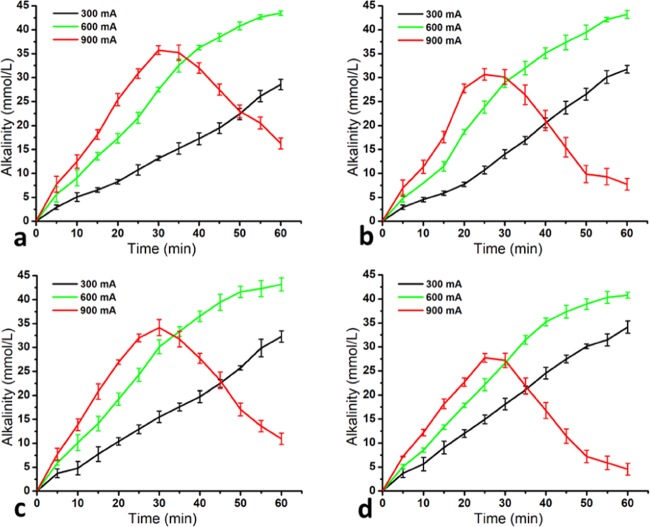
The demand of lactulose production is increasing tremendously because of its bifidogenic (prebiotic) functionality. Therefore, the isomerization of lactose to synthesize lactulose through electroactivation (EA) technology is of great interest nowadays. However, lactulose production through electroisomerization is affected by several operational and experimental conditions, and the process needs to be optimized. In this context, the EA technique was applied to isomerize lactose into lactulose in an EA reactor modulated by anion and cation exchange membranes. The effect of lactose concentrations (5, 10, 15, and 20%), applied electric fields (300, 600, and 900 mA), and processing time (0-60 min) on lactose electroisomerization rate (lactulose formation) and coproduct (glucose, galactose, and fructose) formation has been investigated. The effect of different physicochemical parameters such as pH, alkalinity, temperature, ion migration, and oxidation-reduction potential (ORP) on the conversion of lactose into lactulose was correlated with the lactulose formation to understand the involved process mechanism of action. The conversion of lactose into lactulose was lactose-concentration-, electric-current-, and EA-time-dependent and reached the highest lactulose yield of 38% at 40 min using a 900 mA current intensity in a 10% lactose solution. The results were then compared to conventional chemical isomerization maintaining similar alkaline conditions at ambient temperature (22 ± 2 °C). A higher yield of lactulose was achieved in the EA process within a short reaction time compared to that of the chemical isomerization. The outcome of this study suggests that EA is a promising technique for the enhanced production of lactulose from lactose.
由于乳果糖具有双歧生成(益生元)功能,其生产需求正急剧增加。因此,如今通过电活化(EA)技术将乳糖异构化以合成乳果糖备受关注。然而,通过电异构化生产乳果糖受到多种操作和实验条件的影响,该过程需要优化。在此背景下,采用EA技术在由阴离子和阳离子交换膜调节的EA反应器中将乳糖异构化为乳果糖。研究了乳糖浓度(5%、10%、15%和20%)、施加电场(300、600和900 mA)以及处理时间(0 - 60分钟)对乳糖电异构化速率(乳果糖形成)和副产物(葡萄糖、半乳糖和果糖)形成的影响。将不同物理化学参数如pH值、碱度、温度、离子迁移和氧化还原电位(ORP)对乳糖转化为乳果糖的影响与乳果糖形成相关联,以了解所涉及的作用过程机制。乳糖向乳果糖的转化取决于乳糖浓度、电流和EA时间,在10%乳糖溶液中使用900 mA电流强度,40分钟时乳果糖产率最高可达38%。然后将结果与在环境温度(22 ± 2°C)下保持相似碱性条件的传统化学异构化进行比较。与化学异构化相比,EA过程在较短反应时间内实现了更高的乳果糖产率。本研究结果表明,EA是一种从乳糖中提高乳果糖产量的有前景的技术。