From the Department of Molecular, Cell and Cancer Biology (S.S., J.Y., A.Y., R.L., L.J.Z., N.D.L.), University of Massachusetts Medical School, Worcester.
Bioinformatics Core (O.Y., A.K.), University of Massachusetts Medical School, Worcester.
Circ Res. 2020 Mar 27;126(7):875-888. doi: 10.1161/CIRCRESAHA.119.316075. Epub 2020 Feb 17.
Significant progress has revealed transcriptional inputs that underlie regulation of artery and vein endothelial cell fates. However, little is known concerning genome-wide regulation of this process. Therefore, such studies are warranted to address this gap.
To identify and characterize artery- and vein-specific endothelial enhancers in the human genome, thereby gaining insights into mechanisms by which blood vessel identity is regulated.
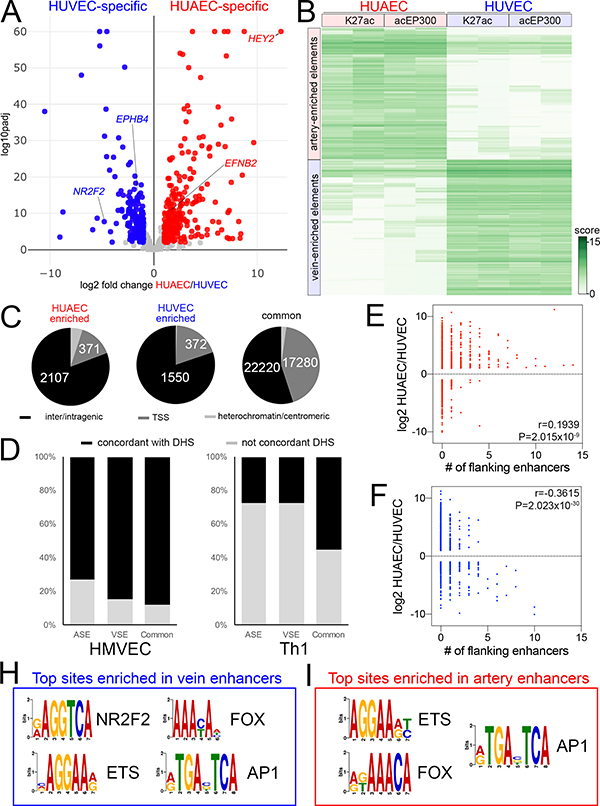
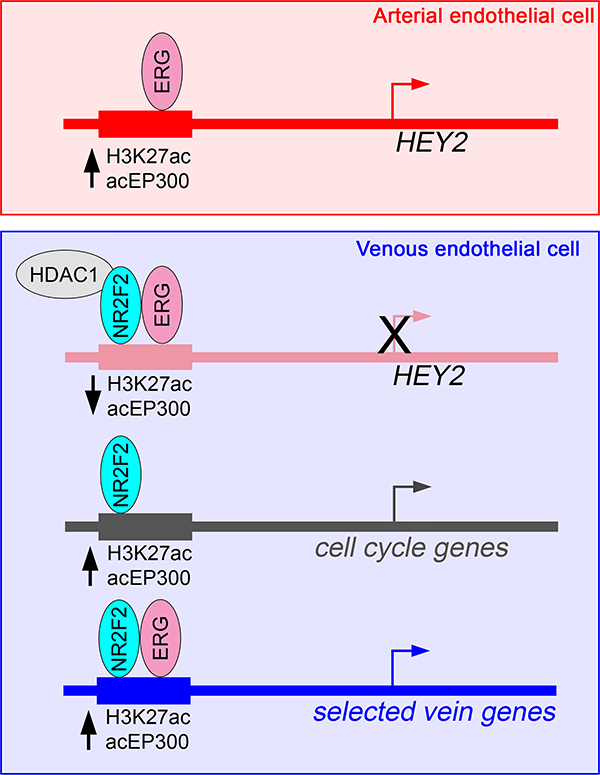
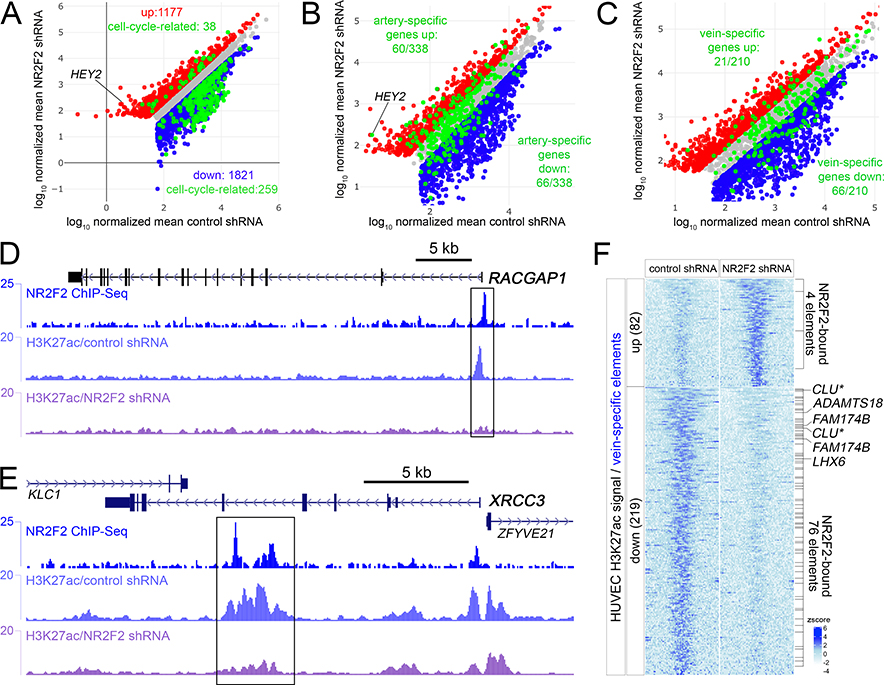
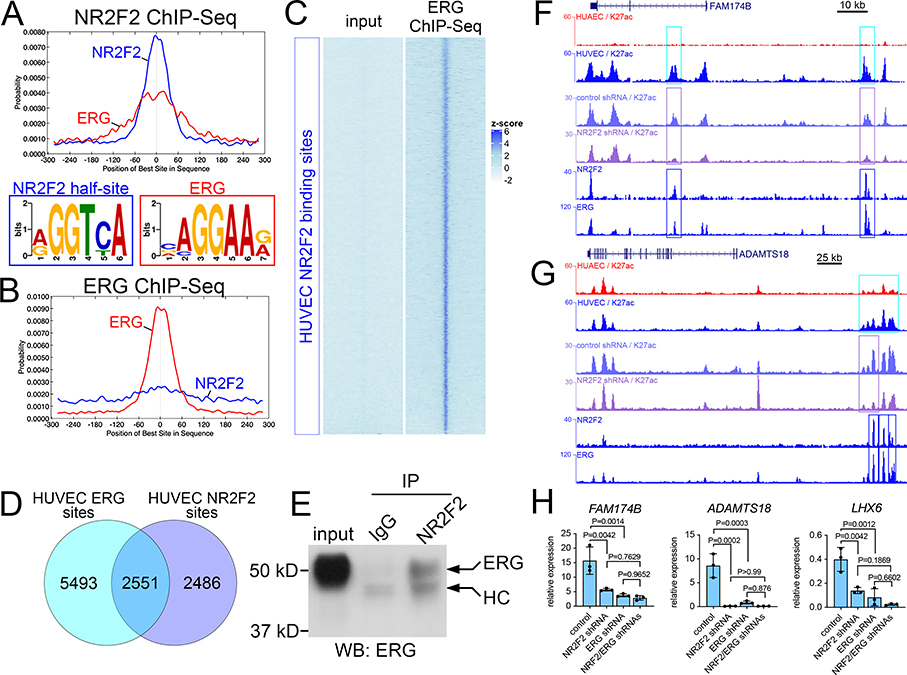
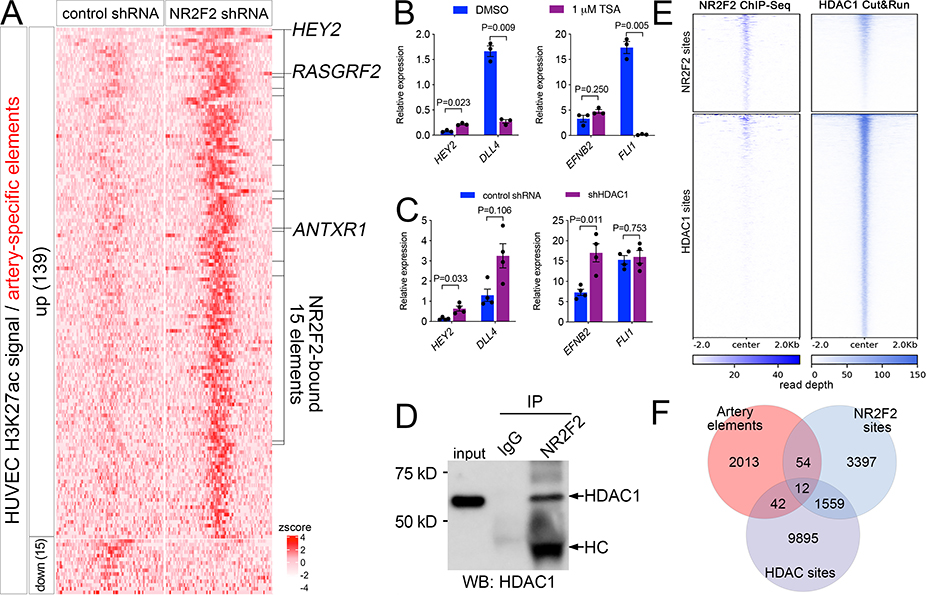
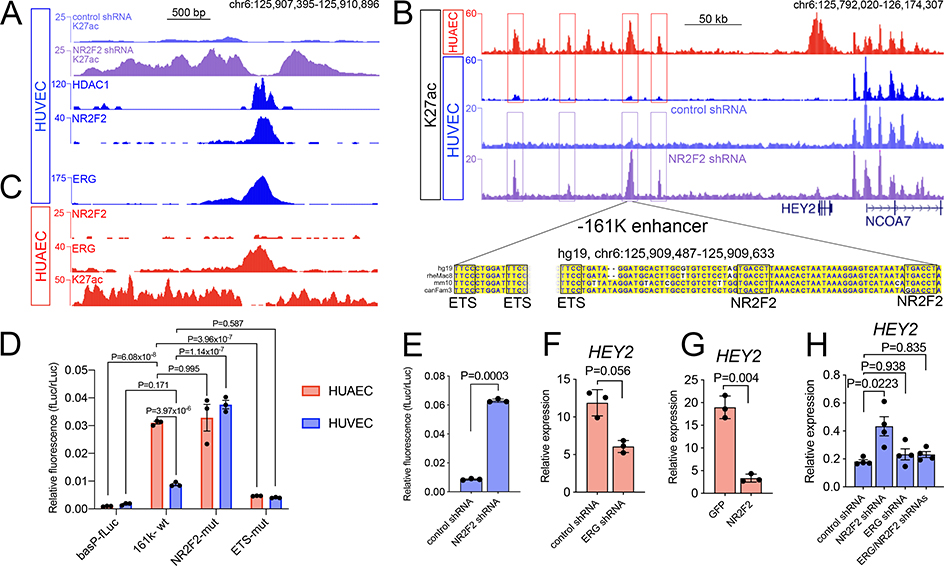
Using chromatin immunoprecipitation and deep sequencing for markers of active chromatin in human arterial and venous endothelial cells, we identified several thousand artery- and vein-specific regulatory elements. Computational analysis revealed that NR2F2 (nuclear receptor subfamily 2, group F, member 2) sites were overrepresented in vein-specific enhancers, suggesting a direct role in promoting vein identity. Subsequent integration of chromatin immunoprecipitation and deep sequencing data sets with RNA sequencing revealed that NR2F2 regulated 3 distinct aspects related to arteriovenous identity. First, consistent with previous genetic observations, NR2F2 directly activated enhancer elements flanking cell cycle genes to drive their expression. Second, NR2F2 was essential to directly activate vein-specific enhancers and their associated genes. Our genomic approach further revealed that NR2F2 acts with ERG (ETS-related gene) at many of these sites to drive vein-specific gene expression. Finally, NR2F2 directly repressed only a small number of artery enhancers in venous cells to prevent their activation, including a distal element upstream of the artery-specific transcription factor, (hes related family bHLH transcription factor with YRPW motif 2). In arterial endothelial cells, this enhancer was normally bound by ERG, which was also required for arterial expression. By contrast, in venous endothelial cells, NR2F2 was bound to this site, together with ERG, and prevented its activation.
By leveraging a genome-wide approach, we revealed mechanistic insights into how NR2F2 functions in multiple roles to maintain venous identity. Importantly, characterization of its role at a crucial artery enhancer upstream of established a novel mechanism by which artery-specific expression can be achieved.
在动脉和静脉内皮细胞命运调控的研究中,转录输入的重要进展已经被揭示。然而,关于这个过程的全基因组调控却知之甚少。因此,有必要进行此类研究以填补这一空白。
在人类基因组中识别和描述动脉和静脉特异性内皮增强子,从而深入了解血管身份调控的机制。
通过对人动脉和静脉内皮细胞中活性染色质的染色质免疫沉淀和深度测序,我们鉴定了数千个动脉和静脉特异性调节元件。计算分析表明,NR2F2(核受体亚家族 2,组 F,成员 2)位点在静脉特异性增强子中过度表达,提示其在促进静脉特征中的直接作用。随后,将染色质免疫沉淀和深度测序数据集与 RNA 测序进行整合,揭示了 NR2F2 调节与动静脉特征相关的 3 个不同方面。首先,与先前的遗传观察结果一致,NR2F2 直接激活细胞周期基因侧翼的增强子元件,以驱动其表达。其次,NR2F2 对直接激活静脉特异性增强子及其相关基因是必不可少的。我们的基因组方法进一步表明,NR2F2 在许多这些位点上与 ERG(ETS 相关基因)一起作用,以驱动静脉特异性基因表达。最后,NR2F2 仅在静脉细胞中直接抑制少数动脉增强子的激活,以防止其激活,包括动脉特异性转录因子 上游的远端元件(含 YRPW 基序的 ETS 相关家族 bHLH 转录因子 2)。在动脉内皮细胞中,该增强子通常由 ERG 结合,而 ERG 也是动脉 表达所必需的。相比之下,在静脉内皮细胞中,NR2F2 与 ERG 结合于该位点,并阻止其激活。
通过利用全基因组方法,我们揭示了 NR2F2 在维持静脉特征的多种作用中的机制见解。重要的是,对其在 上游的关键动脉增强子上的作用的描述建立了一种新的机制,通过该机制可以实现动脉特异性表达。