Department of Epidemiology and Population Health, University of Liverpool, Chester, Cheshire, UK
Department of Epidemiology and Surveillance, Animal Health Trust, Newmarket, Suffolk, UK.
Vet Rec. 2020 Jun 27;186(19):642. doi: 10.1136/vr.105509. Epub 2020 Feb 17.
Clinical disease caused by the bovine lungworm () causes significant welfare and economic problems for the livestock industry. Anecdotal reports suggest that the number of clinical cases has increased, particularly in Northern England and Scotland. However, these spatiotemporal changes have not been quantified and the current impact that the disease is having across Great Britain remains unclear.
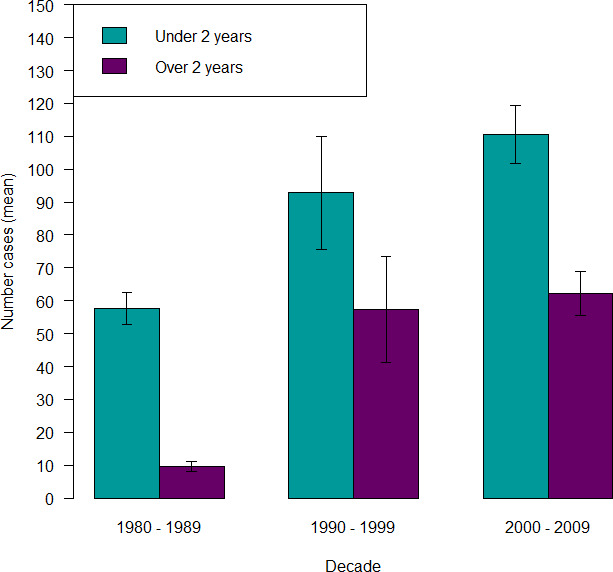
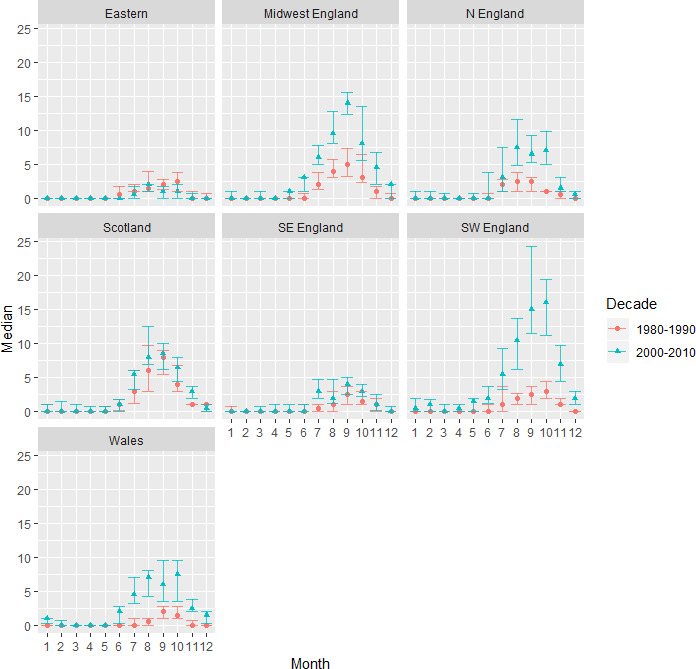
Here, we report a retrospective analysis of the spatial distribution, seasonality and age of lungworm cases reported by the Veterinary Investigation Diagnosis Analysis database from 1975 to 2014.
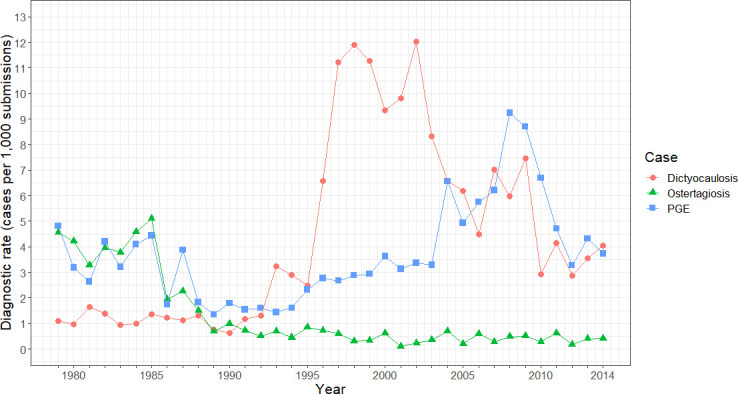
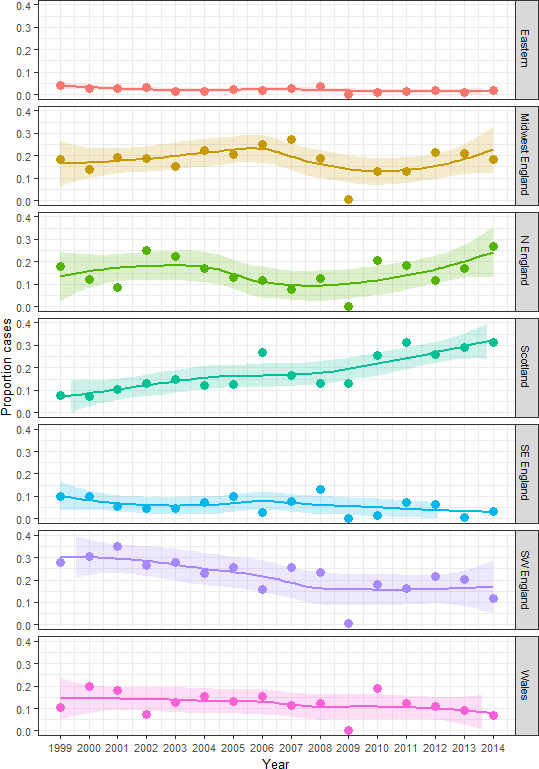
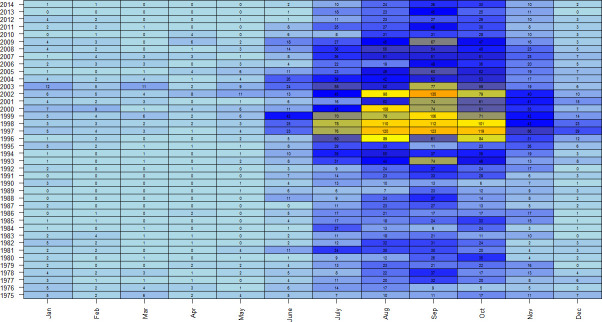
A sharp overall increase in the dictyocaulosis diagnostic rate (DR, cases / 1000 submissions) was observed, with, for example, median 2010-2014 DR 3.5 times as high as 1980-1984 DR. Such increases were most pronounced for Scotland, which became the region with the highest proportion of cases by 2009. Cases were increasingly diagnosed during the winter months (December-February).
The apparent spatiotemporal changes in lungworm epidemiology pose new challenges to cattle farmers in Great Britain. Farmers and veterinarians need to remain vigilant for this disease and consider it as a possible cause for milk production losses at any time of the year. Awareness levels may have to be raised particularly in northern England and Scotland.
由牛肺线虫引起的临床疾病给畜牧业带来了重大的福利和经济问题。有传闻报道称,临床病例的数量有所增加,特别是在英格兰北部和苏格兰。然而,这些时空变化尚未量化,目前该病在大不列颠的影响仍不清楚。
在这里,我们报告了 1975 年至 2014 年兽医调查诊断分析数据库报告的肺线虫病例的空间分布、季节性和年龄的回顾性分析。
观察到总体上包虫病诊断率(DR,每千份送检病例数)急剧上升,例如,2010-2014 年的中位数是 1980-1984 年的 3.5 倍。苏格兰的增幅最为显著,到 2009 年成为病例比例最高的地区。病例越来越多的被诊断为冬季(12 月至 2 月)。
肺线虫病流行病学的明显时空变化给英国的奶牛养殖户带来了新的挑战。农民和兽医需要对这种疾病保持警惕,并在一年中的任何时候都将其视为牛奶产量损失的可能原因。特别是在英格兰北部和苏格兰,可能需要提高认识水平。