Division of Clinical Neuroscience, Chiba University Center for Forensic Mental Health, Chiba, 260-8670, Japan.
Department of Psychiatry, Chaohu Hospital of Anhui Medical University, Hefei, 238000, China.
Transl Psychiatry. 2020 Jan 27;10(1):32. doi: 10.1038/s41398-020-0733-x.
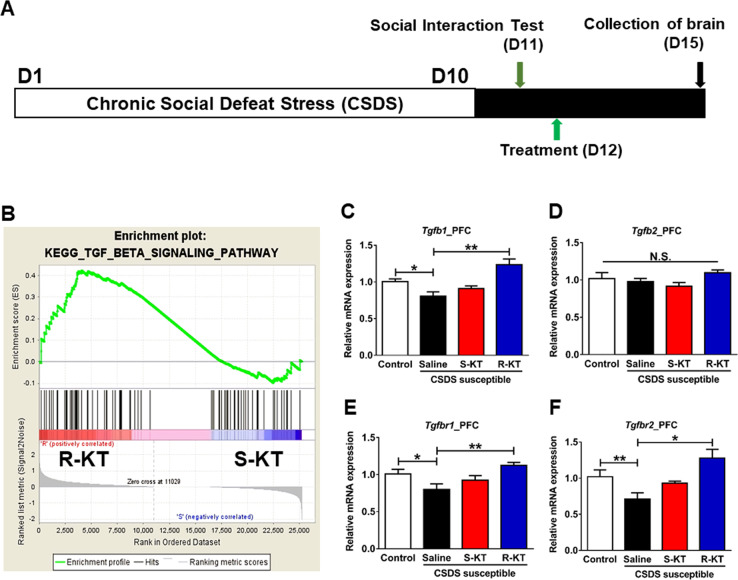
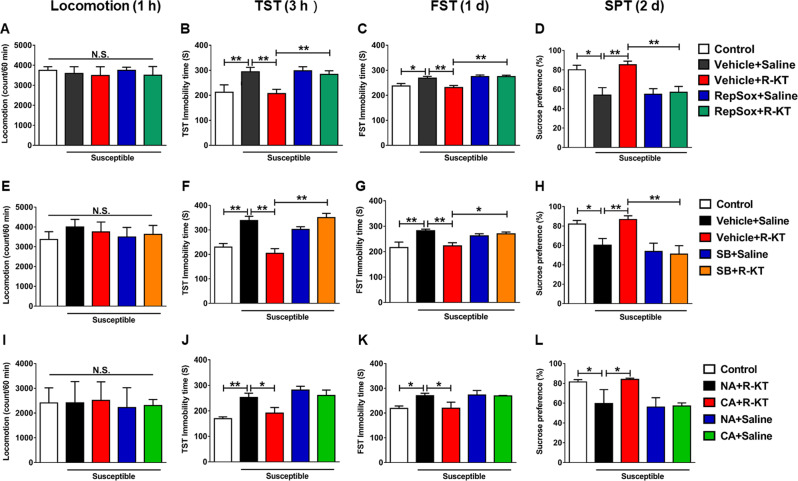
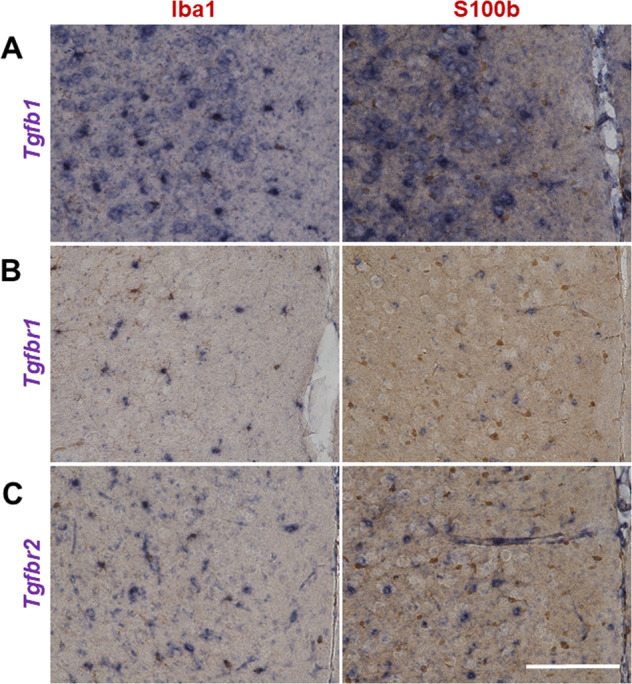
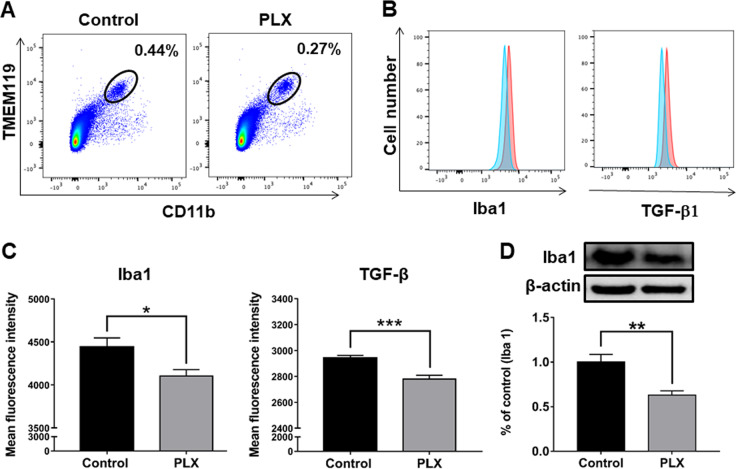
In rodent models of depression, (R)-ketamine has greater potency and longer-lasting antidepressant effects than (S)-ketamine; however, the precise molecular mechanisms underlying the antidepressant actions of (R)-ketamine remain unknown. Using RNA-sequencing analysis, we identified novel molecular targets that contribute to the different antidepressant effects of the two enantiomers. Either (R)-ketamine (10 mg/kg) or (S)-ketamine (10 mg/kg) was administered to susceptible mice after chronic social defeat stress (CSDS). RNA-sequencing analysis of prefrontal cortex (PFC) and subsequent GSEA (gene set enrichment analysis) revealed that transforming growth factor (TGF)-β signaling might contribute to the different antidepressant effects of the two enantiomers. (R)-ketamine, but not (S)-ketamine, ameliorated the reduced expressions of Tgfb1 and its receptors (Tgfbr1 and Tgfbr2) in the PFC and hippocampus of CSDS susceptible mice. Either pharmacological inhibitors (i.e., RepSox and SB431542) or neutralizing antibody of TGF-β1 blocked the antidepressant effects of (R)-ketamine in CSDS susceptible mice. Moreover, depletion of microglia by the colony-stimulating factor 1 receptor (CSF1R) inhibitor PLX3397 blocked the antidepressant effects of (R)-ketamine in CSDS susceptible mice. Similar to (R)-ketamine, the recombinant TGF-β1 elicited rapid and long-lasting antidepressant effects in animal models of depression. Our data implicate a novel microglial TGF-β1-dependent mechanism underlying the antidepressant effects of (R)-ketamine in rodents with depression-like phenotype. Moreover, TGF-β1 and its receptor agonists would likely constitute a novel rapid-acting and sustained antidepressant in humans.
在抑郁的啮齿动物模型中,(R)-氯胺酮比(S)-氯胺酮具有更强的效力和更持久的抗抑郁作用;然而,(R)-氯胺酮抗抑郁作用的确切分子机制尚不清楚。使用 RNA 测序分析,我们确定了新的分子靶点,这些靶点有助于两种对映异构体的不同抗抑郁作用。慢性社交挫败应激(CSDS)后,易感性小鼠分别给予(R)-氯胺酮(10mg/kg)或(S)-氯胺酮(10mg/kg)。对前额叶皮层(PFC)的 RNA 测序分析和随后的 GSEA(基因集富集分析)表明,转化生长因子(TGF)-β信号可能有助于两种对映异构体的不同抗抑郁作用。(R)-氯胺酮而非(S)-氯胺酮可改善 CSDS 易感小鼠 PFC 和海马中 Tgfb1 及其受体(Tgfbr1 和 Tgfbr2)表达减少。TGF-β1 的药理学抑制剂(即 RepSox 和 SB431542)或中和抗体可阻断 CSDS 易感小鼠中(R)-氯胺酮的抗抑郁作用。此外,集落刺激因子 1 受体(CSF1R)抑制剂 PLX3397 耗尽小胶质细胞可阻断 CSDS 易感小鼠中(R)-氯胺酮的抗抑郁作用。与(R)-氯胺酮类似,重组 TGF-β1 在抑郁动物模型中产生快速而持久的抗抑郁作用。我们的数据表明,在具有抑郁样表型的啮齿动物中,(R)-氯胺酮抗抑郁作用的一种新的小胶质细胞 TGF-β1 依赖性机制。此外,TGF-β1 和其受体激动剂可能构成人类新型快速作用和持续抗抑郁药。