Department of Cardiology, Sir Run Run Shaw Hospital, Zhejiang University School of Medicine, Hangzhou, China.
Department of Internal Medicine, Mayo Clinic, Rochester, MN, USA.
Sci Rep. 2020 Feb 17;10(1):2751. doi: 10.1038/s41598-020-59539-6.
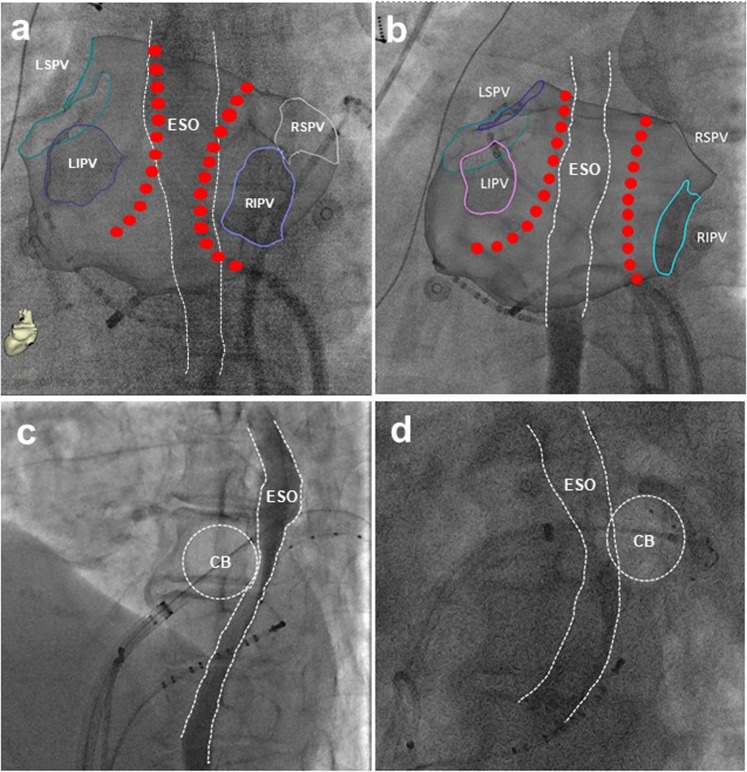
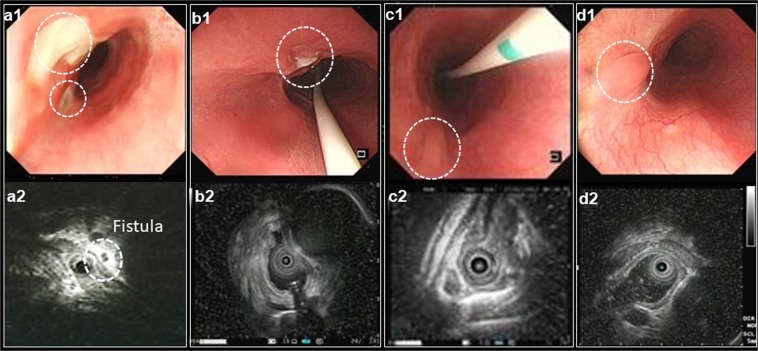
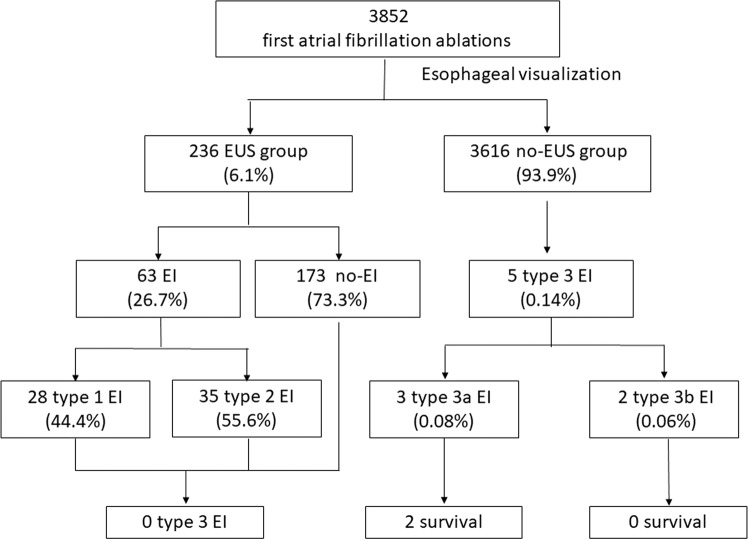
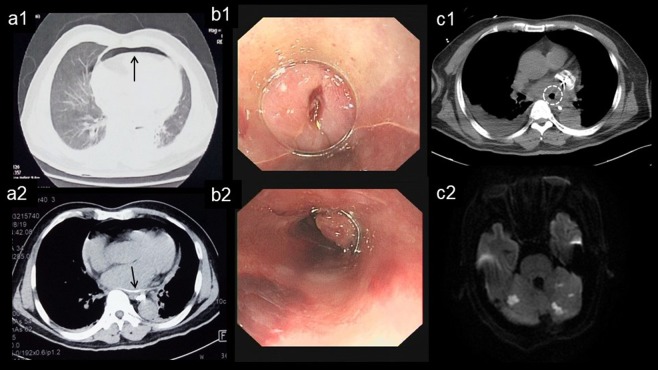
The close proximity of esophagus to the left atrial posterior wall predisposes esophagus to thermal injury during catheter ablation for atrial fibrillation (AF). In this retrospective study, we aimed to investigate risk factors of esophageal injury (EI) caused by catheter ablation for AF. Patients who underwent first-time AF ablation from July 2013 to June 2018 were included. The esophagus was visualized by oral soluble contrast during ablation for all patients and a subset of patients were selected to undergo endoscopic ultrasonography (EUS) to estimate EI post ablation. Degree of EI was categorized as Kansas City classification: type 1: erythema; type 2: ulcers (2a: superficial ulcers; 2b: deep ulcers); type 3: perforation (3a: perforation without communication with the atria; 3b: atrioesophageal fistula [AEF]). Of 3,852 patients, 236 patients (61.5 ± 9.7 years; male, 69%) received EUS (EUS group) and 3616 (63.2 ± 10.9 years; male, 61.1%) without EUS (No-EUS group). In EUS group, EI occurred in 63 patients (type 1 EI in 35 and type 2 EI in 28), and no type 3 EI was observed during follow up. In a multivariable logistic regression analysis, an overlap between the ablation lesion and esophagus was an independent predictor of EI (odds ratio, 21.2; 95% CI: 6.23-72.0; P < 0.001). In No-EUS group, esophagopericardial fistula (EPF; n = 3,0.08%) or AEF (n = 2,0.06%) was diagnosed 4-37 days after ablation. In 3 EPF patients, 2 completely recovered with conservative management and 1 died. Two AEF patients died. Ablation at the vicinity of the esophagus predicts risk of EI. EUS post ablation may prevent the progression of EI and should be considered in management of EI. It remains challenging to identify patients with high risk of EI.
食管与左心房后壁毗邻,使食管在房颤(AF)导管消融过程中容易受到热损伤。在这项回顾性研究中,我们旨在研究房颤导管消融引起食管损伤(EI)的危险因素。纳入 2013 年 7 月至 2018 年 6 月首次接受房颤消融的患者。所有患者在消融过程中通过口服可溶性对比剂观察食管,部分患者选择行内镜超声(EUS)评估消融后 EI。EI 程度按堪萨斯城分类:1 型:红斑;2 型:溃疡(2a:浅表溃疡;2b:深溃疡);3 型:穿孔(3a:无与心房相通的穿孔;3b:食-房瘘[AEF])。在 3852 例患者中,236 例(61.5±9.7 岁;男性,69%)接受 EUS(EUS 组),3616 例(63.2±10.9 岁;男性,61.1%)未行 EUS(No-EUS 组)。EUS 组中,63 例(1 型 EI 35 例,2 型 EI 28 例)发生 EI,随访期间未见 3 型 EI。多变量 logistic 回归分析显示,消融病灶与食管重叠是 EI 的独立预测因素(比值比,21.2;95%可信区间:6.23-72.0;P<0.001)。No-EUS 组中,消融后 4-37 天分别诊断出食管心包瘘(n=3,0.08%)或 AEF(n=2,0.06%)。3 例 EPF 患者中,2 例经保守治疗完全康复,1 例死亡。2 例 AEF 患者死亡。食管附近的消融预测 EI 的风险。消融后 EUS 可能防止 EI 的进展,应考虑用于 EI 的管理。识别高危 EI 患者仍然具有挑战性。