Second Department of Surgery, Wakayama Medical University, Wakayama, Japan.
Department of Immunology, Institute of Advanced Medicine, Wakayama Medical University, Wakayama, Japan.
Br J Cancer. 2020 Apr;122(8):1185-1193. doi: 10.1038/s41416-020-0757-2. Epub 2020 Feb 18.
Cancer peptide vaccines show only marginal effects against cancers. Immune checkpoint inhibitors (ICIs) show significant curative effects in certain types of cancers, but the response rate is still limited. In this study, we aim to improve cancer peptide vaccination by targeting Ag peptides selectively to a dendritic cell (DC) subset, XCR1-expressing DCs (XCR1 DCs), with high ability to support CD8 T-cell responses.
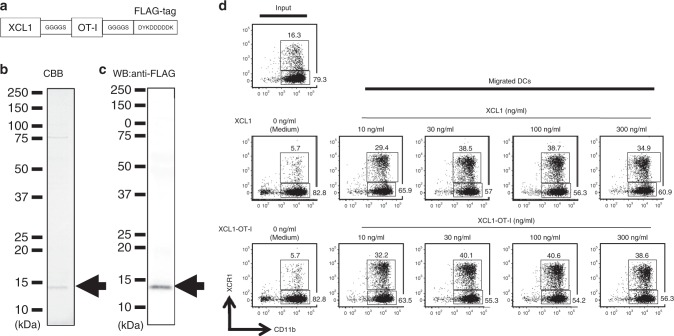
We have generated a fusion protein, consisting of an Ag peptide presented with MHC class I, and an XCR1 ligand, XCL1, and examined its effects on antitumour immunity in mice.
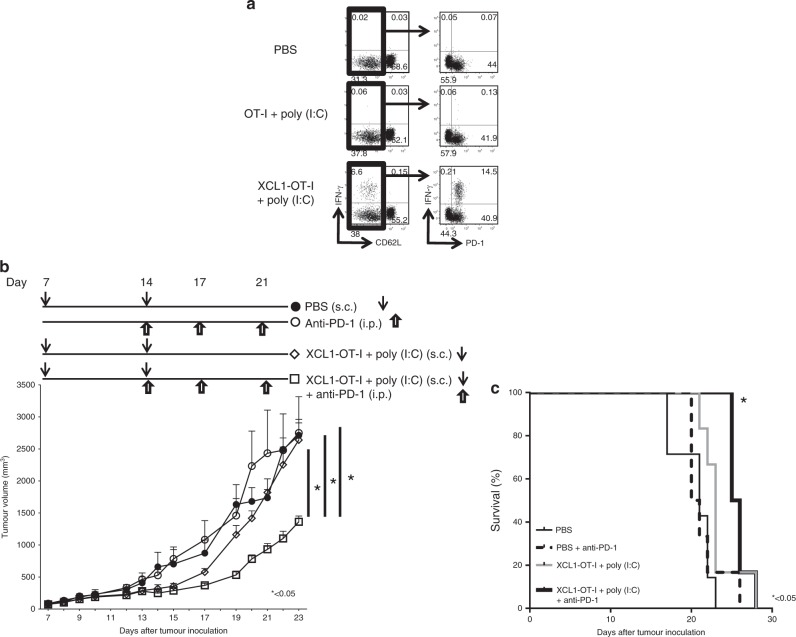
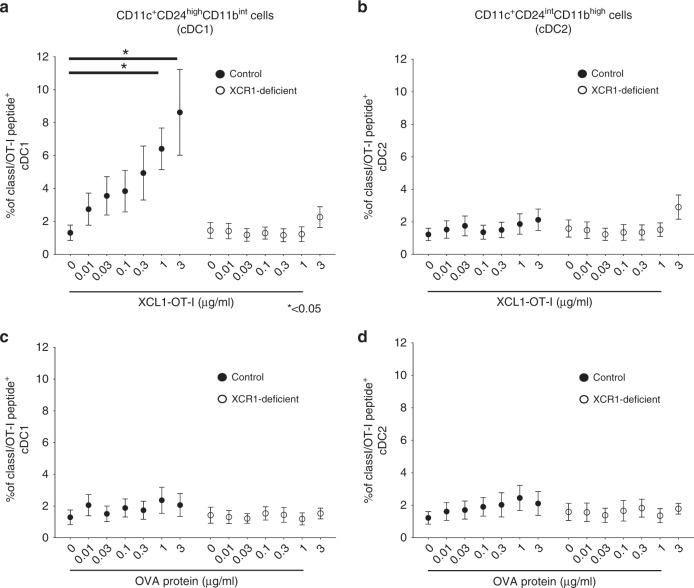
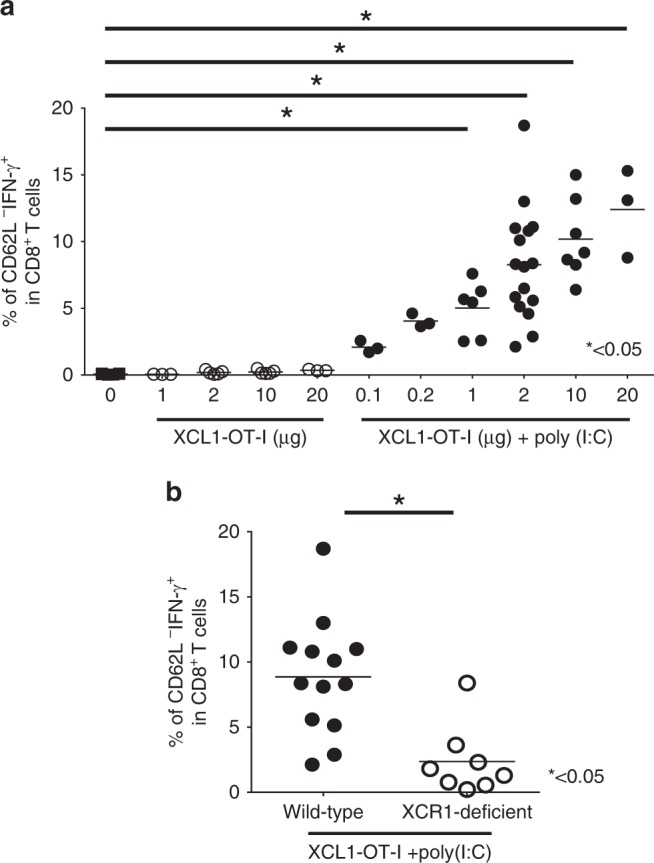
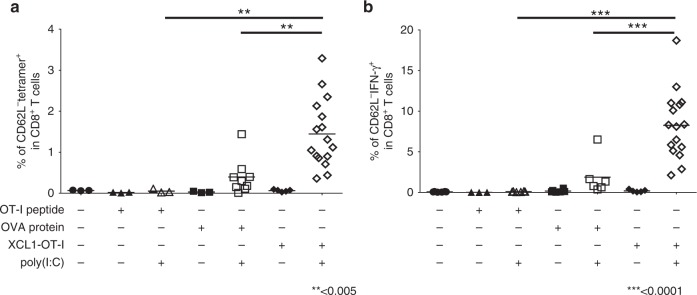
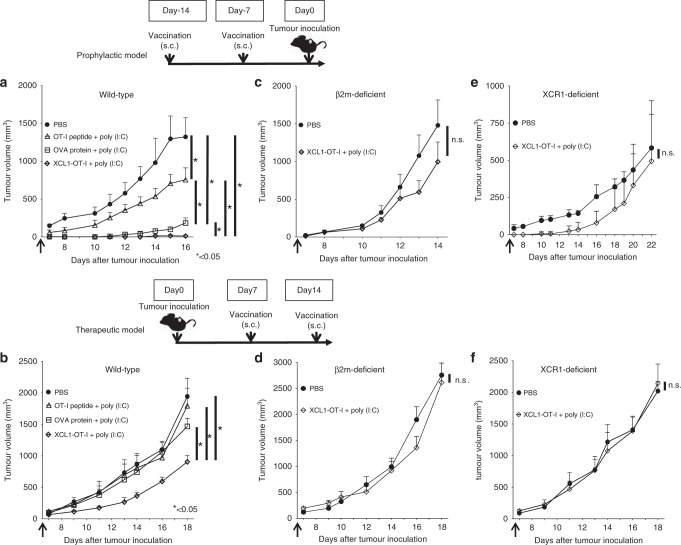
The fusion protein was delivered to XCR1 DCs in an XCR1-dependent manner. Immunisation with the fusion protein plus an immune adjuvant, polyinosinic:polycytidylic acids (poly(I:C)), more potently induced Ag-specific CD8 T-cell responses through XCR1 than the Ag peptide plus poly(I:C) or the Ag protein plus poly(I:C). The fusion protein plus poly(I:C) inhibited the tumour growth efficiently in the prophylactic and therapeutic tumour models. Furthermore, the fusion protein plus poly(I:C) showed suppressive effects on tumour growth in synergy with anti-PD-1 Ab.
Cancer Ag targeting to XCR1 DCs should be a promising procedure as a combination anticancer therapy with immune checkpoint blockade.
癌症肽疫苗对癌症的疗效仅略有改善。免疫检查点抑制剂(ICI)在某些类型的癌症中显示出显著的疗效,但反应率仍然有限。在这项研究中,我们旨在通过将 Ag 肽选择性靶向具有高支持 CD8 T 细胞反应能力的树突状细胞(DC)亚群,即表达 XCR1 的 DC(XCR1 DC),来改善癌症肽疫苗接种。
我们生成了一种融合蛋白,由 MHC Ⅰ类呈递的 Ag 肽和 XCR1 配体 XCL1 组成,并研究了其在小鼠抗肿瘤免疫中的作用。
融合蛋白以 XCR1 依赖的方式递送至 XCR1 DC。与 Ag 肽加 poly(I:C)或 Ag 蛋白加 poly(I:C)相比,融合蛋白加免疫佐剂多聚肌苷酸:多聚胞苷酸(poly(I:C))更有效地通过 XCR1 诱导 Ag 特异性 CD8 T 细胞反应。融合蛋白加 poly(I:C)在预防性和治疗性肿瘤模型中均能有效抑制肿瘤生长。此外,融合蛋白加 poly(I:C)与抗 PD-1 Ab 联合显示出抑制肿瘤生长的协同作用。
将癌症 Ag 靶向 XCR1 DC 应该是一种有前途的联合免疫检查点阻断治疗癌症的方法。