Precision Medicine, School of Clinical Sciences at Monash Health, Monash University, Clayton, VIC, Australia.
Department of Clinical Pathology, The University of Melbourne, Melbourne, VIC, Australia.
Br J Cancer. 2020 Apr;122(8):1133-1140. doi: 10.1038/s41416-019-0720-2. Epub 2020 Feb 18.
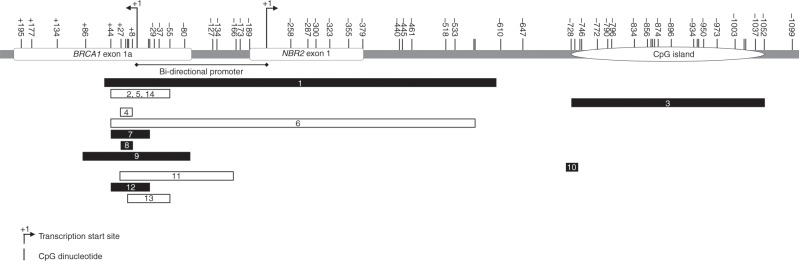
Current risk prediction models estimate the probability of developing breast cancer over a defined period based on information such as family history, non-genetic breast cancer risk factors, genetic information from high and moderate risk breast cancer susceptibility genes and, over the past several years, polygenic risk scores (PRS) from more than 300 common variants. The inclusion of additional data such as PRS improves risk stratification, but it is anticipated that the inclusion of epigenetic marks could further improve model performance accuracy. Here, we present the case for including information on DNA methylation marks to improve the accuracy of these risk prediction models, and consider how this approach contrasts genetic information, as identifying DNA methylation marks associated with breast cancer risk differs inherently according to the source of DNA, approaches to the measurement of DNA methylation, and the timing of measurement. We highlight several DNA-methylation-specific challenges that should be considered when incorporating information on DNA methylation marks into risk prediction models, using BRCA1, a highly penetrant breast cancer susceptibility gene, as an example. Only after careful consideration of study design and DNA methylation measurement will prospective performance of the incorporation of information regarding DNA methylation marks into risk prediction models be valid.
目前的风险预测模型基于家族史、非遗传乳腺癌风险因素、高风险和中度风险乳腺癌易感基因的遗传信息以及过去几年来自 300 多个常见变体的多基因风险评分 (PRS) 等信息,来估计在特定时间段内发生乳腺癌的概率。纳入其他数据(如 PRS)可以改善风险分层,但预计纳入表观遗传标记可以进一步提高模型性能的准确性。在这里,我们提出了纳入 DNA 甲基化标记信息以提高这些风险预测模型准确性的理由,并考虑了这种方法与遗传信息的对比,因为与乳腺癌风险相关的 DNA 甲基化标记的识别根据 DNA 的来源、DNA 甲基化测量的方法以及测量的时间而有所不同。我们强调了在将 DNA 甲基化标记信息纳入风险预测模型时应考虑的几个与 DNA 甲基化特异性相关的挑战,以 BRCA1(一种高外显率乳腺癌易感基因)为例。只有在仔细考虑研究设计和 DNA 甲基化测量的情况下,将有关 DNA 甲基化标记的信息纳入风险预测模型的前瞻性性能才是有效的。