College of Bioinformatics Science and Technology, Harbin Medical University, China.
Department of General Surgery, The Second Affiliated Hospital of Harbin Medical University, China.
Mol Oncol. 2018 Jun;12(7):1047-1060. doi: 10.1002/1878-0261.12309. Epub 2018 May 21.
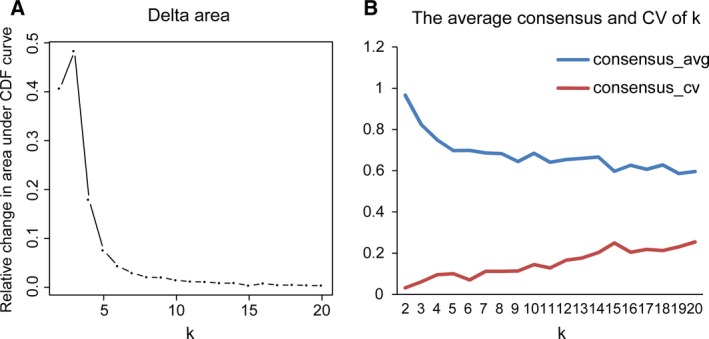
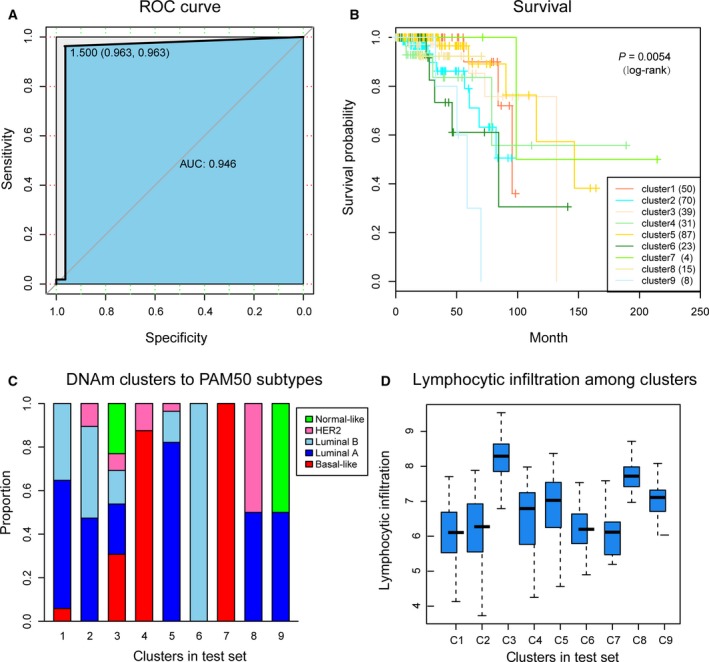
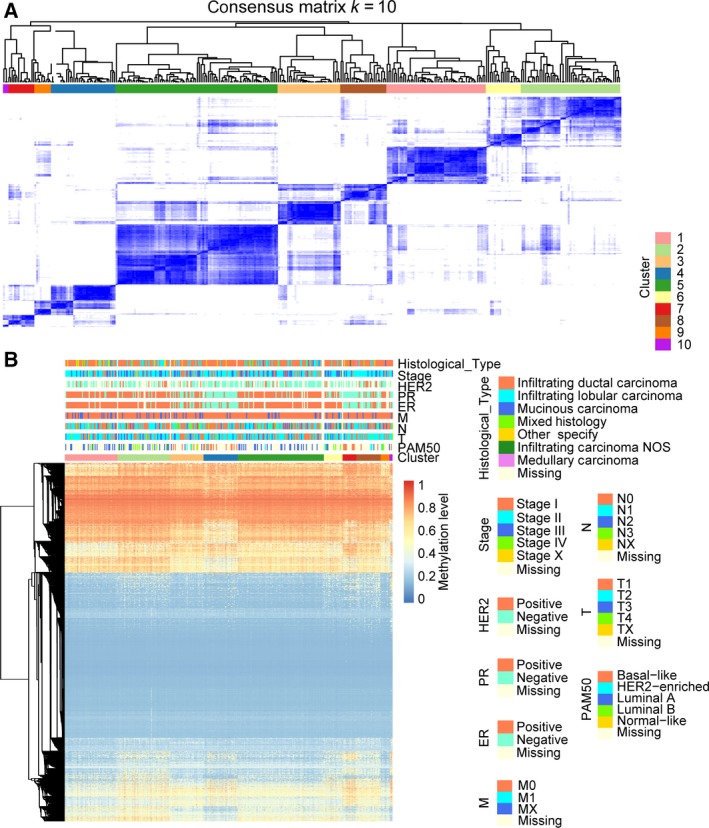
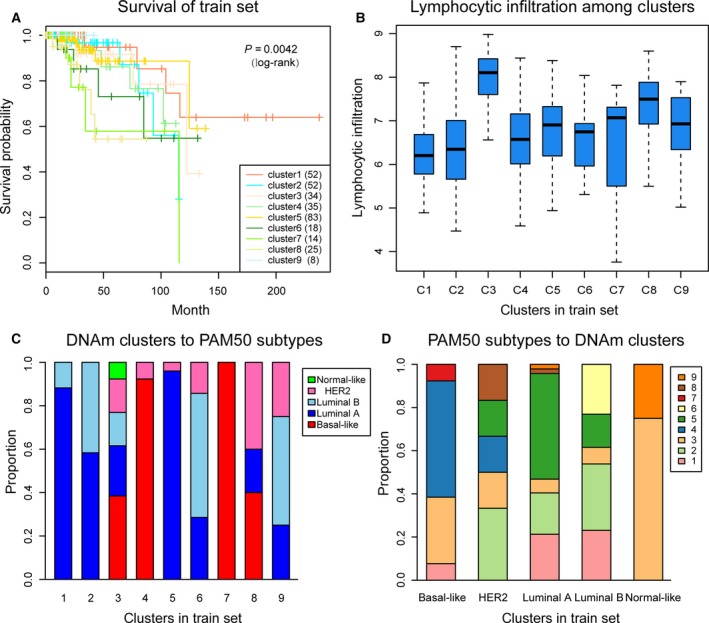
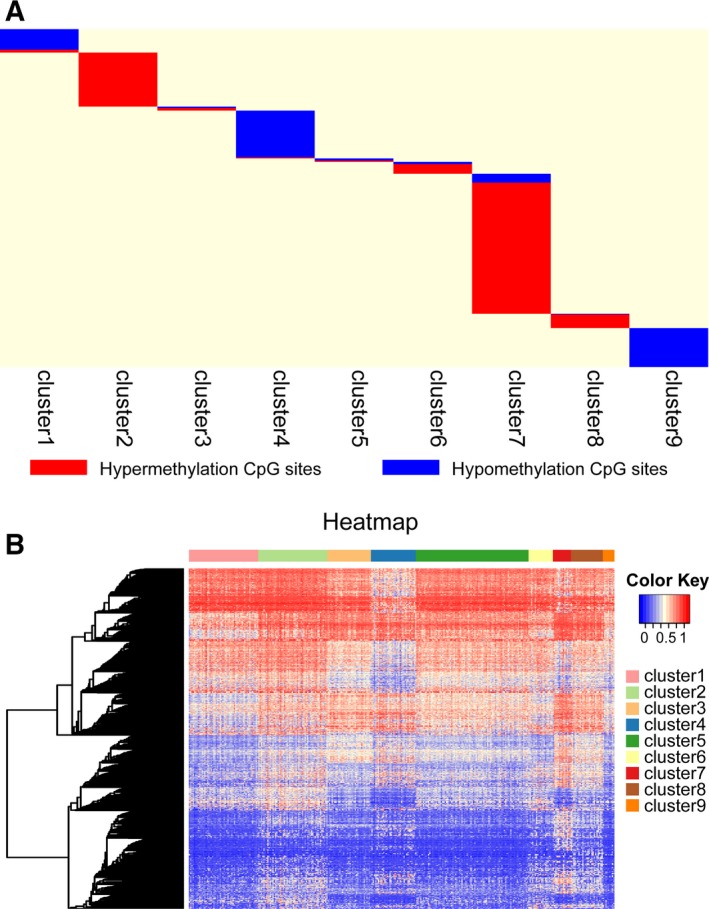
Tumour heterogeneity is an obstacle to effective breast cancer diagnosis and therapy. DNA methylation is an important regulator of gene expression, thus characterizing tumour heterogeneity by epigenetic features can be clinically informative. In this study, we explored specific prognosis-subtypes based on DNA methylation status using 669 breast cancers from the TCGA database. Nine subgroups were distinguished by consensus clustering using 3869 CpGs that significantly influenced survival. The specific DNA methylation patterns were reflected by different races, ages, tumour stages, receptor status, histological types, metastasis status and prognosis. Compared with the PAM50 subtypes, which use gene expression clustering, DNA methylation subtypes were more elaborate and classified the Basal-like subtype into two different prognosis-subgroups. Additionally, 1252 CpGs (corresponding to 888 genes) were identified as specific hyper/hypomethylation sites for each specific subgroup. Finally, a prognosis model based on Bayesian network classification was constructed and used to classify the test set into DNA methylation subgroups, which corresponded to the classification results of the train set. These specific classifications by DNA methylation can explain the heterogeneity of previous molecular subgroups in breast cancer and will help in the development of personalized treatments for the new specific subtypes.
肿瘤异质性是有效诊断和治疗乳腺癌的障碍。DNA 甲基化是基因表达的重要调控因子,因此通过表观遗传特征来描述肿瘤异质性可以提供有临床意义的信息。在这项研究中,我们使用 TCGA 数据库中的 669 例乳腺癌数据,根据 DNA 甲基化状态探索了特定的预后亚组。通过使用 3869 个显著影响生存的 CpG 进行一致性聚类,区分出了 9 个亚组。不同的种族、年龄、肿瘤分期、受体状态、组织学类型、转移状态和预后反映了不同的特定 DNA 甲基化模式。与使用基因表达聚类的 PAM50 亚型相比,DNA 甲基化亚型更为精细,并将基底样亚型分为两个不同的预后亚组。此外,鉴定出 1252 个 CpG(对应 888 个基因)作为每个特定亚组的特异性高/低甲基化位点。最后,构建了基于贝叶斯网络分类的预后模型,并用于将测试集分类为 DNA 甲基化亚组,与训练集的分类结果相对应。这些通过 DNA 甲基化进行的特定分类可以解释乳腺癌先前分子亚组的异质性,并有助于为新的特定亚型开发个性化治疗方法。