Department of Cardiology and Cardiovascular Research Institute, General Hospital of Northern Theater Command, Shenyang, China.
Department of Cardiology and Cardiovascular Research Institute, General Hospital of Northern Theater Command, Shenyang, China.
Redox Biol. 2020 May;32:101444. doi: 10.1016/j.redox.2020.101444. Epub 2020 Jan 31.
Cellular repressor of E1A-stimulated genes (CREG), a vasculoprotective molecule, is significantly downregulated in atherosclerotic vessels through unclear mechanisms. While epigenetic regulation is involved in atherosclerosis development, it is not known if the CREG gene is epigenetically regulated. The aim of this study was to assess the potential role of CREG methylation in contributing to atherosclerosis.
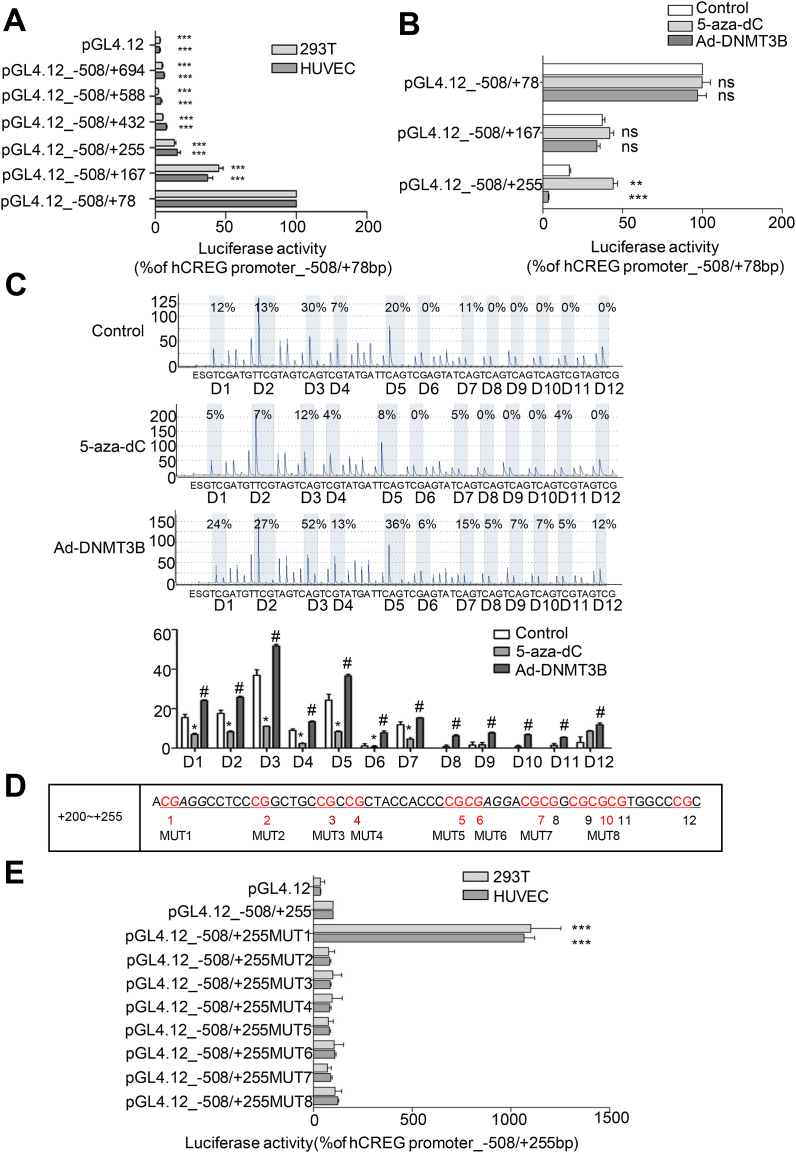
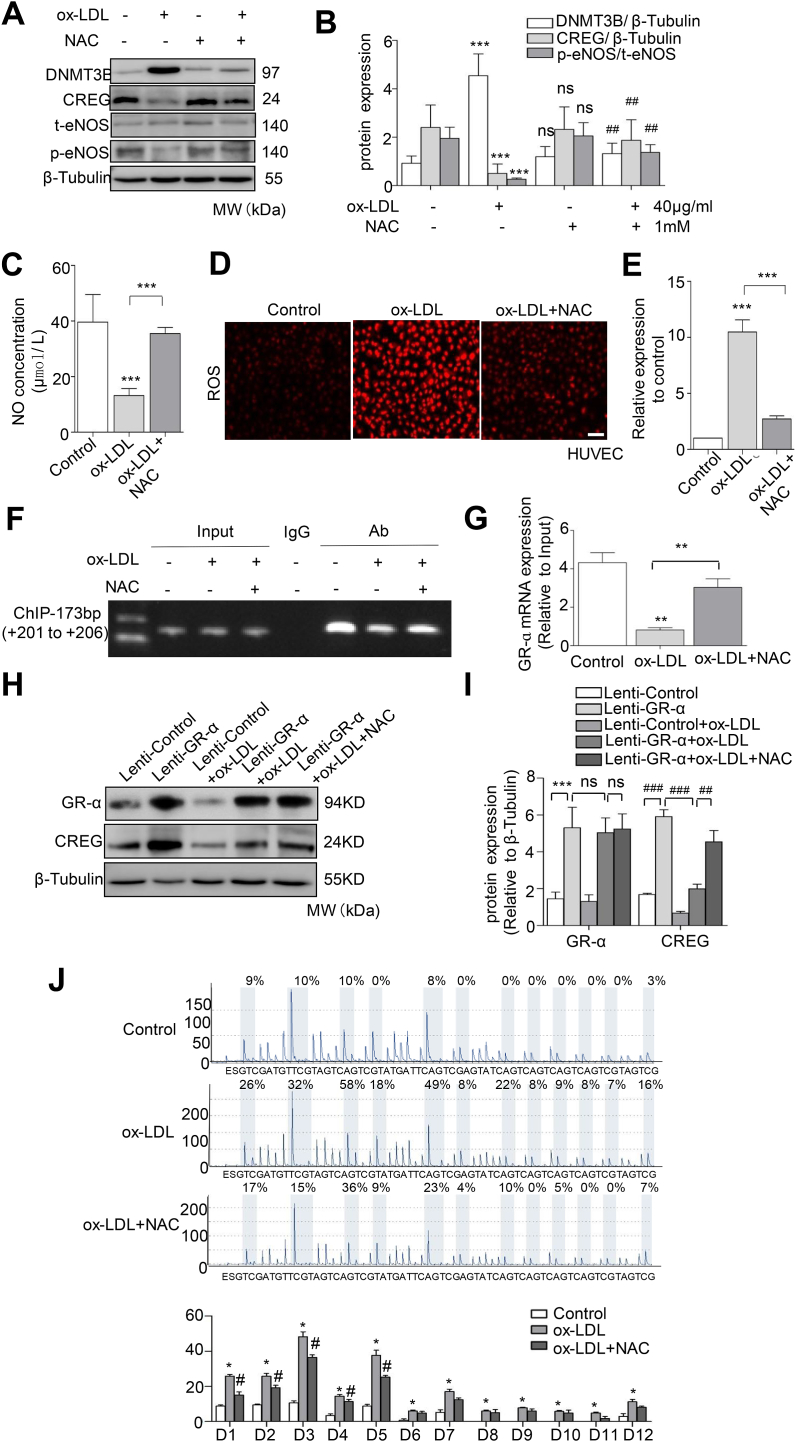
Overexpression of DNA methyltransferase (DNMT)3B significantly inhibited CREG expression in human umbilical vein endothelial cells (HUVECs) and human coronary aortic endothelial cells (HCAECs).Conversely, inhibition of DNA methylation with 5-aza-2'-deoxycytidine (5-aza-dC) dose-dependently increased CREG expression. A CREG promoter analysis identified +168 to +255 bp as a key regulatory region and the CG site at +201/+202 bp as a key methylation site. The transcription factor GR-α could bind to the +201/+202 bp CG site promoting CREG transcription, a process significantly inhibited by DNMT3B overexpression. Treatment of cells with oxidized low-density lipoprotein (ox-LDL), a critical atherosclerogenic factor, significantly increased DNMT3B expression, increasing CREG promotor methylation, blocking GR-α binding, and inhibiting CREG expression. Consistently, CG sites in the CREG promoter fragment were hyper-methylated in human atherosclerotic arteries, and CREG expression was significantly reduced. A negative correlation between DNMT3B and CREG expression levels was observed in human atherosclerotic arteries. Finally, Ox-LDL-induced endothelium dysfunction was significantly attenuated by both 5-aza-dC and an anti-oxidative molecular N-acetylcysteine (NAC) administration through rescue the expression of CREG and activation of the p-eNOS/NO pathway.
Our study provides the first direct evidence that DNMT3B-mediated CREG gene hypermethylation is a novel mechanism that contributes to endothelial dysfunction and atherosclerosis development. Blocking CREG methylation may represent a novel therapeutic approach to treat ox-LDL-induced atherosclerosis.
细胞 E1A 刺激基因的转录抑制因子(CREG)是一种血管保护分子,其在动脉粥样硬化血管中通过不明机制显著下调。虽然表观遗传调控参与了动脉粥样硬化的发生发展,但 CREG 基因是否受到表观遗传调控尚不清楚。本研究旨在评估 CREG 甲基化在动脉粥样硬化中的潜在作用。
在人脐静脉内皮细胞(HUVECs)和人冠状动脉主动脉内皮细胞(HCAECs)中,DNA 甲基转移酶(DNMT)3B 的过表达显著抑制了 CREG 的表达。相反,用 5-氮杂-2'-脱氧胞苷(5-aza-dC)抑制 DNA 甲基化可剂量依赖性地增加 CREG 的表达。对 CREG 启动子进行分析,确定+168 到+255bp 为关键调控区,+201/+202bp 的 CG 位点为关键甲基化位点。转录因子 GR-α 可以结合到+201/+202bp 的 CG 位点,促进 CREG 的转录,而这一过程会被 DNMT3B 过表达显著抑制。用氧化型低密度脂蛋白(ox-LDL)处理细胞,ox-LDL 是一种关键的动脉粥样硬化形成因子,可显著增加 DNMT3B 的表达,导致 CREG 启动子甲基化增加,阻断 GR-α 结合,抑制 CREG 的表达。同样,在人动脉粥样硬化血管中,CREG 启动子片段的 CG 位点发生高度甲基化,CREG 的表达显著降低。在人动脉粥样硬化血管中观察到 DNMT3B 与 CREG 表达水平呈负相关。最后,5-aza-dC 和抗氧化分子 N-乙酰半胱氨酸(NAC)通过挽救 CREG 的表达和激活 p-eNOS/NO 通路,显著减轻了 ox-LDL 诱导的内皮功能障碍。
本研究首次提供了直接证据,表明 DNMT3B 介导的 CREG 基因过度甲基化是导致内皮功能障碍和动脉粥样硬化发展的一种新机制。阻断 CREG 甲基化可能代表一种治疗 ox-LDL 诱导的动脉粥样硬化的新治疗方法。