Department of Refrigeration and Air Conditioning, Federal Institute of Education, Science and Technology of Santa Catarina, São José 88103-310, Brazil.
Department of Mechanical Engineering, University of São Paulo, São Paulo 05508-030, Brazil.
Int J Environ Res Public Health. 2020 Feb 13;17(4):1180. doi: 10.3390/ijerph17041180.
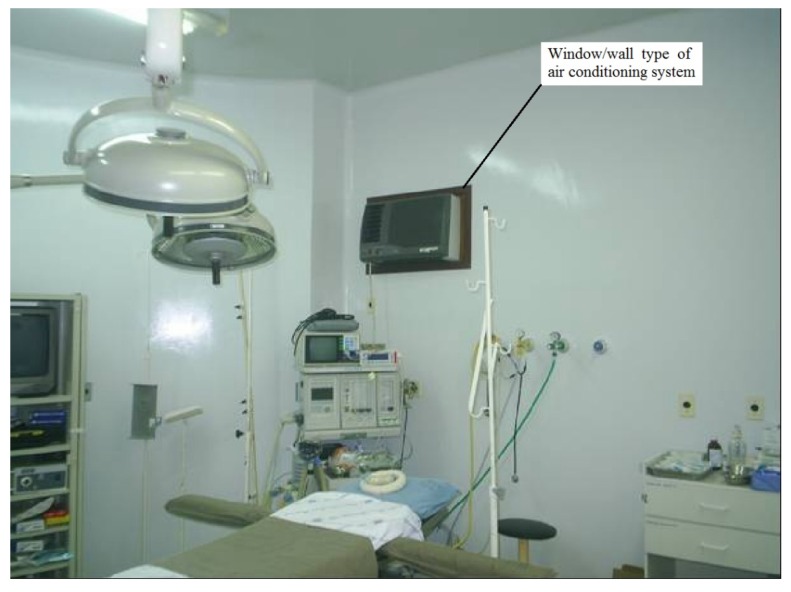
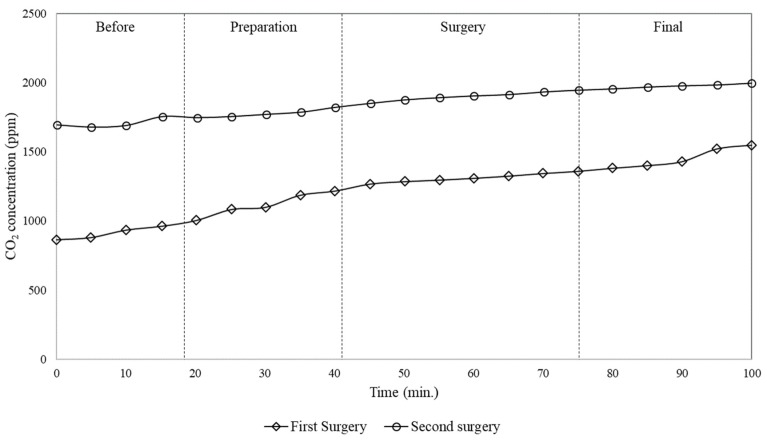
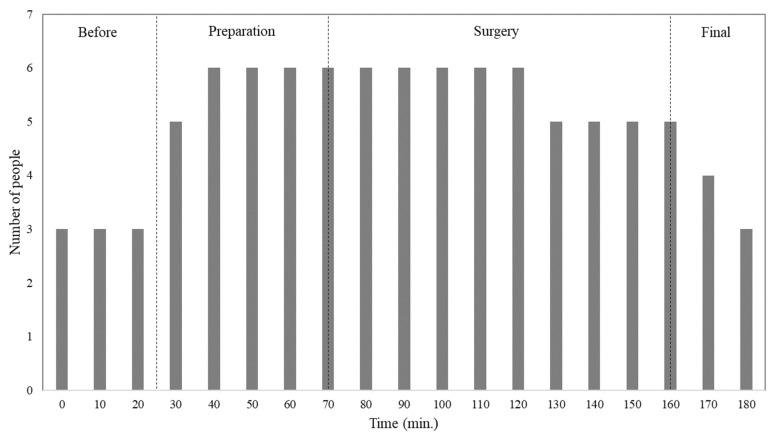
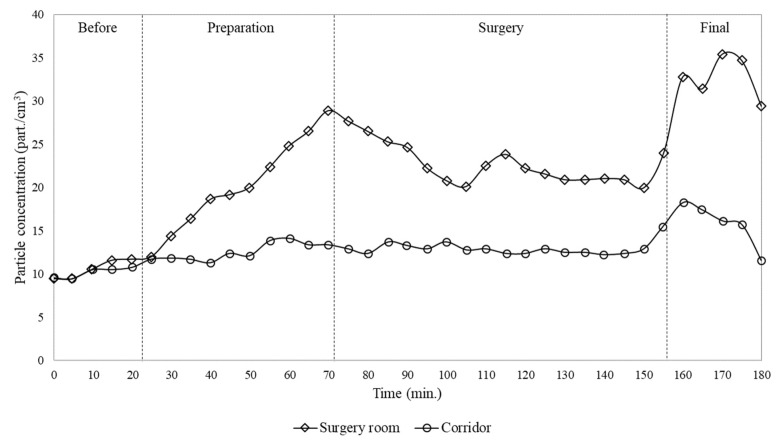
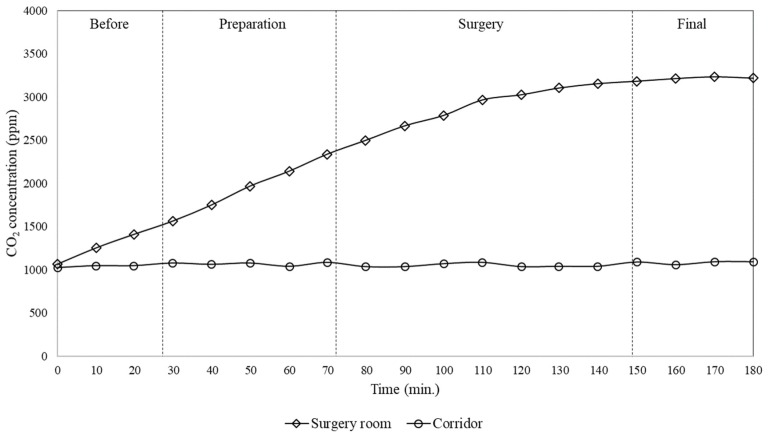
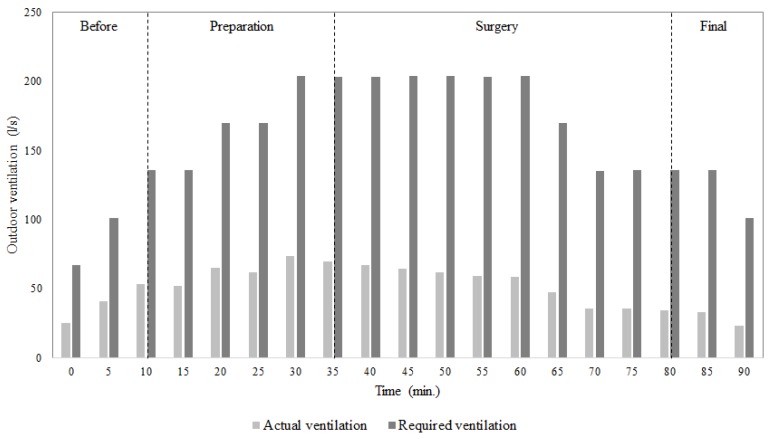
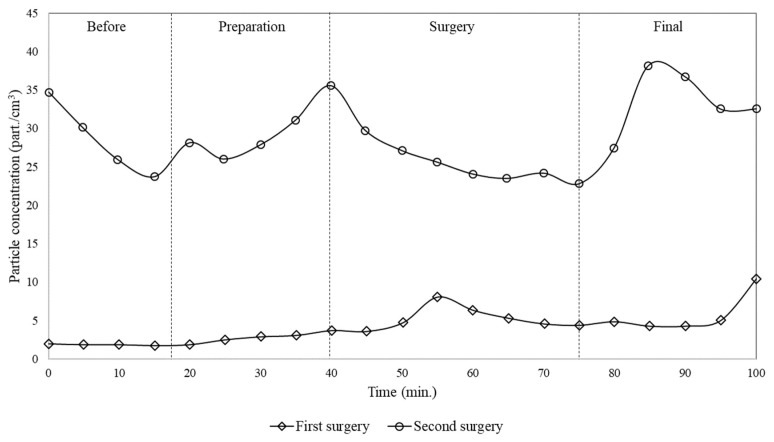
One of the most important functions of air conditioning systems in operating rooms is to protect occupants against pathogenic agents transported by air. This protection is done by simultaneously controlling the air distribution, temperature, humidity, filtration and infiltration from other areas etc. Due to their low price, simple installation, operation and maintenance, window/wall air conditioning system have largely been used in operating rooms in Brazil, even if these types of equipment only recirculate the air inside the room without appropriate filtration and renovation with outdoor air. In this context, this work aims to analyse the performance of the window/wall air conditioning systems on indoor air ventilation in operating rooms by measuring particle number concentrations and carbon dioxide concentrations during different surgical procedures, in a single surgical room and in the nearby areas (corridor) for two cases: single surgery and two subsequent surgeries. In addition, the efficiency of the analysed air conditioning system was evaluated by comparing the ventilation level calculated in the surgical room with the ventilation required in order to maintain the carbon dioxide concentration within acceptable levels. The results showed that this type of air conditioning system is not appropriate for use in operating rooms since it cannot provide an adequate level of ventilation. The CO concentrations during surgeries, in fact, significantly exceeded acceptable values and a simultaneous increase in particle number concentration was observed. The results also showed that there is a high risk of contamination between subsequent surgeries in the same surgical room, due to residues of contaminants transported by the particles emitted during the surgeries that were not removed from the operating room by the air conditioning system. The particle number concentration measured in the second surgery, in fact, was approximately six times higher than in the first surgery.
空调系统在手术室中的一个重要功能是保护操作人员免受空气传播的病原体的侵害。这种保护是通过同时控制空气分布、温度、湿度、过滤和来自其他区域的渗透等来实现的。由于其价格低廉、安装、操作和维护简单,窗式/墙式空调系统在巴西的手术室中得到了广泛应用,即使这些类型的设备仅对室内空气进行再循环,而没有适当的过滤和与室外空气的更新。在这种情况下,这项工作旨在通过测量不同手术过程中室内空气中的粒子数浓度和二氧化碳浓度,以及在单个手术室内和附近区域(走廊)的浓度,来分析窗式/墙式空调系统在手术室中室内空气通风的性能,两种情况下的手术:单个手术和随后的两个手术。此外,通过比较手术室内计算出的通风水平与维持二氧化碳浓度在可接受水平所需的通风量,评估了所分析的空调系统的效率。结果表明,这种类型的空调系统不适合在手术室中使用,因为它不能提供足够的通风水平。实际上,手术过程中的 CO 浓度显著超过了可接受值,并且观察到粒子数浓度的同时增加。结果还表明,由于空调系统未从手术室中去除手术过程中产生的粒子携带的污染物残留,同一手术室内随后的手术之间存在高度的污染风险。实际上,第二次手术中测量的粒子数浓度约为第一次手术的六倍。